
Get all your news in one place.
100's of premium titles.
One app.
Start reading
LiveScience
LiveScience
Kristina Killgrove

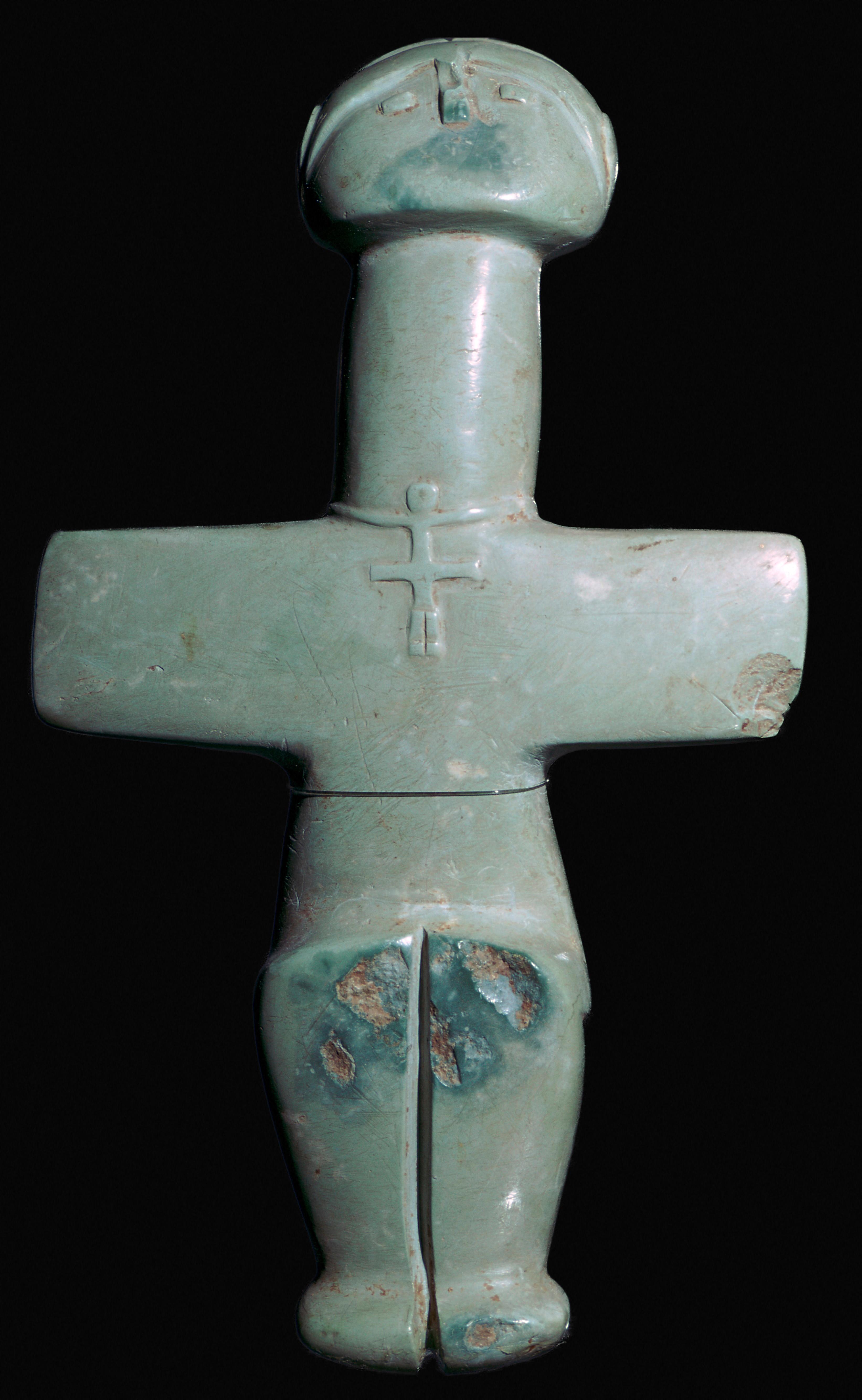
Idol of Pomos: A 5,000-year-old fertility figurine from Cyprus that wears a miniature version of herself on a necklace

The Idol of Pomos has become a symbol of Cyprus. (Image credit: The Print Collector/Alamy)
QUICK FACTS

Name: Idol of Pomos

What it is: A carved figurine

Where it is from: Pomos, Cyprus

When it was made: Circa 3000 B.C.

In the early 1930s, archaeologist Porphyrios Dikaios was excavating in the village of Pomos on the northern coast of Cyprus when he chanced upon a cross-shaped figurine carved from local greenish stone. Now known as the Idol of Pomos, the carving is the best-preserved example of a Copper Age fertility figurine from Cyprus and has become a symbol of the country.

The Idol of Pomos is 6 inches (15.3 centimeters) tall and was carved from picrolite, a soft, green, metamorphic rock native to the Troodos Mountains of Cyprus. During the Copper Age, or Chalcolithic period (circa 3900 to 2500 B.C.), the people of ancient Cyprus shifted from living in small agricultural villages to creating a more complex society with hierarchies, a unique artistic tradition and metallurgy.

During the Middle Chalcolithic (circa 3400 to 2800 B.C.), ancient Cypriot artists began producing a wide variety of human-shaped sculptures. The most common of these figurines that archaeologists have found are cruciform, or cross-shaped.

Chalcolithic cruciform figurines from Cyprus share a few characteristics: The body and the arms form a cross shape, and the figure's knees are depicted slightly drawn up or bent. Many of the figurines have small breasts, and some have another figure carved horizontally in the figure's arms, leading scholars such as archaeologist Edgar Peltenburg to suggest that they might be birth charms or fertility deities.

The Idol of Pomos is unusual because its face includes eyes, a nose and a cap-like covering with ears, unlike other examples that are faceless. Although this statuette does not have protruding breasts, it is assumed to represent a female figure. The figurine also wears a miniature version of herself around her neck, suggesting that these small idols may have been worn as jewelry 5,000 years ago.

Given the abnormally long neck and the flat back, the Idol of Pomos originally may have been suspended or hung on a wall, according to Joan Mertens, who wrote about the figurine while she was an assistant curator at the Metropolitan Museum of Art. But many details about the cruciform figurines and their meaning remain a mystery.

Today, the Idol of Pomos is on display at the Cyprus Museum in Nicosia. The figurine, which has come to represent Cyprus' contribution to prehistoric civilization, has also been featured on the country's 1- and 2-euro coins since Cyprus' adoption of the euro in 2008.

For more stunning archaeological discoveries, check out our Astonishing Artifacts archives.

Sign up to read this article
Read news from 100's of titles, curated specifically for you.
Already a member? Sign in here
Related Stories
Top stories on inkl right now
One subscription that gives you access to news from hundreds of sites
Already a member? Sign in here
Our Picks
Fourteen days free
Download the app
One app. One membership.
100+ trusted global sources.