Get all your news in one place.
100's of premium titles.
One app.
Start reading
International Business Times UK
Politics
Glory Moralidad

Idaho Bill To Criminalise Trans People Using 'Wrong' Bathroom—Up to 5 Years in Jail Time

KEY POINTS

  • Idaho bill could jail transgender people for 'wrong' bathroom use
  • Law enforcement warns proposal is difficult to enforce in practice
  • Critics say law risks profiling and everyday discrimination escalation

A visit to the 'wrong' toilet could soon carry the risk of a prison sentence in Idaho. That is not exaggeration but the plain reading of House Bill 752, now edging through the state legislature, one that places transgender people at the centre of a legal storm few can ignore.
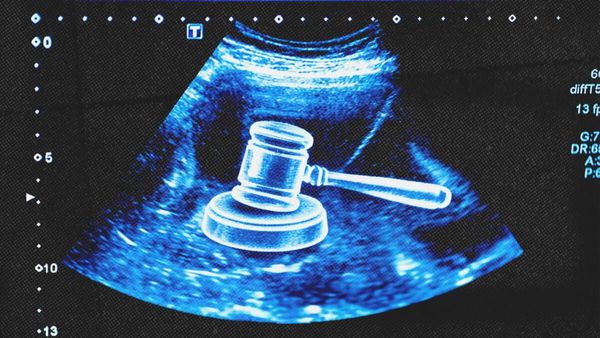
A first offence could bring up to a year in jail. A second offence escalates sharply, carrying a potential sentence of up to five years in prison. That is not a minor sanction. In fact, it exceeds the punishment for some offences many would instinctively consider more serious, including a first conviction for drink-driving in Idaho and displaying offensive sexual material in public.

If passed, the proposal would make it a criminal offence for transgender individuals to use bathrooms that align with their gender identity, even inside privately owned businesses.

A Law That Reaches Into Everyday Life

At least 19 states already restrict transgender people from using bathrooms and changing facilities that match their identity in schools and, in some cases, other public settings. A handful, including Florida, Kansas, and Utah, have attached criminal penalties in certain circumstances.

It applies to any 'place of public accommodation', a phrase broad enough to cover shops, restaurants, offices and more or less anywhere open to the public. It moves the issue out of schools and government buildings and into the fabric of daily life.

Lawmakers in the state's Republican-controlled Senate are expected to decide shortly whether the measure will be sent to Governor Brad Little.

Supporters argue the severity is justified. Republican Senator Ben Toews framed the issue in stark terms during a committee hearing.

'Private spaces such as restrooms, changing areas and showers are sex-separated for a reason,' Toews said. 'Individuals in these vulnerable settings have a reasonable expectation of privacy and security.'

The bill does include exceptions, though they are narrow and, in places, oddly specific. Emergency responders, coaches, custodians and those assisting children are exempt. So too is someone deemed to be in 'dire need' if no other option is reasonably available.

That last clause has become a focal point for critics, who question how such a standard would be interpreted in practice. Critics slam that it is one thing to write an exception into law and another to enforce it without veering into absurdity.

Policing Identity In Practice

Even some law enforcement groups are uneasy. The Idaho Fraternal Order of Police and the Idaho Chiefs of Police Association have both raised concerns, warning that the bill would place officers in untenable positions.

Officers could be expected to determine a person's biological sex in the moment, or assess whether someone's need to use a bathroom qualifies as urgent enough to avoid arrest. Officials say these are not straightforward judgments.

The Idaho Sheriff's Association attempted to soften the approach by suggesting that individuals be asked to leave before police are called. Lawmakers have reportedly declined.

Heron Greenesmith of the Transgender Law Center took aim at the 'dire need' provision, asking, 'How does one prove that one was going to poop on the floor?'

Opponents argue the bill risks encouraging a culture of suspicion. John Bueno, a transgender student at the University of Idaho, believes it will lead to increased profiling, not only of transgender people but of anyone who does not conform neatly to expectations.

'It's this cultural attitude of getting other Americans to habitually be narcing on one other and doing this sort of "transvestigating," that is what these kinds of bills promote,' Bueno said.

Bueno added, 'This will increasingly deter queer individuals from Idaho universities and the state as a whole,' they said. 'Which to be fair, is probably the primary purpose.'

Work, Safety, And The Human Reality

For some, the implications are more immediate. Nikson Matthews, a transgender man, told lawmakers that the bill would force him into spaces where he feels visibly out of place and potentially at risk.

'It creates a crime, but that is not based on conduct or harm,' Matthews said. 'It is based on presence, and to justify that you have to accept that someone's presence alone is traumatizing and harmful enough to criminalize.'

There is also the question of work. Laura Volgert, a Boise resident, highlighted the practical strain.

'People might be able to hold it for an hour if they're at a restaurant for lunch or at a grocery store,' she said. 'They can't be expected to hold it for a full eight-hour shift.'

The Case Made By Supporters

Those backing the bill insist it is being misunderstood. Suzanne Tabert, speaking in support, framed it as a matter of boundaries rather than exclusion.

'If we lose the ability to protect based on biological sex, we lose our most effective tool for preventing harassment, voyeurism and other sex crimes before they occur,' she said.

She rejected the idea that the legislation targets transgender people directly. 'This legislation is not about how an individual identifies, nor does it seek to target or malign the transgender community. Rather it upholds a universal standard of privacy.'

That argument reflects a broader trend across the United States. Restrictions on transgender participation in sports and access to gender-affirming care have been advancing in parallel, often under the same banner of safety and protection.

According to The New York Times, only one widely reported arrest linked to bathroom restrictions has surfaced so far, during a protest in Florida last year. That may change if Idaho proceeds.

Sign up to read this article
Read news from 100's of titles, curated specifically for you.
Already a member? Sign in here
Related Stories
Top stories on inkl right now
One subscription that gives you access to news from hundreds of sites
Already a member? Sign in here
Our Picks
Fourteen days free
Download the app
One app. One membership.
100+ trusted global sources.