US Immigration and Customs Enforcement (ICE) is preparing to spend millions of dollars on thousands of electric-shock gloves promoted as a less-lethal way of controlling people during confrontations, but the technology is already raising serious questions over safety, training and potential misuse.
According to reporting from The Bulwark, the devices are part of a planned ICE procurement worth between $10 million and $20 million. The outlet cited a Department of Homeland Security acquisition-planning document detailing the purchase.
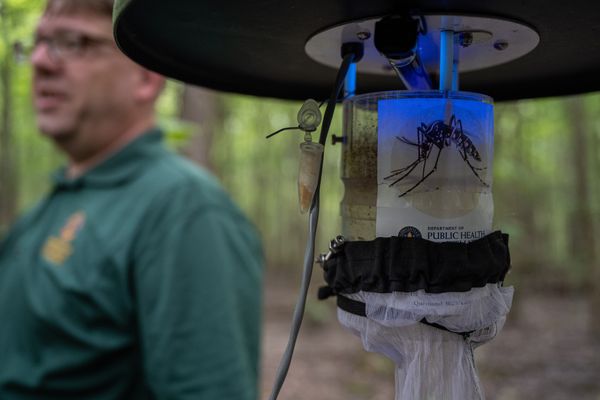
The devices, known as Generated Low Output Voltage Emitters, or G.L.O.V.E.s, are manufactured by Compliant Technologies and described as Conductive Distraction and De-escalation Devices (CD3).
What Are the G.L.O.V.E.s?
Unlike a conventional Taser, the G.L.O.V.E. is worn on an officer's hand and delivers an electrical shock through direct contact.
Compliant Technologies markets the device as an 'invisible partner' and 'Force Multiplier' designed to supplement existing use-of-force options for law enforcement, corrections, security, emergency services and the military.
The company says its technology provides a non-lethal alternative intended to reduce risk and liability while giving officers another option before more serious force becomes necessary.
Trump administration border czar Tom Homan has defended the technology as another tool for officers dealing with people who refuse to comply.
'It's another device to help someone get compliant when they are not,' Homan told Fox & Friends. 'You can't just go from zero to one hundred, right, and the first thing you go for is lethal force.'
Manufacturer Warns Against Misuse
Despite being promoted as a de-escalation tool, the manufacturer's own instructions impose significant restrictions on how the gloves should be used.
The G.L.O.V.E. manual states that the device should not be deployed over verbal defiance or belligerence, as punishment or for torture. Users are also warned to avoid using it against vulnerable groups including elderly people, small children, pregnant women and severely disabled people.
The manual also says no more than two devices should be applied simultaneously to one person and limits applications to no more than 15 seconds. Users must be trained and qualified, with certification lasting two years. ICE is reportedly still developing its own training protocols.
Those safeguards have become particularly important because of concerns about what happens when the device is used improperly.
A lawsuit in Kentucky alleges that a man died after correctional staff shocked him 27 times with the gloves and another 13 times with a Taser. An internal investigation found that two of the glove applications allegedly lasted 99 seconds and 45 seconds, far beyond the manufacturer's recommended 15-second limit.
Critics Fear a Weapon That Is Harder to See
Another concern is that the gloves may be considerably less obvious when used than conventional Tasers.
Mendota Heights Police Chief Kelly McCarthy said Tasers leave more visible evidence of their deployment, including identification tags that can be traced to individual devices.
The electric gloves do not leave the same physical evidence, although they reportedly record data about their use.
'I don't think they're going to de-escalate,' McCarthy said. 'I think they're going to escalate situations.'
Legal Challenges Already Looming
The planned rollout is also attracting political and legal scrutiny.
New York Governor Kathy Hochul and Attorney General Letitia James have questioned whether use of the devices could violate civil rights and suggested legal action could follow if they are deployed in the state.
US Representative Delia Ramirez is meanwhile working with organisations including the American Civil Liberties Union, Physicians for Human Rights and the Center for Victims of Torture on a congressional inquiry into the gloves.
For ICE, the technology is being presented as another option between physical restraint and potentially deadly force. For critics, however, the bigger question is whether a device designed to be worn discreetly can be deployed with enough transparency, training and oversight to prevent abuse.