Key Takeaways
- Intelligence agents seized Javier Oropeza, the former mayor of Torres, as he walked out of a newspaper interview in Barquisimeto, 48 hours after he flew home from two years of exile in Spain; he was freed roughly six hours later.
- María Corina Machado, still outside the country, insists she is coming back: "Society is asking and demanding my return". Reuters reported that US officials privately asked her to hold off.
- While negotiators in Caracas argue over judges and guarantees, Foro Penal counts 328 political prisoners and VE sin Filtro logs 194 internet domains still blocked, 84 of them belonging to news outlets.

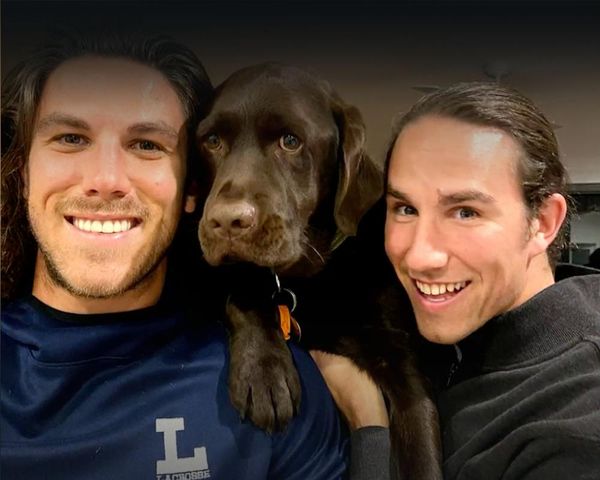
"This is the nature of this regime. That is why the entire country detests them." Machado posted those words on the night of Sept. 17, hours after agents of the Bolivarian National Intelligence Service forced former Torres mayor Javier Oropeza into a pickup truck in broad daylight in Barquisimeto.
Oropeza had landed in Venezuela 48 hours earlier, after two years in Spain. He was picked up as he left the offices of the newspaper El Informador, where he had just given an interview. He walked free that same night. All of it unfolded while two delegations sat a few kilometers away, in the second phase of the country's political negotiation.
An Arrest Shorter Than the Bargaining Session
Dinorah Figuera, who leads the opposition delegation, raised the case at the table as soon as word spread. "We immediately denounced the case, we demanded his release," she said, using the moment to point out that the pending releases involve not one leader but hundreds. Across the table sits Jorge Rodríguez, president of the National Assembly.
Arrests of opposition figures became unusual after the US intervention in January, but they never stopped entirely. That is precisely the argument Machado has been assembling since July: the paperwork advances while the machinery of coercion stays switched on. For her, the Oropeza case is not a footnote. It is a dry run of what could happen to anyone returning from exile, herself included.
A Transition the Nobel Laureate Calls Unfinished
Machado left Venezuela at the end of 2025, after more than a year underground, to collect the Nobel Peace Prize in Oslo. She has not been back. She now lives mainly in Panama and, by her own account Venezuelan authorities have refused to renew her passport.
In an interview with the outlet Democrats Review circulated this month, she described the process as incomplete and said she receives daily threats from members of the executive branch headed by Delcy Rodríguez. Her stance on the talks has not shifted since July 26, when she announced she would not take a seat: "We will not be an obstacle to any initiative that produces real progress," she wrote then, tying her backing to verifiable outcomes: full prisoner releases, institutions restored and a presidential vote called.
What Is Actually on the Table: the Supreme Court, the Electoral Council and London's Gold
The first phase of the dialogue, opened Aug. 1 and closed Aug. 12, produced two agreements: the recovery of Venezuelan gold reserves held at the Bank of England, worth some $4 billion, and a commitment to overhaul the judiciary. The second phase, which began Sept. 15, walked straight into that terrain — rewriting the Supreme Court's governing statute, building a nominations committee where civil society would hold 12 seats against 11 for lawmakers, and lifting the political bans, including the one imposed on Machado.
She wants a faster clock. In remarks published in mid-September she said her contacts with the US State Department lead her to expect a new National Electoral Council and a new Supreme Court before the year runs out, and she demanded a firm election date. The underlying dispute is not the institutional calendar. It is who sets the route.
Pressure From Within: the Alliance for Venezuela
On Sept. 14, nine political and social organizations launched the Alliance for Venezuela with an unhedged demand: presidential elections with a fixed date, an impartial electoral council and an end to the disqualifications. "María Corina Machado will be our candidate," said spokesman Noel Álvarez, former head of the business federation Fedecámaras.
The endorsement arrives amid measurable erosion, and the numbers are worth keeping apart. Her approval slid from 72% in July to 53% in August in AtlasIntel's survey for Bloomberg. A study released Sept. 8 puts her voting intention at 61%. And in a hypothetical head-to-head against Delcy Rodríguez, Meganálisis places her at 82.6%. Three readings that do not contradict one another because they measure different things: approval, preference and a direct matchup.
Washington: Oil, Stability and an Inconvenient Nobel
Donald Trump's administration designed and drives this negotiation and backs President Delcy Rodríguez without reservation. She took office on Jan. 5, two days after the capture of Nicolás Maduro. Asked about elections on Sept. 2, Trump answered that the country is not ready yet and praised Rodríguez's performance.
Reuters reported on Sept. 16, citing four opposition figures and two political analysts, that Machado's return is settled but undated, and that US officials privately asked her to postpone it. "She is going to return. She will go to the United States, but not to ask permission," one of those sources said. Secretary of State Marco Rubio acknowledged her right to come home and, in the same breath, stressed the value of her work organizing the diaspora.
The reading is hard to dodge: Washington would rather keep its most popular figure off the board while the institutional scaffolding goes up. Machado answers with different arithmetic — there is no durable stability built on 328 political prisoners and 84 blocked news sites.
What Comes Next
Venezuela is moving without a map. A technical table handing out judgeships while a former mayor enters and leaves a cell on the same day. A leader whose passport has not been renewed announcing her return. And an international partner bankrolling the transition while asking the Nobel winner to wait. Machado's return has stopped being a symbolic gesture: it is the move that will force every player to show their hand.