
Get all your news in one place.
100’s of premium titles.
One app.
Start reading
Ideal Home
Ideal Home
Amy Lockwood

I wasted so much money on the wrong winter duvet – this is the one thing I wish I had known before buying one

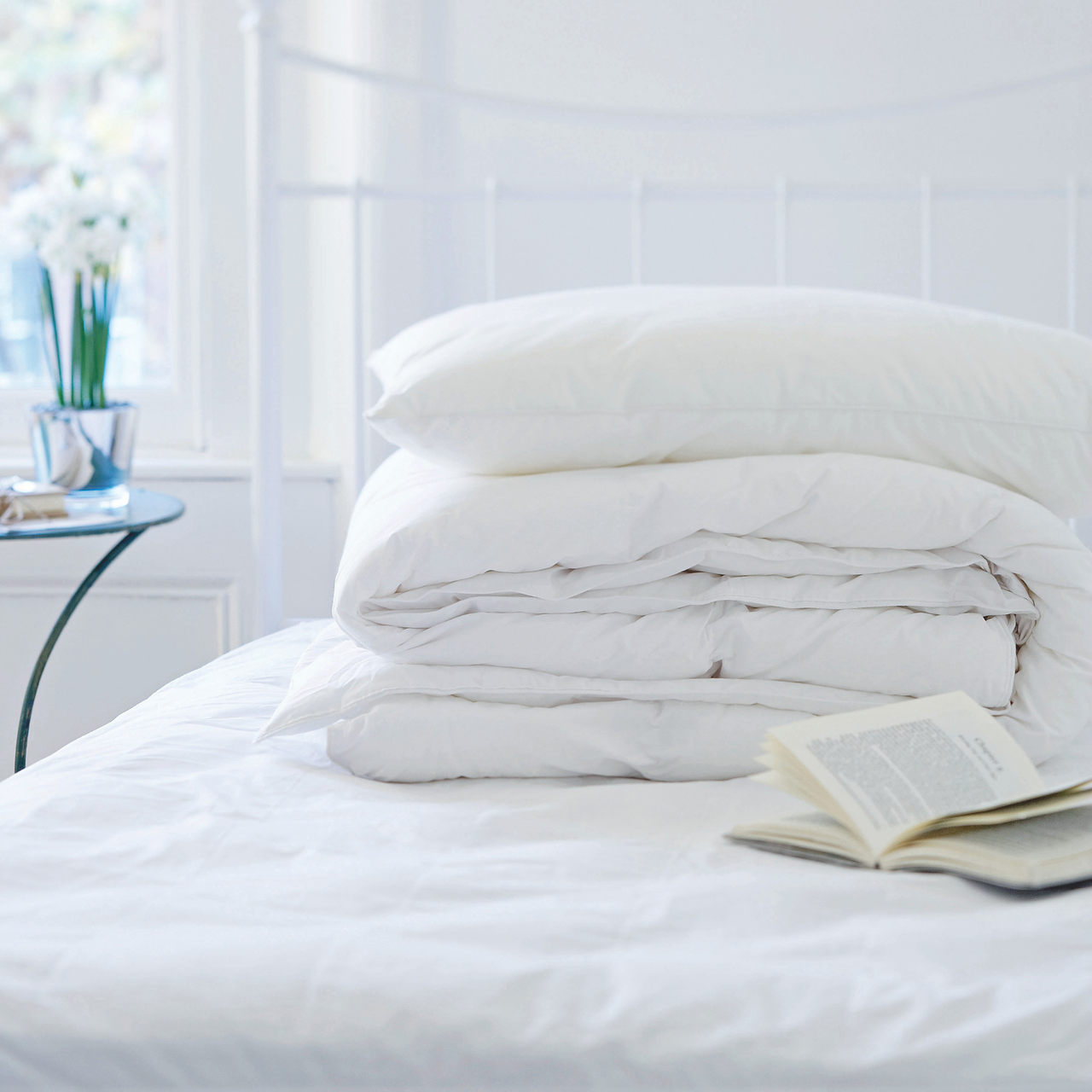
Duvet and pillows pile on bed.

As you've probably noticed, autumn is well underway. And it's beginning to affect nighttime temperatures.

If you've recently woken up feeling a little chilly under the covers, then your thoughts might have turned to sourcing the best duvet for the colder months. However, if you're considering investing in a dedicated winter duvet, hang fire.

There's one thing I wish I had known before buying my first winter duvet, and I'm here to share my duvet-buying mistakes so you don't make the same one.

I've been Ideal Home's Sleep Editor for the past four years, and during that time I've learnt a lot about sleep. Most importantly, I've learnt that the right bedding materials play a huge part in helping us to sleep better.

That's because a deep and restful sleep is more easily achieved if our body is the right temperature. If we get too hot or too cold during the night, we're more likely to slip out of deep sleep and into a lighter and less rejuvenating sleep.

(Image credit: Dominic Blackmore)

And that means we need a duvet that allows our body to regulate our temperature during the night. My big mistake when I bought my first winter duvet all those years ago was investing in one that didn't allow for this.

Like many of us, I invested in a winter duvet based on its tog rating. What is duvet tog? It's a measure of a duvet's warmth. Tog ratings start at 1 and go up to around 15.

A good summer duvet tog is around 4.5 tog. In the UK, a 10.5 tog duvet is usually a decent warmth level for spring and autumn and, in winter, most bedding experts will recommend using a 13.5 tog duvet.

However, what I didn't realise when I bought my first winter duvet is that staying warm and cosy throughout the colder months isn't all down to investing in a high tog duvet.

What I hadn't factored in was that although my priority was to stay warm, a good duvet should still offer breathability. This is what allows us to be insulated and cosy, but without overheating during the night.

(Image credit: Davide Lovatti)

Like many of us, the first winter duvet I bought was synthetic with a microfibre polyester filling. I don't remember consciously choosing to buy polyester. I think I was most likely swayed by its price, as polyester-filled duvets are usually the most affordable options.

What I now know is that polyester lacks breathability, and so although I was very warm under my 13.5 tog microfibre duvet, I would regularly find that some time around 3 am, I would become far *too* warm.

I'd wake up kicking off the covers because I was too hot and clammy, only to then start shivering and wrap myself back up in the duvet. This cycle would then continue throughout the night, and I often woke up not feeling very well rested as a result.

A few years later, I upgraded my duvet and invested in the luxury of a feather and down duvet fill. It was *very* warm and insulating and head and shoulders above my old synthetic duvet in terms of quality. But I found I'd still drift off super cosily, only to wake up too hot and spend the night with one leg sticking out from under the covers.

(Image credit: Future PLC / Simon Whitmore)

That only changed when I put my first wool duvet through Ideal Home's duvet testing process. As it turns out, wool is a bit of a miracle fibre when it comes to sleep.

That's because wool fibres are naturally temperature-regulating and breathable. I soon discovered wool could keep me cosy and warm in bed, whilst still allowing my body to breathe and for excess body heat to dissipate through the duvet fibres. That meant no more overheating.

It was a game-changer for me. From my first night sleeping under a wool duvet, I slept far better. So much so that I've been known to take my wool duvet with me when I go stay at friends' houses, and I slightly dread a night in even the nicest five-star hotel because I know they're unlikely to have a wool duvet and I'll probably overheat.

I also soon discovered that wool is one of the best fillings for a duvet if you share a bed with someone who has a very different inner thermostat from you. This can make it difficult to find a duvet you both agree on.

There's the Scandinavian option of separate duvets, or even a sleep divorce with separate bedrooms, but wool solves both of those problems by creating an individual microclimate for both of you. So you could call it a relationship-saver, too.

(Image credit: DOUGLAS GIBB PHOTOGRAPHY)

The downsides? A wool duvet is expensive compared to a polyester-filled duvet, and most are far harder to wash. In this regard, sunlight is your friend, as you can hang a wool duvet outside in the sun and the fresh air and UV rays will 'clean' it. Or you can invest in one of the few wool duvets that are machine-washable (more on that below).

However, for me, the improvement to my sleep quality is well worth overcoming those niggles. And the other benefit is that, unlike polyester, ethically-sourced wool is a sustainable and renewable material that also biodegrades safely at the end of the duvet's lifespan.

That means you can sleep more easily, not just because of wool's superior temperature regulation, but also because your duvet choice is far kinder to the environment.

Best wool duvets

If you want to take a leaf out of my book and make your new winter duvet a wool affair, these are the best wool duvets I've tested.

Sign up to read this article
Read news from 100’s of titles, curated specifically for you.
Already a member? Sign in here
Related Stories
Top stories on inkl right now
One subscription that gives you access to news from hundreds of sites
Already a member? Sign in here
Our Picks
Fourteen days free
Download the app
One app. One membership.
100+ trusted global sources.