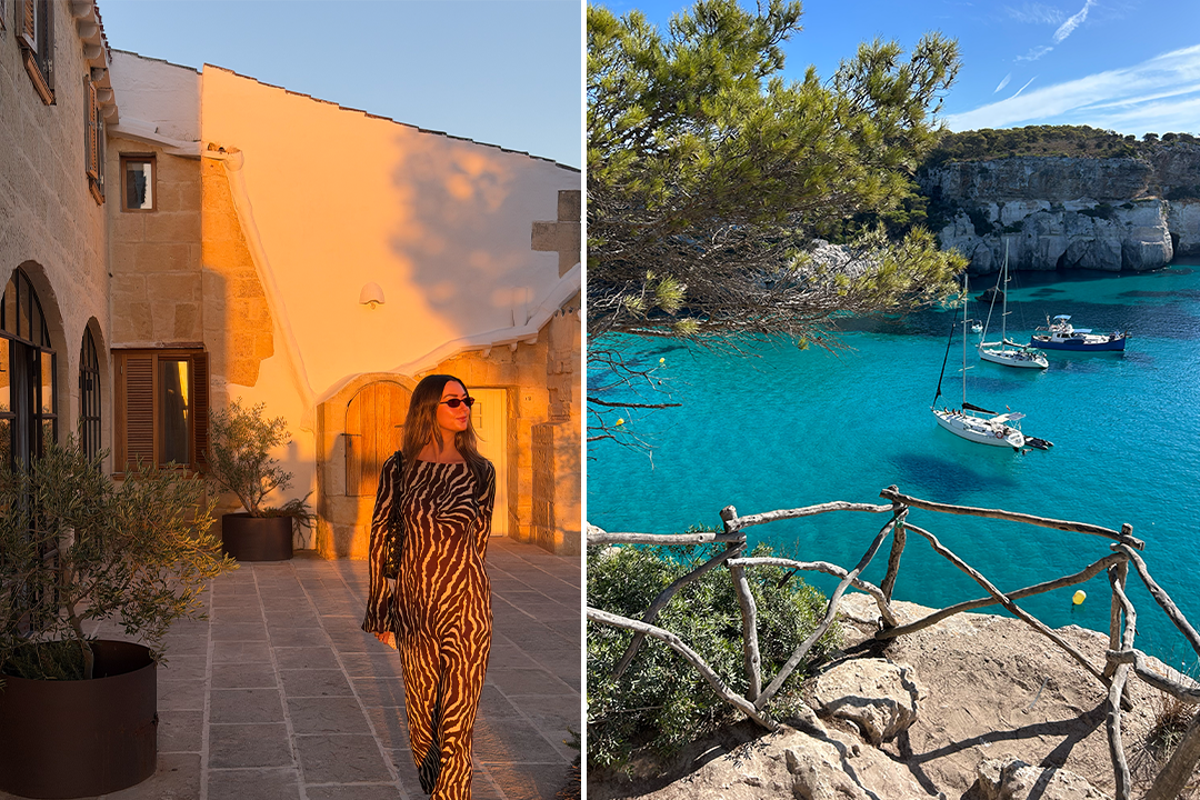
I’m swimming in crystal-clear, turquoise water above schools of brightly coloured fish. The pristine white sand beach is almost empty. There are no loungers, no music, no beach bar. No, I’m not in the Maldives; I’m in Menorca, Mallorca and Ibiza’s tranquil little sister.
The Balearic island is a Unesco Biosphere Reserve, giving it an entirely different landscape and feel from its busier, more heavily visited neighbours. Untouched sandy coves and protected marine life make the Mediterranean waters remarkably vibrant, while restrictions on high-rise development and resort towns leave vast stretches of green, open countryside.
A taxi driver tells me spring is particularly beautiful, when the island is lush with wildflowers and new growth. I’m visiting in September, which locals say is unusually busy. It appears the secret is getting out.
A burgeoning number of luxury boutique hotels, alongside buzzy restaurants and a rich art and cultural scene, is making Menorca an appealing – and often more affordable – alternative to the Balearics’ better-known islands.
Wherever you are on the island, the sunsets are spectacular. The atmosphere is relaxed, the landscape largely rural, and Mallorca’s mountains are a striking silhouette on the horizon.
Mallorca and Ibiza have historically attracted millions of visitors between them each year. In 2025, Mallorca welcomed 13.5 million visitors while Ibiza and Formentera combined welcomed 3.7 million. Menorca, in comparison, was visited by just 1.7 million.
Some of the biggest names in hospitality are putting their stamp on the island. The Experimental group, of Cowley Manor fame, opened Menorca Experimental in 2023: a 19th-century finca surrounded by pine trees, with 34 rooms, a spa, outdoor pool and destination restaurant.
Read more: This Spanish party island is more family-friendly than you think
Elsewhere in the south, Amagatay is a rural farmstead with one of the island’s most talked-about restaurants. It is among a growing number of agrotourism hotels that have transformed traditional agricultural estates into places to stay.
On the north side of the island, Morvedra Nou takes a similarly rural approach. Former farm buildings and stable blocks have been converted into rooms surrounded by acres of countryside. Olive oil, fruit and vegetables are grown for the restaurants, while facilities are deliberately low-key: an outdoor pool, gym and plenty of space to simply do nothing.
Don’t come to Menorca expecting sprawling resorts and state-of-the-art spas. The appeal is almost the opposite: hire a bike, hike, ride a horse or read among the olive groves.
The Vestige Collection embodies this slow-living approach to hospitality. The group has transformed historic, abandoned and neglected fincas and manor houses into sustainability-focused luxury hotels, including Vestige Son Vell, Son Ermità and the newly opened Binidufà.
Read our full review of Vestige Son Vell
The hotels combine secluded settings with farm-to-fork dining, a philosophy that extends across the island’s restaurant scene. Nonna Bazaar is one of Menorca’s most Instagrammed restaurants, while at Coral on the north coast, tables perch above a rocky coastline, making it one of the best places to watch the sun sink into the Mediterranean.
Menorca may be famed for its olive groves – its rich, regional olive oil is a must-try – but the island has a lesser-known wine story too. Vines have been cultivated here since Roman times, with local wines gaining protected designation status in 2002 – look for ‘PGI’ on the bottle. Today, nine artisanal wineries dot the island, including the stylish Bodegas Binifadet. Make a trip for the laidback group tastings and stay longer for dinner.
Menorca has plenty to offer for anyone swapping the Balearic beach-club scene for art and culture. In the historic port town of Ciutadella, you can wander through preserved medieval streets and past grand historic palaces. Once the island's political capital, Ciutadella has been shaped by Roman rule, Islamic and Christian conquests and centuries of European rivalry. Today, its busy food scene, harbour and local markets make it an appealing alternative to Menorca’s more rural, secluded stays.
On the other side of the island, the capital Mahón (a small cruise port and former British military and naval base in the 17th century) has cultivated a strong contemporary art scene. Independent galleries owned by an international community abound, and on the island of Illa del Rei, an outpost of Hauser & Wirth sits in a restored 18th-century naval hospital.
Even Menorca’s few and far-between beach bars blend into the Med landscape. At Playa de Binibeca, Bucaneros occupies a 1960s white-stone fishing hut with a distinctive red door – it’s become a popular drinking hole for locals and visitors alike. At nearby Cala Binidalí, Bar Som Sis is a family-run hilltop hut serving fresh seafood and local beer.
Read more: The best six places off the Spanish tourist trail
The best way to experience Menorca’s protected landscape is on foot, bike or horse. The Camí de Cavalls, a historic 185km trail that circles the island, connects beaches, coves and stretches of coastline that are difficult to reach by road.
On one stretch between two of the island’s most beautiful beaches, Cala en Turqueta and Macarella, we barely encountered another person. The path winds through pine forest, with occasional breaks in the canopy revealing views across pristine countryside and turquoise water. There wasn’t a high-rise hotel in sight.
That, ultimately, is Menorca’s greatest appeal. Its beaches are beautiful, and the absence of everything around them makes them feel extra special. Menorca is no longer quite the secret it once was. Boutique hotels, destination restaurants and social media allure are bringing a new audience to the island.
For now, at least, you can still feel like you discovered a hidden gem before everyone else.
Read more: Best hotels in Mallorca, from adult-only rural retreats to historic stays
How to get there
EasyJet, Jet2, Ryanair, British Airways and Tui Airways all fly from major UK airports to Mahón, starting from around £38. The island’s only airport is a 15-minute drive from the capital Mahón, and 44 minutes from Ciutadella. Car rental companies at the airport include Sixt, Hertz and Europcar – we rented ours from Minurka, which cost €220 (£187) for three days.