
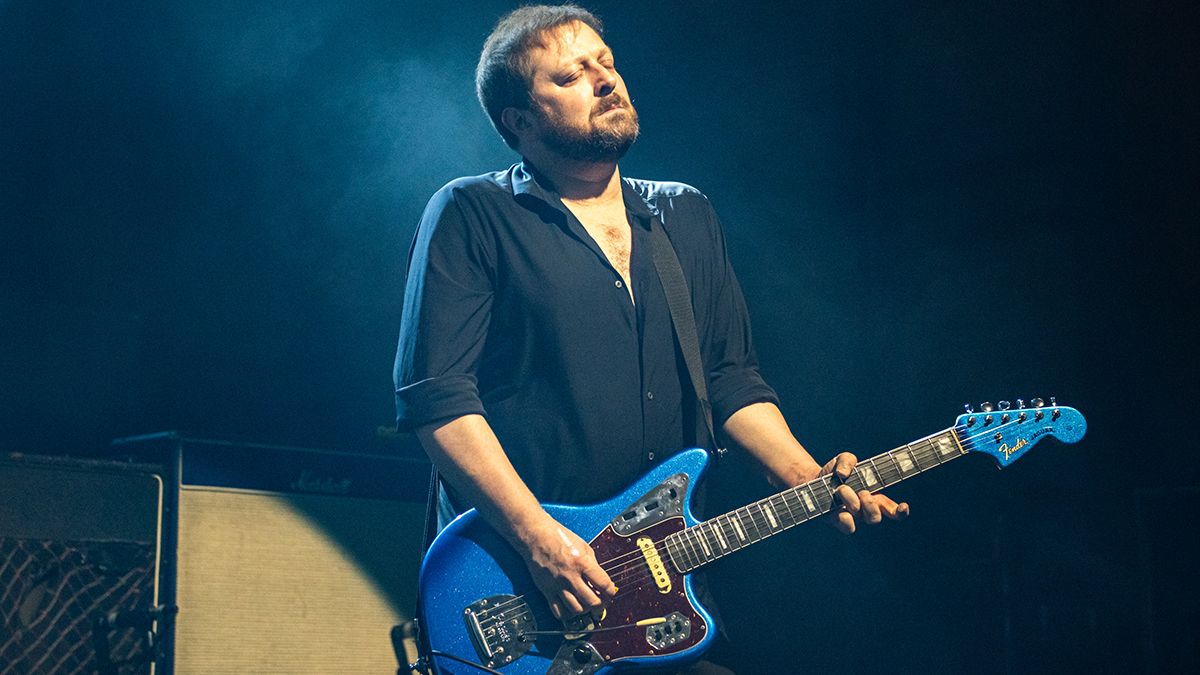
At 17 going on 18, Richard Oakes found himself with the unenviable – or enviable, depending on your perspective – task of replacing Bernard Butler, Suede's widely revered Britpop guitarist. And he did that with some truly humble gear.
“I turned up at my first audition with my Squier Telecaster, as that was all I owned,” he tells Guitar World in a new interview. “They quickly put a rig together for me, based vaguely on what had been used previously; it was all about getting a ‘Suede sound’ so we could go on tour. I didn’t experiment with guitars or amps; there wasn’t time for that.”

Over the years, Oakes stuck with a Vox AC30, and while he initially played Gibsons, by the time 1996’s Coming Up – arguably the band’s most globally successful album – came out, he had switched to Fenders, “as they fit better with my natural style.”
Despite the lack of gear, the young Oakes' talent was promising from the get-go.
“The first thing I wrote for Suede was the music that became Picnic by the Motorway, but the first thing we recorded was [the single] Together, and that was an incredible experience,” he reminisces.
“To be at Wessex Studios in Highbury [the studio in London that was frequented by the likes of King Crimson, Queen, and the Clash], where some of my favorite music has been recorded, working on music of my own… that was far more of a wow moment than any gig we had done up to that point.
“I was still only just 18,” he notes, “And it was difficult to take in everything that was happening to me in 1994, but that recording session sticks in my head as the first time I realized the magnitude of the opportunity that had been offered to me.”
Guitar World’s interview with Richard Oakes will be published in the coming weeks.
As for Butler, the guitarist broke down his tumultuous ’90s in an exclusive Guitarist interview – and revealed why it was important for him to re-examine and reissue his underrated debut studio album, People Move On, in 2022.