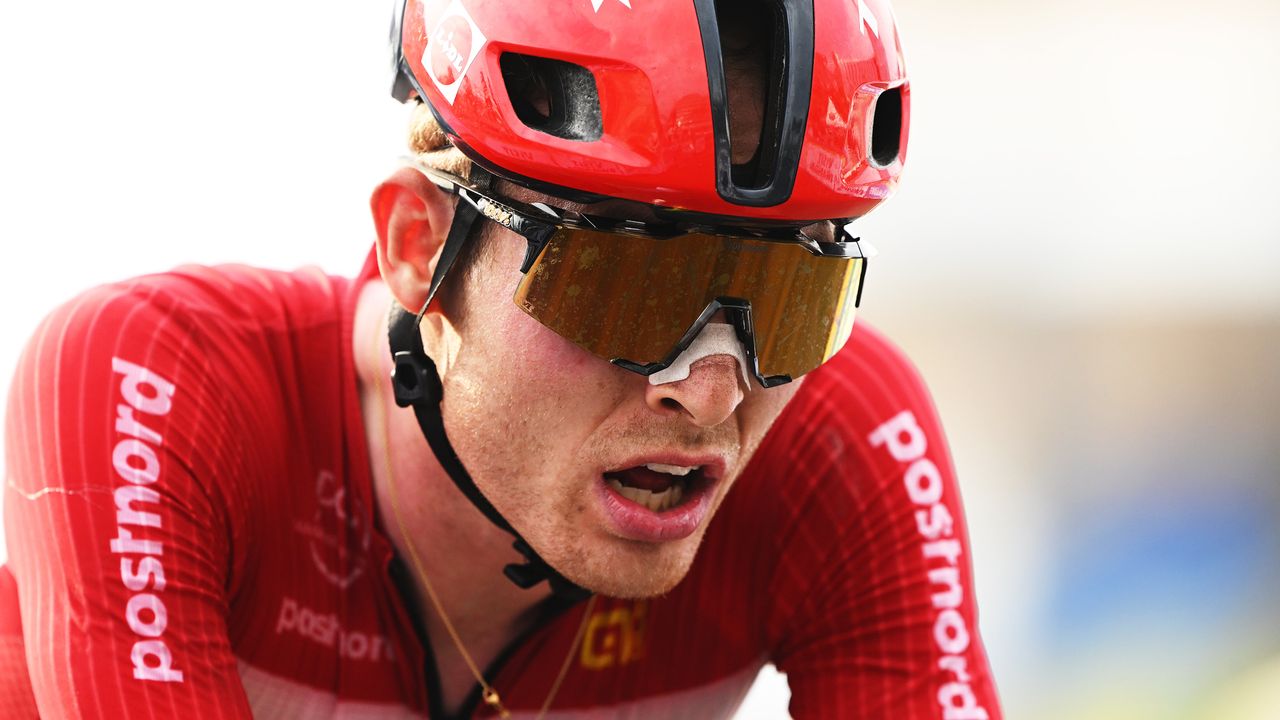
You’ve probably noticed while watching the professional road races lately that an increasing number of riders have been wearing brightly coloured strips across their noses. As part of the latest 'in vogue' training trend, where there's an added emphasis on breathing efficiency, nasal strips are back in style. These have been an in-and-out performance gain over the last couple of decades. From the snore-stopping skin coloured strips of the 2000-2010s, to the in-nose turbine that Chris Froome was briefly sponsored by, and then Peter Sagan's magnetic nose-widening 100% sunglasses.
Nose strips are nothing new in cycling, but in 2025 they seemed to become the latest must-have training gain and influencer-plugged fitness-booster. Go onto Instagram as someone who follows cycling, and you will almost certainly have seen influencers and bike racers wearing Zone8 or HiStrip nose strips, often in bright pink for that added visibility. But just how do they claim to work, how do they actually work in practice, what does the scientific research and literature say, and are they worthwhile for us to invest in?