Get all your news in one place.
100's of premium titles.
One app.
Start reading
T3
T3
Technology
Matt Kollat

I rely on my Oura Ring daily, but its stress tracking needs fixing

Oura app screenshot on colourful background.

I love my Oura Ring 4. It’s one of the few wearables I have on me continuously. I appreciate many of its features, from its sleep-tracking prowess to its automatic exercise recognition. It won’t push my Garmin watch off my wrist for active training, but for anything else, I often recommend the Oura to anyone unsure which wearable to choose.

Despite its many excellent qualities, the Oura's smart ring system has one big flaw: stress tracking. Stress is one of the big factors that the algorithm takes into consideration when calculating how well you’ve recovered and how well you’ve slept. It even affects how the app evaluates your diet.

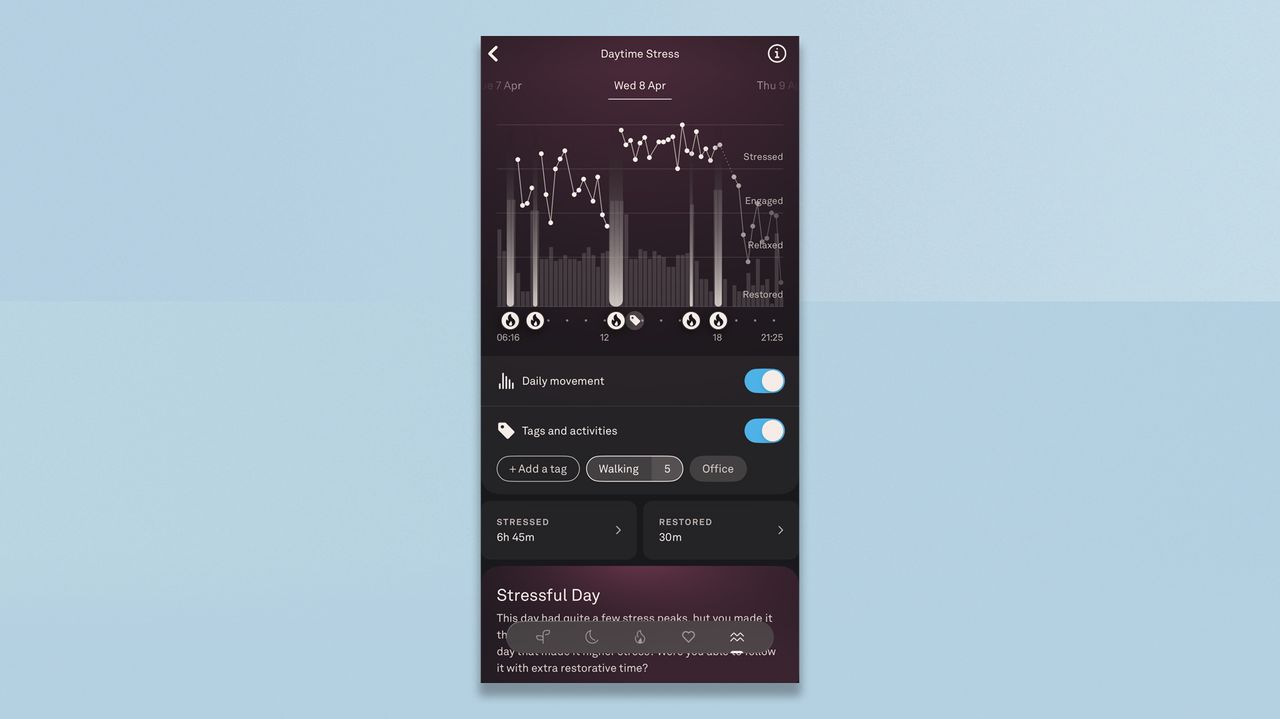
Get stressed. Stay stressed. (Image credit: Matt Kollat)

In short, inaccurate stress levels can have a huge impact on your key scores in Oura, which is extremely frustrating, given that the system doesn’t seem to understand what stress actually is. Sure, when you read the descriptions, Oura will say it looks for signs of physical stress, and that some physical stress is good.

For example, exercise is physical stress, and we all know exercise in moderation is good for you. You can push your body too far with exercise, but if you aren’t going crazy, some cardio and strength training will do you good. Oura knows this, which is why it’s so strange how it handles physical stress.

When ‘rest’ isn’t actually rest

As I mentioned above, Oura automatically recognises certain exercises, such as running, walking, cycling, housework, and so on. I find it pretty accurate, at least the way it knows when an exercise starts and finishes. If you go for a walk, the ring will know, and when you stop, it will cease tracking the exercise.

It’s almost too accurate. If I’m out walking and stop to buy a coffee or pop to a shop to have a look around, it will break the exercise into two parts, with the section in between considered non-exercise. Also, as soon as the exercise has concluded, the algorithm will assume you’ve immediately recovered.

And this is where the problem lies. The body doesn’t work like this. If I’m out on a walk and stop for five minutes, my heart rate won’t drop to its resting level. If I go for a run, my body will warm up, and my heart and respiratory rates will remain elevated for a good while after the exercise concludes.

In Oura’s world, movement defines everything

Oura, seemingly, doesn’t care. If you aren’t exercising, you’re resting, so your vitals should hover near your sleeping average. Otherwise, you are ‘stressed’, or if the algorithm has a better day, ‘engaged’. In Oura’s world, there is no recovery period, and exercise only exists exactly as long as you’re moving.

Morning exercise = stress all day (Image credit: Matt Kollat)

Worse still, if you exercise in the morning – maybe a quick walk or jog before work – the algorithm seems to get stuck for the rest of the day, thinking if you start your day stressed, then you should be stressed for the rest of the day. The same goes for exercising after work, which often leaves my stress level at least ‘engaged’ before bed.

This is majorly counterproductive. First, if my ring thinks I’m stressed throughout the day, it will think I don’t recover from stress well, which will knock down my long-term stress management score. Basically, my ring thinks I’m stressed, and I can’t handle stress. Not good.

Exercise shouldn’t feel like a penalty

Secondly, the app not understanding exercise-related stress only discourages me from working out. I had a sciatica issue for months, which prevented me from exercising. As a result, my stress level has dropped significantly – even though work is just as stressful as it’s always been – and my stress management score has also improved.

If I didn’t know any better, I might conclude that exercise is bad for me. And it’s not just me; many people I talk to who use the ring say stress tracking has been off for them, too. A real pain because otherwise the system would be near-perfect.

The good news is that it would be easy to sort this issue. You don’t need any hardware tweak, just an adjustment of the machine learning algorithm (says the person who never trained AI). All Oura has to do is treat pre- and post-exercise vitals differently from everyday stuff.

Smarter context, not more data

I don’t need Garmin-level exercise tracking, but Oura should at least account for recovery heart rate and treat quick breaks in workouts as part of that workout. No, I didn’t have a 35-minute, 27-minute, and 28-minute run back-to-back with three 3-minute breaks in between. I went for an hour and a half, and I had to stop to drink or take a gel or let cars pass.

If Oura could sort this out, I would be the happiest person. Considering how much health and fitness data the company must be sitting on, I assume it wouldn’t take too long to find a way to better handle exercise stress. And when it will, I can finally exercise without upsetting the algorithm.

Sign up to read this article
Read news from 100's of titles, curated specifically for you.
Already a member? Sign in here
Related Stories
Top stories on inkl right now
One subscription that gives you access to news from hundreds of sites
Already a member? Sign in here
Our Picks
Fourteen days free
Download the app
One app. One membership.
100+ trusted global sources.