Get all your news in one place.
100's of premium titles.
One app.
Start reading
Tom’s Guide
Tom’s Guide
Technology
Nick Harris-Fry

I don’t trust the heart rate sensors on watches, so wear a chest strap on every run — here are the 4 best straps I’ve tested

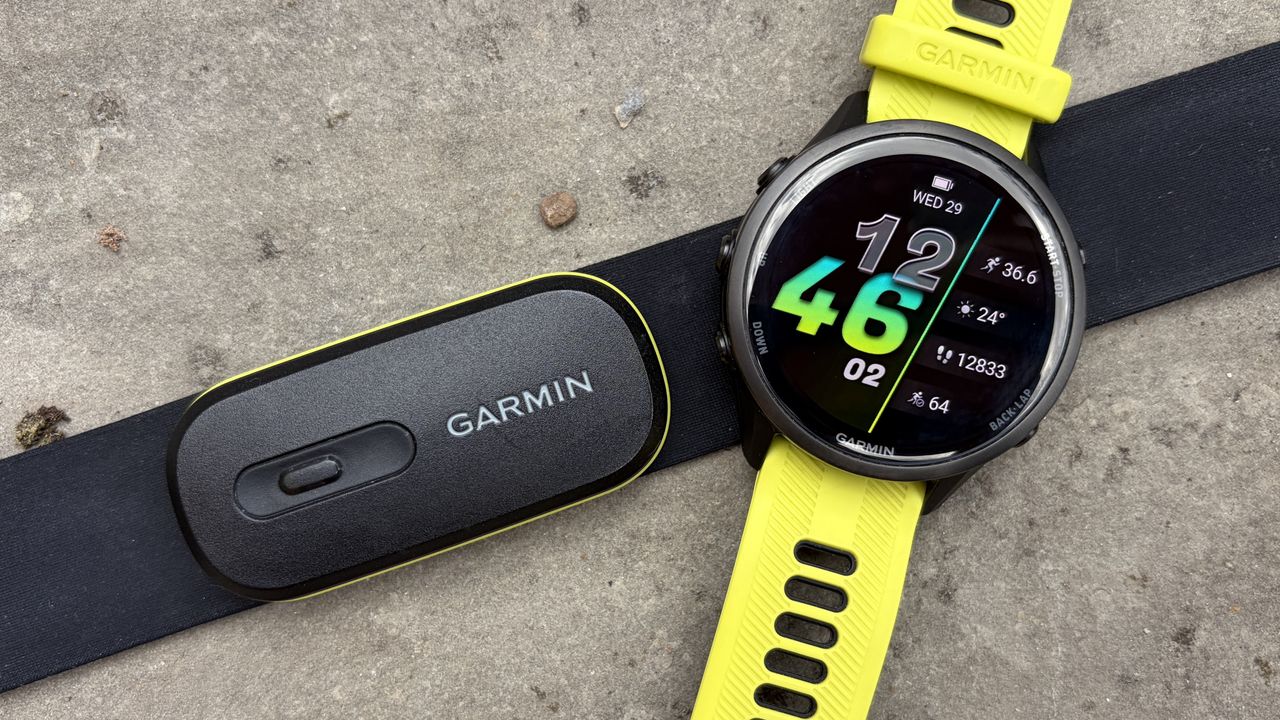
Garmin Forerunner 970 & Garmin HRM 600.

I started testing the best sports watches just over a decade ago, and even back then almost all the new releases had a built-in optical heart rate sensor.

It was also the time I started to take my own running seriously, which meant following a training plan set by a coach with sessions of varying intensity throughout the week. I often relied on heart rate data to judge my effort during these sessions, along with my own perception of how hard I was working.

This quickly led to the realisation that the sensors on watches were often out of whack with my own estimation of effort, and once I started using a chest strap heart rate monitor, my concerns about the accuracy of those watches were confirmed.

In the years since then the sensors on watches have gotten a lot better. The best Garmin watches and the Apple Watch in particular usually produce accurate readings during runs, in my experience.

However, if you use heart rate to judge your effort during runs, or pay close attention to the training analysis and recovery stats on your watch, which rely heavily on heart rate data, even the best optical sensors can still fall short, and I prefer to use a chest strap during all my runs myself.

It’s one of the best accessories you can get for your workouts, in my opinion — here’s why.

Why chest straps are more reliable than optical sensors on watches

(Image credit: Future)

The key difference with chest straps vs optical heart rate sensor is how they go about measuring heart rate.

Chest straps measure electrical signals directly from the heart, which not only makes them very accurate, but also means there’s virtually zero lag in their readings when your heart rate changes suddenly, like when you’re doing an interval session and quickly speed up.

(Image credit: Future)

Optical sensors use LED lights to measure changes in your blood volume, which affects how the light is reflected back to the sensor. This is a less direct method than electrical signals, and prone to interference.

When you’re at rest optical sensors on watches are usually very reliable, but during workouts when your heart rate can rise and fall rapidly and you might be swinging your arm around a lot, optical sensors have a harder time.

Chest straps are in a much more stable position as well as using a more reliable method of measuring heart rate.

In around a decade of using them almost daily, I can only remember a handful of incidents where I felt my chest strap was producing inaccurate results. In contrast, there are several problems that arise regularly with optical sensors on watches.

Common problems with watch sensors during runs

(Image credit: Future)

As I mentioned above, the heart rate sensors on watches are good these days, but there are still certain issues that crop up from time to time during runs.

The most common one is lag. Optical sensors take longer to notice rapid changes in heart rate, so during interval sessions they don’t rise and fall as quickly as a chest strap.

(Image credit: DC Rainmaker Analyzer)

This can make it trickier to use heart rate to judge effort in short intervals in particular, but as you can see from the graph above the lag might only be a few seconds and overall it’s not a huge problem in my opinion, as long as you bear it in mind when running.

A bigger problem is cadence lock, which is still a major issue with some watches I test. This is when the optical sensor on the watch gets confused and measures your cadence — how often your feet hit the ground — rather than your heart rate.

This results in way too high a heart rate for me during runs, and means that an easy jog can be classed as an all-out effort in a watch’s training analysis, skewing my recovery data for weeks.

Since most people’s cadence when running is somewhere between 160 and 200, it can also be hard to even tell when your watch is reading it instead of your heart rate, because a lot of people will be hitting that kind of heart rate in runs.

(Image credit: DC Rainmaker Analyzer)

You can see in this graph that the watch I was wearing jumped between heart rate and my cadence for the first half of a run before actually locking onto my pulse correctly. Cadence lock at the start of a run is especially common.

Another common problem I’ve experienced with optical sensors is that they are less reliable in cold conditions, because blood vessels near your skin contract, making it harder to measure heart rate using blood volume.

(Image credit: DC Rainmaker Analyzer)

I find this makes cadence lock even more likely to happen, as in this graph where I compared a watch to a chest strap during a hard session involving three 5K efforts, where the watch read incorrectly high throughout.

Downsides of chest straps

(Image credit: Nick Harris-Fry/Future)

Chest straps might be very accurate, but they’re still not the perfect product. Many people find it uncomfortable to wear them compared with watches, and during the winter months, pulling a cold strap onto your chest certainly makes for an unpleasant second or two, I can tell you.

They’re not unfailingly accurate too, and to reduce the risk of errors especially at the start of runs it’s worth wetting the sensors on the inside of the band. Ideally you can do this either with water or a dedicated gel, but a quick lick also gets the job done in a pinch.

You might not want to lick your chest strap though, because another problem with them is that they can get pretty disgusting over long-term use if you’re not careful about washing them regularly.

If you’re not a fan of chest straps, but do find wrist sensors inaccurate, then armbands can be a good middle ground.

(Image credit: Future)

These use optical sensors, but the position on your upper arm makes them more stable and reliable. The extra muscle mass in your upper arm tends to create a better contact point for the sensor too.

I’ve used the Coros Heart Rate Monitor for long periods and found it reliable, but actually I find chest straps comfortable and less hassle than armbands at times.

This is mainly because I put my heart rate sensor on last before a run, and can just lift my top up to put on a chest strap, whereas with armbands I have to take off a long-sleeved top or jacket entirely to put them on.

Best chest strap heart rate monitors I’ve tested

(Image credit: Future)

I’ve yet to test a chest strap that proved really unreliable in terms of heart rate accuracy, so picking out the best I’ve tested comes down to other features, like extra stats, battery life and price.

Coospo H9Z

(Image credit: Future)

Coospo’s line-up of budget heart rate monitors is impressive, and the H9Z is a great option for those who want an accurate chest strap at a low price, especially because it’s almost always in sales.

It’s a waterproof sensor with a rechargeable battery that lasts for up to 50 hours of use. I prefer this to using coin battery-powered straps myself, having broken a strap or two when changing batteries.

You can pair watches, apps and bike computers to the Coospo H9Z via both Bluetooth and ANT+, and it has a waterproof IP67 rating, though it’s not suitable for swimming.

(Image credit: DC Rainmaker Analyzer)

I’ve tested the Coospo H9Z extensively and compared it to the ‘gold standard’ straps available like the Polar H10, and its readings were spot on.

Polar H10

(Image credit: Future)

The Polar H10 initially launched in 2017, so the fact it’s still seen as one of the most accurate options available is testament to its quality, and because it’s an older device, it pops up in sales more than ever these days.

I’ve used the Polar H10 regularly for years, and for a long time it was my main heart rate strap, and I never found it to be inaccurate or unreliable in linking to watches and other devices.

It uses a coin battery that I found usually had to be changed after about six months of use, and has internal storage for your workouts and can be used for swimming.

Polar also has the H9 sensor, which is a little cheaper and just as accurate, but can’t be used for swimming as it lacks internal storage. The H9 can also only have one Bluetooth connection at a time, but if you don’t need more than that, it’s worth looking at too.

Garmin HRM 600

(Image credit: Future)

The Garmin HRM 600 launched alongside the Garmin Forerunner 970 watch in 2025 and has been my go-to chest strap ever since.

This is not just because it’s reliably accurate and rechargeable, but also because when linked to a top Garmin watch it adds extra running dynamics stats like step speed loss (how much you slow down with each step during runs) and running economy measurements.

As with the Polar H10, the Garmin HRM 600 will connect to watches and apps from other brands easily, and you can use it for swimming because it’s waterproof and has internal storage.

It’s a pricy option, but is now often in sales and if you are a runner with a high-end Garmin watch, the HRM 600 does bring some extra data to the table you can’t get anywhere else.

Fourth Frontier Zone

(Image credit: Future)

This is the most expensive chest strap I’ve tested and it’s no more accurate than the others on this list, but it does have an extra feature that some will find vital — it produces live and continuous ECG measurements during activities.

If you’re an athlete with heart concerns, this extra data could be invaluable along with the heart strain score offered by the device, and it also has vibration alerts you can set up to notify you if you’re pushing too hard in a workout.

You can also wear it outside workouts to get heart rate, ECG and heart rate variability measurements throughout the day and night — the 30-day battery life on the Fourth Frontier Zone is extremely impressive.

Unless you need the ECG stats however, I’d look at other straps myself because the Zone is expensive and requires a monthly subscription to unlock all of its features.

Do you have a favorite chest strap? Let me know in the comments.

Sign up to read this article
Read news from 100's of titles, curated specifically for you.
Already a member? Sign in here
Related Stories
Top stories on inkl right now
One subscription that gives you access to news from hundreds of sites
Already a member? Sign in here
Our Picks
Fourteen days free
Download the app
One app. One membership.
100+ trusted global sources.