
My evenings are spent productively. I exercise, I spend time engaging with my hobbies and making time with my friends before getting my full 8 hours of sleep. Well, that is at least the goal. A more realistic evening involves scrolling for a few hours and then panicking as I rush through everything I was meant to do in an unproductive hour.
I am just as guilty as many of being glued to my phone. I pick it up to randomly scroll through social media throughout the day, and I have a love-hate relationship with doomscrolling Instagram and TikTok.
None of these behaviors are good, obviously, and I’m looking to change things. That’s why I turned to everyone’s favorite digital assistant, ChatGPT. I asked ChatGPT to help me change these behaviors, and this is what it suggested.
ChatGPT’s anti-phone plan
I went to ChatGPT with the prompt:
“I spend too much of my day on my phone. I want to reduce this time so I am only using it when absolutely necessary. Help me fix this.”
I then followed it up with a list of my habits, including scrolling first thing in the morning, defaulting to doing it again on public transport instead of reading a book or doing a brain puzzle. I'll even randomly scroll throughout the day.
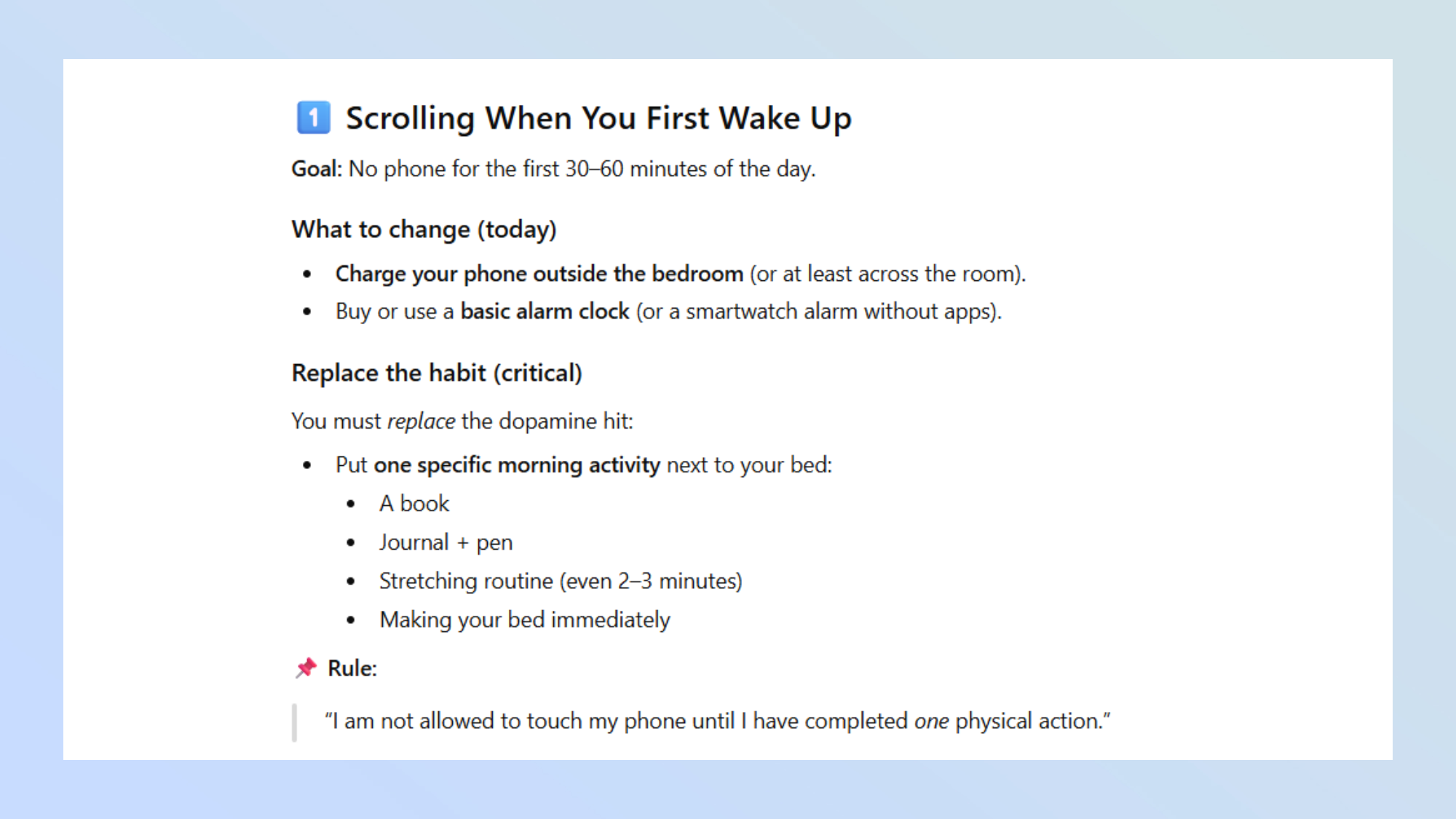
ChatGPT came back with a plan, broken down into stages, based on the times and situations that I highlighted. This included putting my smartphone in another room overnight, and getting up immediately to go for a ‘phone-free walk’ if possible.
It advised turning gray-scale on my phone to make it less exciting to look at, and moving all distracting apps to a harder-to-find spot on my phone. It even suggested logging out of all of the apps when I’m not using them, adding barriers to use.
It then took the extra step of offering up some suggestions of what I could do with my time instead of scrolling on social media or automatically opening my phone, offering a list of more productive apps.
Making a plan

One of the best ways to use ChatGPT is to ask follow up questions. It can be easy to ask the initial prompt and then leave it at that, but a second request can unlock a lot more information.
I asked ChatGPT to create a monthly plan that could help me get used to this new system, including some initial steps to make, as well as a daily plan that could help me get a bit more on track.
To do this, the chatbot broke things into four weeks, each with a different goal. First, becoming aware of the habit and trying to note when it was most prominent, aiming to avoid those behaviors.
In week 2, the focus is changing my morning behavior, finding new habits to start my day better off. Week 3 and 4 then revolved around trying to improve my behaviors going forward to stop this happening all together.
Using ChatGPT for habits
I have found that ChatGPT is an especially great tool when it comes to setting or breaking habits. The best way to set it up for this is to give it as much detail about you as possible.
Explain what you are trying to change and give ChatGPT all of the factors that you can think of. I recently managed to get back into running after a long period off by using ChatGPT to break some of the hurdles holding me back.
I’ve done the same with getting a better morning routine, as well as a number of other habits and behaviors that it has helped me with.

Follow Tom's Guide on Google News and add us as a preferred source to get our up-to-date news, analysis, and reviews in your feeds.