Get all your news in one place.
100's of premium titles.
One app.
Start reading
Tom’s Guide
Tom’s Guide
Technology
Camilla Sharman

I asked a lawncare expert how to save my brown, dry lawn — these are the rules for August

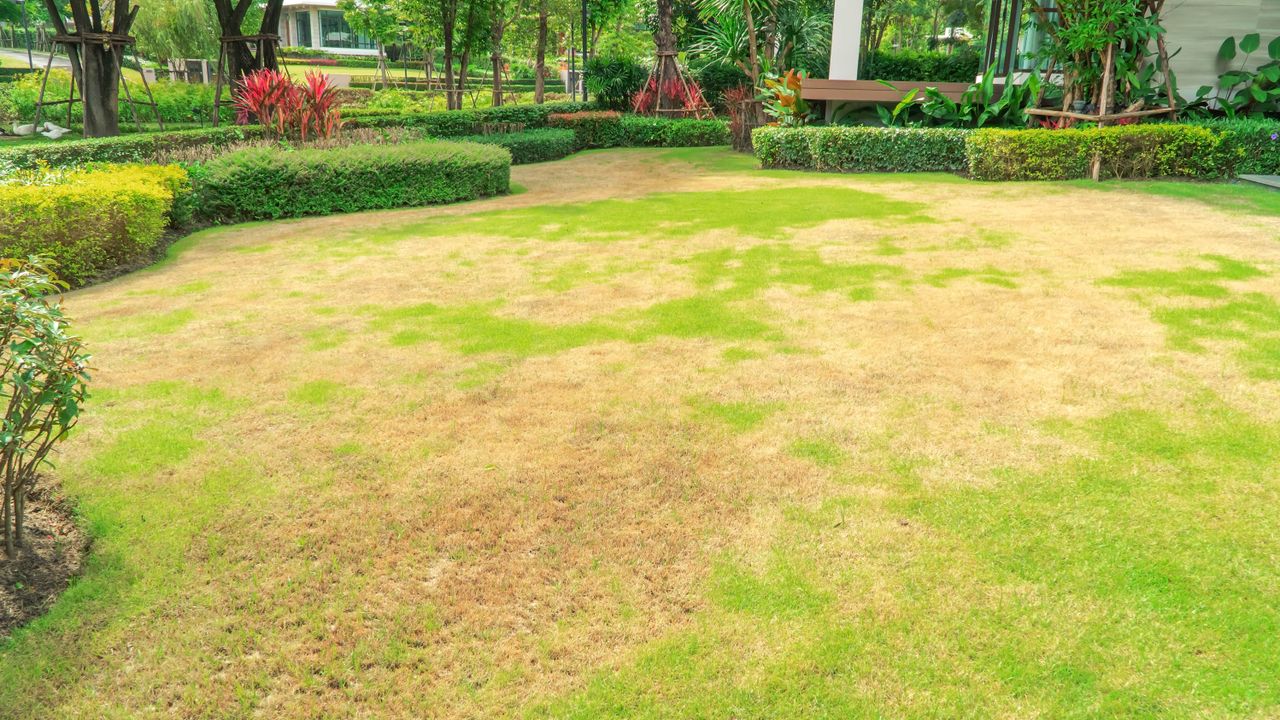
A lawn which is yellowed and damaged.

Relentless summertime heatwaves, paired with consistently high temperatures and scarce rainfall, have left our once pristine lawns looking brown, patchy and parched. With drought declarations and strict water restrictions in many areas, restoring that lush lawn back to its former glory seems almost impossible.

Making matters worse, as we step into August — traditionally the second-hottest month in the year following July — the forecast shows the extreme heat isn’t letting up anytime soon.

The unpredictable climate has left gardeners wondering what to do with their lawns and how to care for them in August. To solve the conundrum, I asked Chris McIIroy, lawn care expert at The Grass People, to share the dos and don’ts of tackling lawn care this month.

The dos and don'ts of lawn care in August

Don’t dethatch

(Image credit: Shutterstock)

Removing natural debris that has settled on your lawn might seem tempting and help watering efforts, but in peak summer, the experts warn against it.

McIIroy says, “Dethatching in August is generally not recommended. The process can be quite stressful for your lawn, and combined with the summer heat, it could do more harm than good. It’s best to wait until the cooler, more forgiving months in early fall for dethatching.”

Do mow

(Image credit: Shutterstock)

Keeping a lawn a little bit longer in a heatwave can provide shade for the turf, but if grass is growing at a healthy rate, giving it a light trim when the temperatures aren’t too high can be helpful.

McIIroy says, “Mow your lawn regularly, aiming for once a week. However, adjust the frequency based on growth rates and weather conditions. If your grass’ growth is stunted, maybe leave it 10 days between mows.”

But if the conditions are too dry, he suggests keeping your grass a little bit longer to help retain moisture levels.

He also explains that raising the mower blade and keeping the grass a touch longer can also help, as the longer blade shades the soil and assists with moisture retention. “You should also raise the mower’s setting if the weather gets damper and moss starts to reappear,” he adds.

Don’t leave clippings on the lawn

(Image credit: Shutterstock)

Some gardeners believe leaving cut grass blades on the lawn might provide protection from the heat, but McIIroy warns it can actually do the opposite. “Clippings actually trap heat, raising the temperature around the turf, and he adds. “The humidity created by the heat and moisture can create the perfect breeding ground for bacteria.”

Bacteria can harm water and nutrient flow and cause the grass to wilt, turn yellow or copper-red.

Do water

(Image credit: Shutterstock)

Lawns will be in need of hydration after the repeated hot weather spells combined with little rainfall.

But McIIroy says that watering is tricky right now, especially for those in the U.K. and U.S. who have water use restrictions.

However, if you aren’t restricted, he says, “Water early in the morning so hydration reaches the roots without evaporating first. Focus on giving it a deep soak once or twice a week to encourage deep root growth.

“You can also use a wetting agent to enhance efforts and to ensure water breaks through the tough turf.”

Lawncare essentials we love

More from Tom's Guide

Sign up to read this article
Read news from 100's of titles, curated specifically for you.
Already a member? Sign in here
Related Stories
Top stories on inkl right now
One subscription that gives you access to news from hundreds of sites
Already a member? Sign in here
Our Picks
Fourteen days free
Download the app
One app. One membership.
100+ trusted global sources.