The Hubble Space Telescope may have just celebrated its 35th birthday on April 24, but it's still providing groundbreaking astronomy.
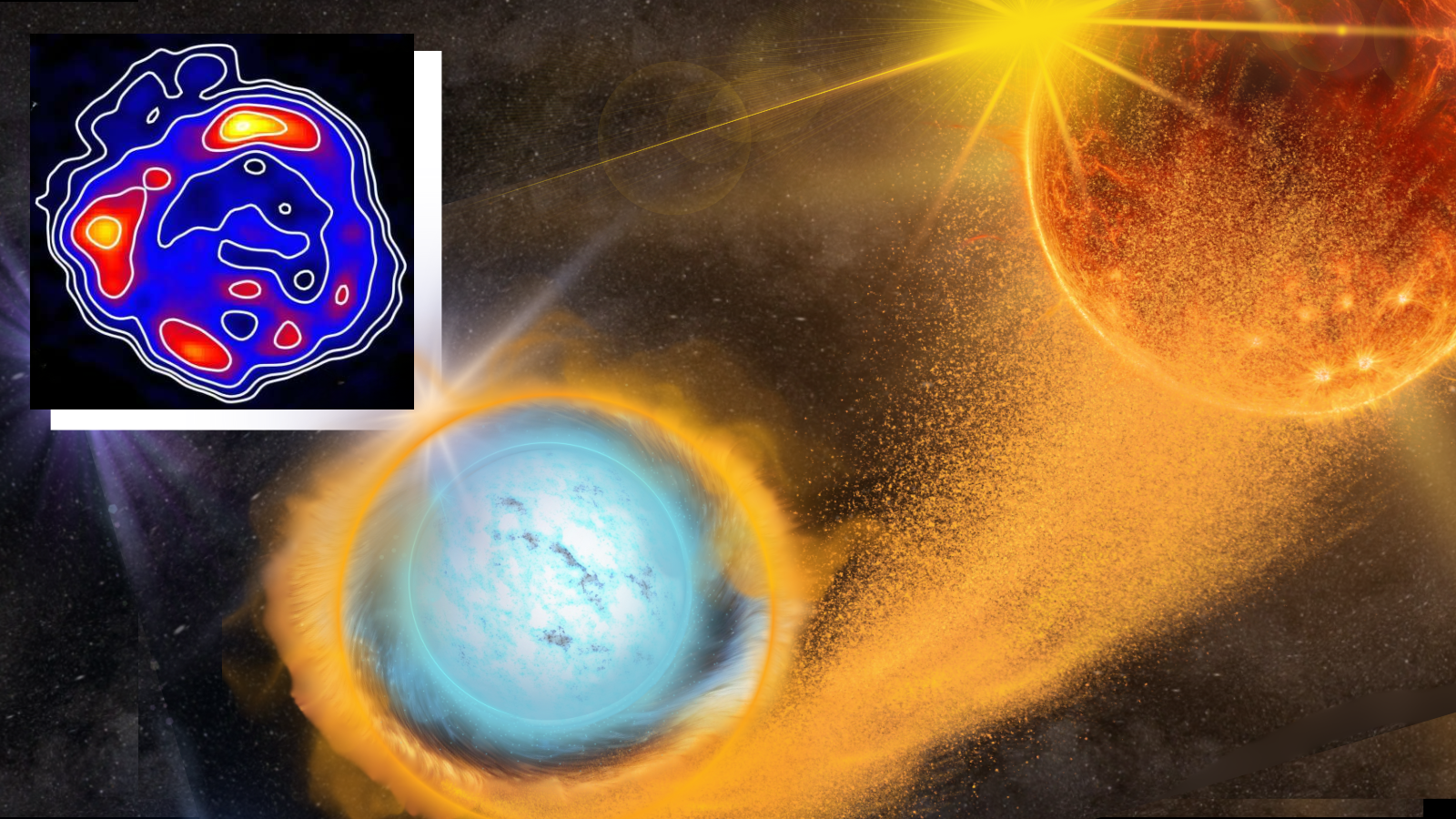
Case in point: Astronomers have used Hubble along with an array of other telescopes including NASA's Chandra X-ray space observatory, the Australia Telescope Compact Array (ATCA) and the Parkes 64-meter telescope, to explore supernova wreckage in the Large Magellanic Cloud (LMC), a satellite galaxy of the Milky Way.
The supernova remnant in question is MC SNR J0519–6902, first discovered in 1981. This wreckage has a ring-like structure that is around 26 light-years in diameter — that's wide enough to fit the entire solar system across it about nine times! One of the mysteries that surrounds MC SNR J0519–6902 is exactly what violent event created it. Astronomers have long suspected that this LMC supernova remnant is the remains of a destroyed white dwarf star, but the exact details of that explosive event, called a Type Ia supernova, have proved elusive.