
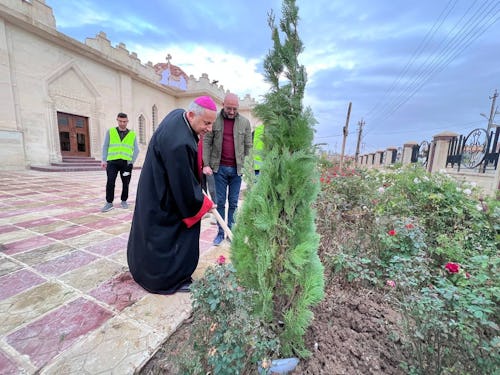
Suad Jassim remembers the terror she felt when ISIS first occupied her city. The extremist group captured Mosul in northern Iraq in 2014 and occupied it for three years. By 2017, intensive bombing had destroyed about 65% of the city’s buildings. “We weren’t even able to leave the house,” Jassim, 48, says. “We were living in fear.”
Mosul had once been known as “the Green City.” Trees had lined the avenues; there were forested valleys. But the intense warfare during ISIS’s occupation ravaged much of this vegetation. “ISIS cut some of the trees. Otherwise they were ignored,” says Abdullah Al-Dabbagh, chief gardener at Mosul’s Northern Technical University. “Nobody took care of them and they died. Life stopped.” Pollution, desertification, urban expansion, and flooding also played their part. By 2021, the Green City had turned gray.













