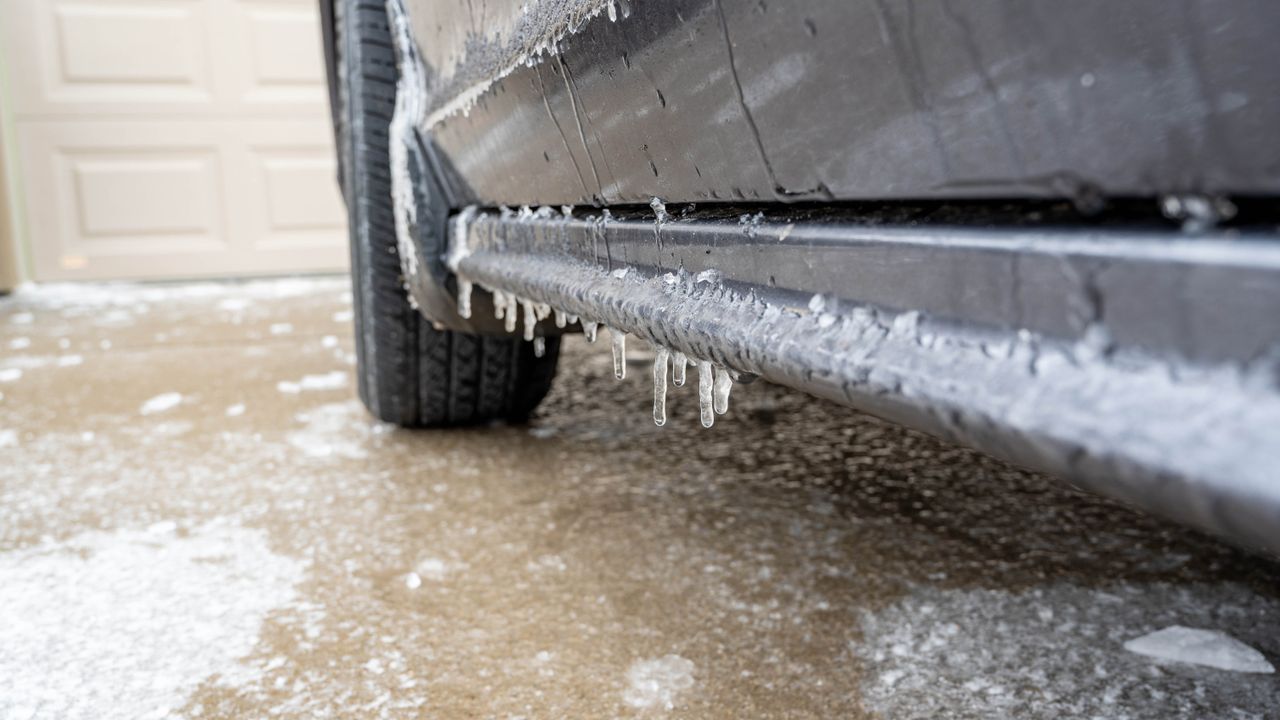
If you’ve had heavy snowfall recently, it’s important to know how to remove ice from your driveway. As snow melts and refreezes overnight, it can quickly turn into a slick, hazardous surface that’s risky to walk or drive on.
If your driveway has iced over, clear it before attempting to drive away. Driving on ice increases the risk of losing control of your vehicle and having an accident. The good news is that de-icing a driveway is a straightforward task — and it can be done with or without salt.
What you’ll need
- Metal shovel
- Kitty litter or sand
- Rock salt or
- Rubbing alcohol
- Calcium chloride
- Magnesium chloride
1. Clear away snow and improve traction
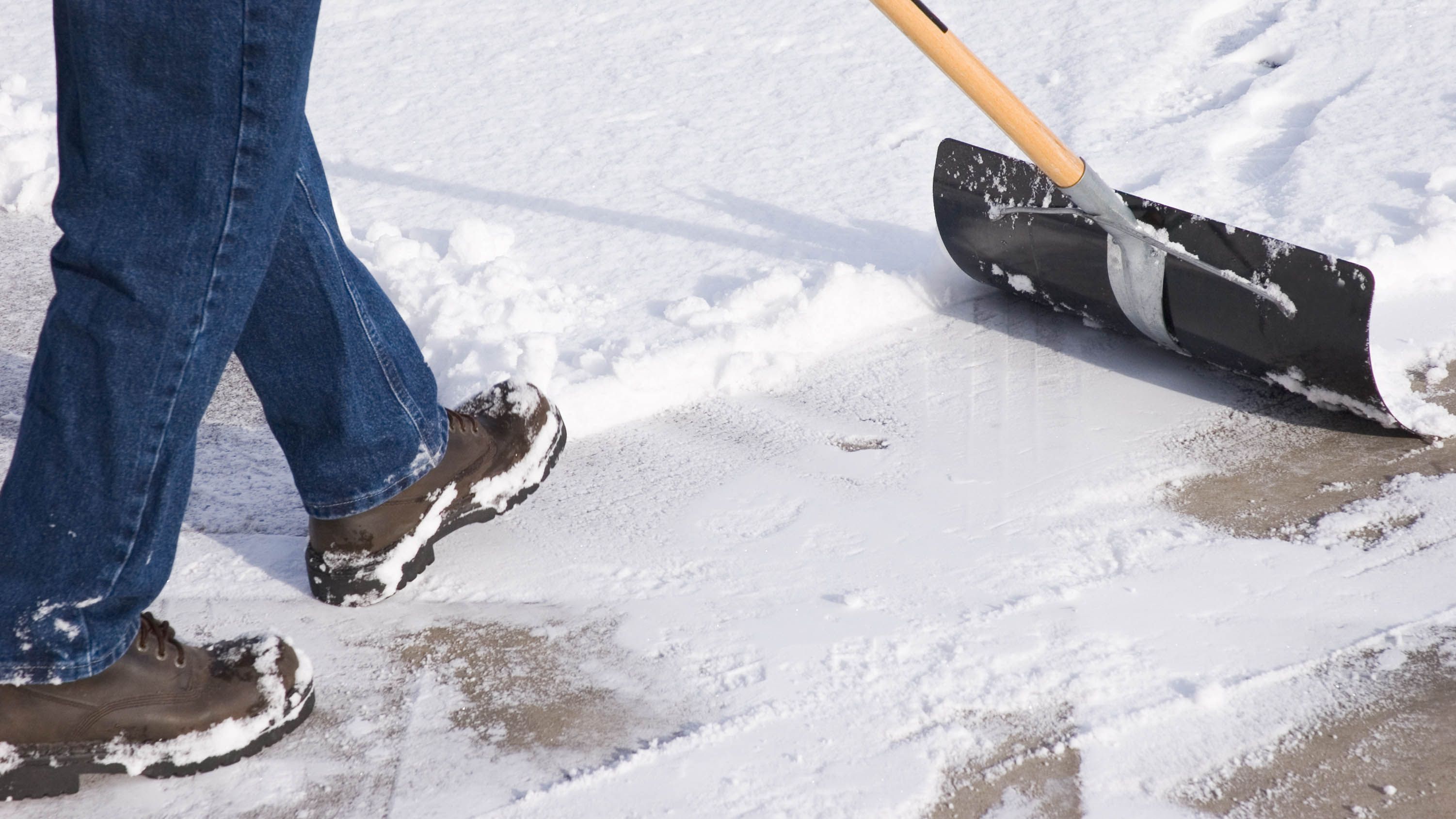
First of all, grab a metal shovel and remove any immediate snow from your driveway. This is best to do even if ice isn’t obvious at first, as it may reveal a hidden layer underneath. Use a sturdy metal shovel for best results. If you’ve got a much longer driveway, you can alternatively use a snow blower.
Once the ice is revealed, lay down some sand or kitty litter where you plan to stand. This will give you traction while you work and help prevent slips.
2: Choose the right de-icer for your driveway

Now the ice is clear to see, you can melt it more easily. You’ve got a few options here:
Rock salt: The most traditional de-icer, which can be applied using a hand spreader. Be aware that rock salt can be harmful to your lawn and flowerbeds. It’s also toxic to cats and dogs and can irritate their paws.
Rubbing alcohol: Rubbing alcohol has a very low freezing point (approximately −128°F / −89°C), so it won’t refreeze once applied. You can pour it directly onto the ice or dilute it 50/50 with warm water in a spray bottle. However, it’s also toxic to animals.
Calcium chloride: Calcium chloride melts ice faster than rock salt and works at lower temperatures. Like other chemical de-icers, it can still be toxic to pets.
Magnesium chloride: Magnesium chloride is an effective de-icer and is more pet-friendly than most alternatives. It’s available in flake or pellet form and can be scattered across the ice.
3: Apply, wait, and remove the ice

Apply your chosen de-icer evenly across the icy areas for best results. After application, wait 15–30 minutes for it to take effect, depending on the thickness of the ice and the outdoor temperature. If you’re using a dedicated commercial de-icer, follow the manufacturer’s instructions for application and wait time.
Once the ice has partially melted, use your shovel again to remove the loosened ice from the driveway. Reapply your de-icer and repeat the process as necessary until the surface is clear.
Does vinegar melt ice on the driveway?
While some sites recommend using vinegar as a de-icer, we wouldn’t recommend it. This is because the freezing point of vinegar (28 degrees) is not much lower than water, so if you’re applying it in these temperatures, you’re just adding to the ice.