
Get all your news in one place.
100’s of premium titles.
One app.
Start reading
Woman & Home
Woman & Home
Lifestyle
Samantha Priestley

Yoga is a low-impact way to strengthen and stretch your muscles: 8 ways to try it as a workout

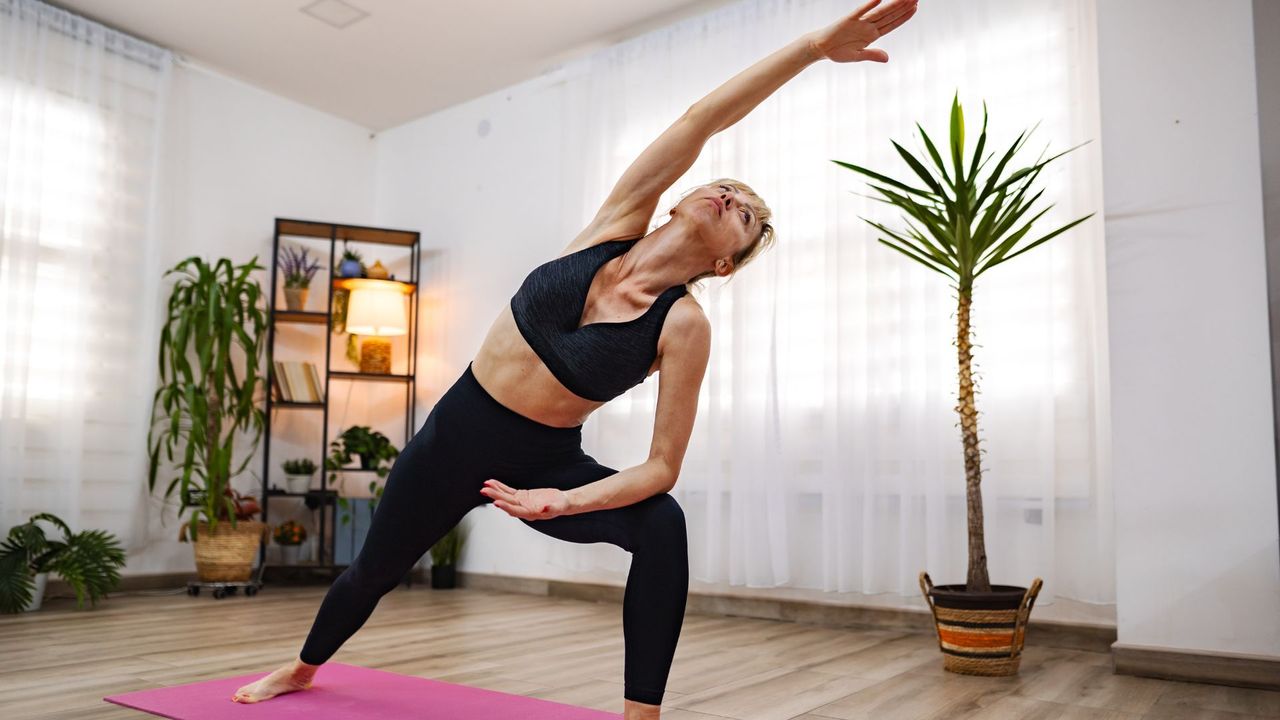
Woman practicing yoga as a workout in her living room.

Yoga is often perceived as a gentler form of exercise, but by focusing on faster flows and different sequences, you can also do yoga as a workout. Adding higher-intensity elements will engage and strengthen your muscles in a completely different way from your regular practice.

Yoga engages both mind and body, and many poses are, by default, a form of strength training. For example, the crow pose works to strengthen the muscles in the upper body by forcing us to hold our own weight on our shoulders, arms, and back. Most poses use your body strength as the primary source of resistance, but some will offer a higher-intensity workout than others; ideal if you want to use yoga for weight loss or get stronger.

The type of yoga you do will also make a difference when it comes to raising your heart rate and pushing your muscles. Some forms, for example, yoga nidra and yoga for beginners, offer countless benefits but are lower intensity. In contrast, hot yoga or Ashtanga or power yoga will offer a more intense workout, but are all very different from one another.

We consulted certified yoga teachers to find out what changes or additions you can make to your regular practice to turn it into more of a workout and to strengthen muscles. Of course, what constitutes a workout will differ for everyone depending on factors like age, fitness and ability, so we've suggested tweaks that should work for everyone.

How to do yoga as a workout

1. Add in dynamic sequences

The more you move your body, the higher your heart rate will get. If you're looking to work out to improve your cardiovascular health and endurance, incorporating some dynamic movements into your yoga practice will be essential.

"Adding gentle pulses or controlled micro-movements within poses can significantly raise the intensity. These small actions target stabilising muscles and quickly create heat in the body, delivering a workout effect without high impact," explains Sunita Devi, Lead Teacher at at Hotpod Yoga.

You can also include faster-paced movements between poses, explains certified yoga instructor, Michelle Polizzi, adding, "you could modify your sun salutation to include a lunge instead of a warrior one, then pulse your legs three times while in the high lunge.”

Lunges engage the quadriceps (thigh muscles), gluteus maximus (buttocks) and the adductor magnus (the muscles on the insides of your thigh). (Image credit: Getty Images)

2. Integrate strength-building poses

Choose yoga poses that target and engage major muscle groups, known as compound exercises. Holding these poses and focusing on proper alignment will help build muscle strength over time.

If you want to turn your yoga practice into a workout, "think strength first, stretch second," advises certified yoga instructor Sunita. "Rather than collapsing into poses, focus on actively holding them. In standing postures like Warrior II or Tree pose, engage the legs, draw in the core, and lift through the spine. When poses are treated as strength holds rather than stretches, the body works harder and more productively."

By focusing on these poses, you'll create a higher-intensity, efficient cardio workout, but you'll also build strength without the need for equipment. The benefits of strength building are endless and range from improved bone density and cardiovascular health, to better balance and tone. One of the main symptoms of perimenopause is muscle loss, which can inhibit movement and flexibility over time - so strength building is particularly important as we get older.

This is where yoga can really help; a study by the University of Oklahoma found that after just eight months of yoga, participants experienced serious improvements in leg strength, blood pressure, and heart rate.

Here are three strength-building yoga poses to add to your routine:

  • Warrior poses: As pictured above, warrior pose strengthens and stretches the legs and buttocks, hip flexors (the front of your hips), and the tiny muscles that support your shins.
  • Plank variations: The classic plank will target your core muscles predominantly, along with your shoulders and lower back.
  • Chair pose: Much like squatting, chair pose (as pictured below) engages the entire legs from the buttocks and thighs to the calves and smaller muscles around the ankles.
The chair pose will also help you engage your core muscles. (Image credit: Getty Images)

3. Add in some light weights

While we already use our own body weight for resistance in yoga, you could also add in some wrist or ankle weights to increase the intensity and to really help strengthen core muscles. The more resistance you put against yourself, the harder your body has to work to overcome it. In turn, you'll build muscle, and all that extra energy will also help burn calories.

There are lots of yoga movements you could easily add weights to, such as a goddess pose with bicep curls, a bridge pose with a chest press, or a warrior pose with weighted shoulder taps, turning even the most relaxing yoga practice into a strength training workout.

To build up the intensity even further, try doing higher repetitions with the weight (between 15 to 20 reps). Not only will this help to get your heart rate up, but it'll also help build muscle as you put your body under a significant stressor for a longer amount of time through the same workout.

(Image credit: Getty Images)

4. Include high-intensity intervals

Yoga can also be practised in intervals if you want to add some cardio (or extra weight-based elements) to your workout. Simply integrate bursts of movement like jumping jacks, high knees, and other easy cardio exercises between yoga poses, suggests Polizzi.

These intervals elevate your heart rate and boost the cardiovascular benefits of your yoga practice, without forcing you to maintain a consistently high effort. This approach also means you can start doing yoga as a workout without having to increase the time spent on the mat. You also don't require any extra equipment.

"Add in some mountain climbers into a plank," suggests the teacher. "Or move from a low lunge into a standing tree position while on one leg, which will also help you get stronger."

5. Try power or Vinyasa yoga

Power yoga and Vinyasa classes often involve a faster-paced flow, which incorporates both strength and cardio elements. These styles can provide a more intense workout compared to slower-paced yoga classes.

Tony Horton, a certified personal trainer, says these are programs he personally recommends clients incorporate into their programs. "Combine a seamless Vinyasa flow with high heart rate movements like high-rep leg, ab, and core movements. A higher-paced power yoga sequence intertwined with the Vinyasa style will certainly get the heart rate up and burn more calories," he says.

6. Hold the poses

Even the gentlest yoga routine can be challenging if you're not used to holding poses for an extended length of time. It's one of the reasons why Pilates for strength training is such a popular workout.

To practice yoga as a workout, really hold those poses for as long as you can and you’ll soon see how much strength it requires.

Another way to add a layer of intensity to your practice is to move slowly between transitions, explains Sunita. "This is one of the simplest ways to make your practice more demanding," she explains. "When you control each movement, particularly through strength-based transitions like plank or downward dog, your muscles are under tension for longer, which helps build strength and endurance."

As yoga is a complete mind and body workout, you’ll also be using meditation techniques and breathwork to help hold these poses for longer and longer each time.

7. Repeat the poses

One of the ways we can improve our fitness and grow muscle is by doing the same yoga pose repeatedly until our body becomes fatigued, research from Universidad Isabel I shows.

"Repeating flows rather than constantly switching poses encourages muscle fatigue and better technique," explains Sunita. "As the body tires, you become more aware of alignment and engagement - which is where strength gains are made."

You’ll soon be able to feel which poses are working your muscles more than others, so check in during your workout to see which ones feel the hardest. When you’ve identified which these poses are for you, repeat them a few times.

Remember, if you do want to do yoga as a workout, you must pay attention to your breathing. "Deep, steady breathing plays a vital role in sustaining effort. Strong nasal breathing helps regulate your nervous system and allows you to stay longer in challenging postures," explains Sunita. "If your breath becomes shallow, it’s often a sign that muscular engagement has dropped."

8. Try hot yoga

Another way to turn yoga into a workout is to try a different type of practice, like hot yoga. Admittedly, you won't be able to do this one at home, but adding heat can warm up your muscles, helping you achieve a greater range of poses. "Heat naturally increases heart rate, meaning that strength-based poses feel more cardiovascular," explains Sunita. "Warm muscles move more efficiently, allowing for dynamic sequences, while the body works harder overall to regulate temperature. The result is a practice that challenges strength, stamina and focus all at once."

Note that there is a difference between hot yoga, generally heated to around 37°C degrees and Bikram yoga, generally practised in 40°C heat.

How long do you have to do yoga for?

If you're new to yoga, sessions should start off gently and be around 15 minutes long each time. However, as with all types of workouts, it's different for every person. "You'll feel the positive mental impact of yoga in the first ten to 15 minutes," says Horton, who is also the founder of the successful P90X fitness program. “But it's difficult to say that there's a specific amount of time you'll need to acquire all the benefits of yoga in your workout. It’s nuanced and specific to the individual, so it's impossible to make a blanket statement about how long your workout should be."

As a middle ground for beginners, he says, "a well-paced half-an-hour will certainly count as an effective workout." Then as you become more familiar and proficient at the type of yoga you're doing, "you'll need to lengthen your yoga routine to 60 or 90 minutes" to see substantial changes.

Polizzi also notes that it's not just about the length of time you practice per session but how often you practice. "Yoga would count as a workout at 30 minutes of relatively fast-paced movement. At least three times a week would help you see results, but four or five times a week would help you see results more quickly." Wondering how many times a week you should practice for your goals? Take a look at our guide on how often you should do yoga.

Can you do yoga as your only exercise?

Yes, doing any form of exercise is better than doing none at all and, as Polizzi says, "Yoga could be your only form of strength training because there are many types of yoga, and you could add weights, add speed, or slow it down."

It also depends, as noted, on your age and fitness age, level, and what you want to achieve as to whether yoga just by itself will benefit you. For example, if you're looking to strengthen your upper body and core then research featured in a review from the University of Mississippi suggests this is more than enough. The report found that "yogic practices enhance muscular strength and body flexibility, promote and improve respiratory and cardiovascular function".

However, it's important to have some variety in your routine. "Doing the same exact type of yoga every day would add too much repetition to the same muscles while ignoring other areas, and our bodies crave variety," says Polizzi. "I also wouldn’t recommend doing yoga alone by itself because I think getting outside and moving is important for mental and physical health and enables a well-rounded wellness routine."

So, you could try learning how to start running as a beginner, increasing the amount of high-intensity cardio exercise you do outdoors. Or for something lower-impact, try walking or swimming as a workout alongside your regular yoga practice.

Is 20 minutes of yoga a day enough exercise?

If you're pushed for time, 20 minutes of yoga every day can be enough. But if you're looking to do yoga as a workout, you'll probably need to aim for more than that.

As Polizzi explains, “Twenty minutes of yoga per day could be enough exercise for certain days, but it isn’t enough overall. Keep in mind that the Center for Disease Control recommends 30 minutes of moderate exercise a day at least five times per week, along with two days of strength training, so this is a good rule to follow.”

Sign up to read this article
Read news from 100’s of titles, curated specifically for you.
Already a member? Sign in here
Related Stories
Top stories on inkl right now
One subscription that gives you access to news from hundreds of sites
Already a member? Sign in here
Our Picks
Fourteen days free
Download the app
One app. One membership.
100+ trusted global sources.