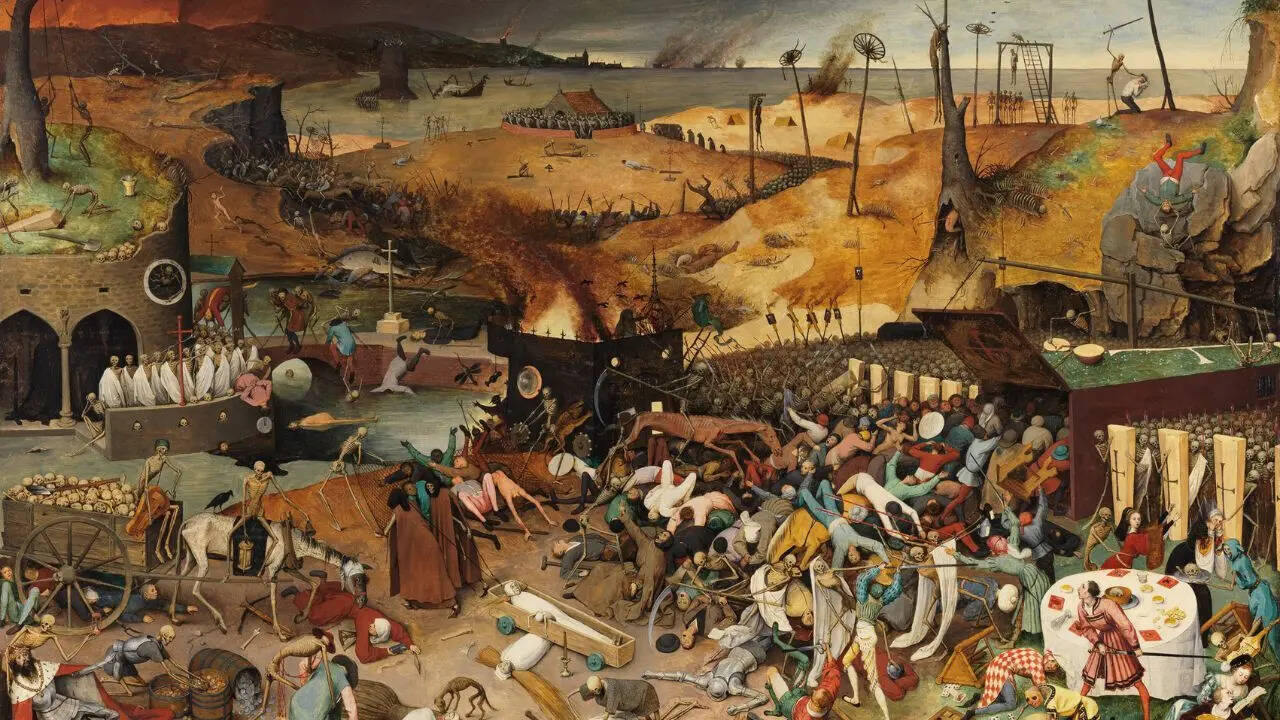
The Black Death, which happened between 1347 and 1352 in Europe, was a catastrophic demographic contraction that caused an enormous change in the demographics of Europe because of its deaths; by killing nearly half of the people living in Europe at that time, the Plague was also a major force that helped to create the cultural ‘Renaissance.’ The Plague destroyed the feudal system, and by destroying this system, the surviving workers (labour force) got higher wages and created a new wealthy class of people (middle class) who had discretionary surplus capital for art and other cultural activities. The Plague also caused a shift in thinking towards humanism because established ecclesiastical institutions did not stop the plague from occurring.
As a result, when people began to think differently about life and death, this new way of thinking created a foundation for the economic prosperity and cultural advances that took place during the Renaissance by moving from being concerned about death to being concerned about the human experience. Ultimately, the Renaissance changed the way humanity experienced the despair of death into a time of great creativity and achievement (Golden Age). This profound transition reshaped Western civilization, proving that even the darkest periods of history can catalyze extraordinary intellectual and artistic rebirth.