Get all your news in one place.
100's of premium titles.
One app.
Start reading
The Times of India
The Times of India
World
TOI World Desk

How Some Homes Survived: Researchers trace role of embers and design; findings from Creek Fire

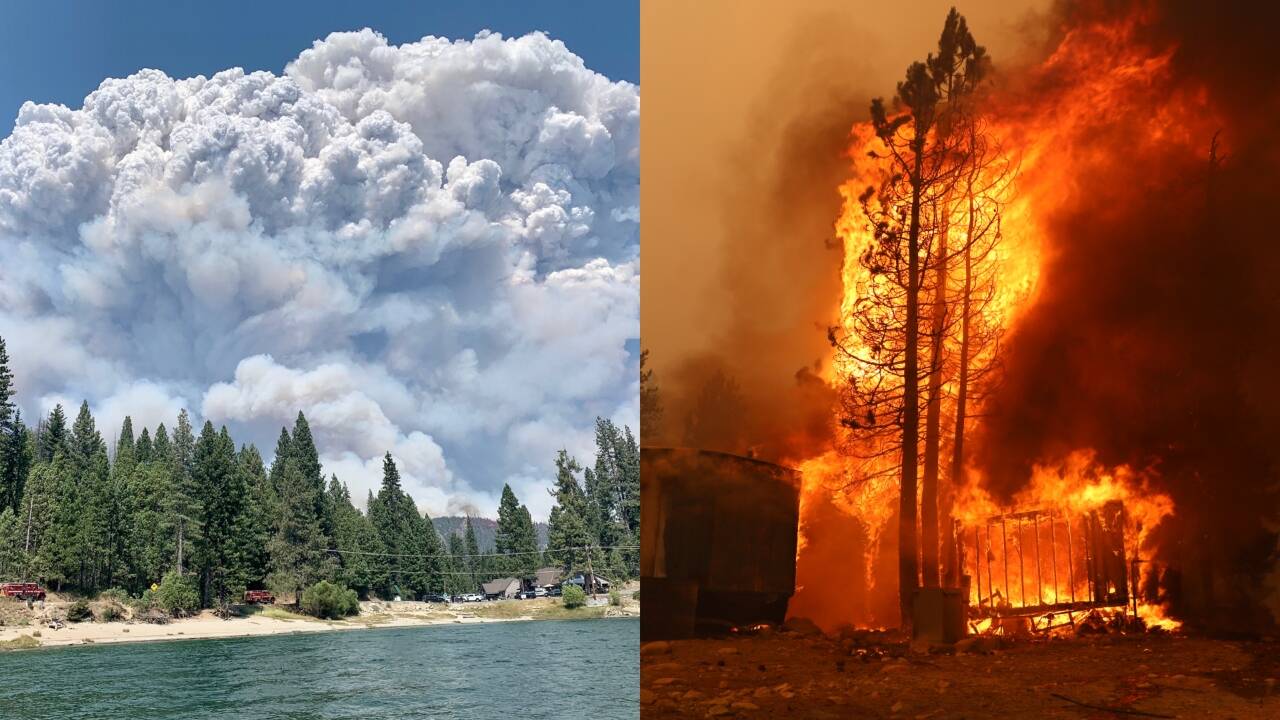
Within minutes, a wildfire can alter the surroundings of a house. Strong winds and exceptionally dry conditions drove the Creek Fire through the foothills north of Los Angeles on December 5, 2017. Burning embers were carried ahead of the main fire and ignited secondary fires around buildings, endangering homes in and around Kagel Canyon.

Get breaking news anytime, anywhere. Download the TOI app now!

A neighbour warned Wood Grigsby, who had lived in upper Kagel Canyon for about 12 years, about the fire while he was asleep. When he got outdoors, he discovered that surrounding properties were already in danger and that flames were spreading throughout the canyon. In contrast to nearby properties, his house was somewhat protected. Grigsby had cleared brush around the house and replaced some vegetation with gravel, reducing the fuel immediately surrounding the property.

As the fire advanced, Grigsby and his son started to move furniture off the porch and look for embers and spot fires. As surrounding homes burnt, they spent hours fighting tiny fires around the property. One house was demolished about 180 feet up the hill from Grigsby’s dwelling. The Creek Fire burnt 15,619 acres in Los Angeles County and destroyed 123 structures, including 60 homes, according to CAL FIRE figures reported the week it burned.

How the fire came to the neighbourhood

The blaze began at about 3:44 a.m. near Kagel Canyon, in the Angeles National Forest area, and grew during a time of extreme wildfire weather. in Southern California, when high winds may quickly spread fires through dry vegetation and carry burning material over the region. But for those who lived in the canyon, the threat wasn't only the main wall of fire. As foliage and structures were burnt, it generated embers that might be blown through the air and land on properties some distance distant. These embers can then spark fires in grass, leaves, landscaping material, fences or other combustibles.

Those small fires matter because wildfire researchers have found that homes can catch fire through several different channels. A dwelling need not be located in the primary fire front. Research by the National Institute of Standards and Technology found that firebrands, or smouldering embers, can ignite mulch near a structure, depending on their size and number, airflow, and the moisture of the material. Researchers looked at firebrands, or smouldering embers, and how they can ignite fires in mulch near structures. Their investigations demonstrated that igniting depended on the size and number of firebrands, airflow and the moisture level of the material. Once the spark ignites a tiny fire close to a house, the risk might rise quickly. A burning piece of landscaping material could send flames to siding, decks or other combustible portions of a building.

Why some homes did not burn

One big benefit Grigsby had before the fire came was that there was less flammable foliage just around the house. He'd cut the undergrowth surrounding the place and put in gravel instead of letting the plants grow right up against the building. So when embers landed, they had fewer fuels to catch fire with and travel to the structure. This form of planning is frequently referred to as constructing defensible space. The underlying principle is to eliminate as many flammable items around the house as possible, reducing the likelihood of the fire and embers coming into contact with the structure.

A 2019 study by Alexandra Syphard and USGS scientist Jon Keeley, published in the journal Fire , offers wider context. The researchers analysed building inspectors' reports for more than 40,000 wildfire-exposed structures across California between 2013 and 2018, comparing homes that survived with those destroyed. Statewide, structural characteristics explained more of the difference than defensible-space distance did, though destroyed homes were over-represented in the data

The most consistently important features were enclosed eaves, vent screens and multi-pane windows. These elements may reduce the chance of wind-borne embers entering a building. Multi-pane windows can also provide added protection from radiant heat. The authors also noted a limitation: many homes with more than 30 metres of defensible space or fire-resistant materials were still destroyed. That means no single preparedness step will ensure a house survives a big wildfire.

Embers can convert a little fire into a house fire.

Controlled wildfire studies further highlight the importance of material right adjacent to a home. In a separate NIST investigation, scientists tested several types of mulch beside realistic-scale building corners and exposed the area to showers of firebrands. The experiments found that firebrands could first create smouldering ignition in mulch, which could then transition to flaming. Under the tested wind conditions, flames from the burning mulch eventually ignited the adjacent building assembly.

The results help explain why the few feet around a house can be so important in a wildfire. A fire doesn’t have to look like a single big flame front. An ember can fall on a flammable item, ignite it and then offer the following step towards the building. Grigsby and his son weren't trying to stop the fire; they were guarding against exactly this kind of ember ignition. But Grigsby's story is not to suggest that homeowners should stay and fight an advancing wildfire. Conditions near a fire can change rapidly, and skilled firefighters risk a lot even with training, protective equipment and communication systems.

Sign up to read this article
Read news from 100's of titles, curated specifically for you.
Already a member? Sign in here
Related Stories
Top stories on inkl right now
One subscription that gives you access to news from hundreds of sites
Already a member? Sign in here
Our Picks
Fourteen days free
Download the app
One app. One membership.
100+ trusted global sources.