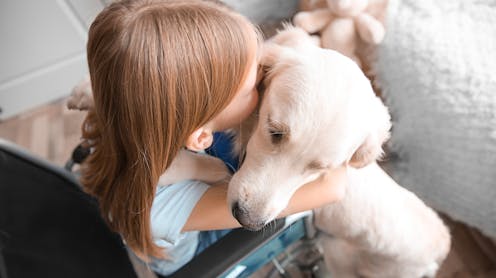
Children with cerebral palsy often have difficulty walking, which can affect their relationships with peers and overall quality of life. People with visual impairment can experience similar difficulties with balance, spatial awareness and negotiating obstacles. People with visual impairments have reported that their greatest barrier to improved mobility was the discriminatory attitudes of others. Guide dogs and assistance dogs have tended to improve the quality of life for people with visual impairments, bringing admiration from others and improving confidence and independence.
Dogs have been trained as mobility aids for ex-war veterans, while others have been trained to help wheelchair users manage daily tasks, such as picking up a dropped sock.