Get all your news in one place.
100's of premium titles.
One app.
Start reading
The Conversation
The Conversation
Armand Hernández, Investigador Ramón y Cajal en Ciencias de la Tierra y del Agua, Centro Interdiscilplinar de Química e Bioloxía (CICA), Universidade da Coruña

How ice, trees, coral and sediments help us reconstruct 2.6 million years of climate history: an introduction to paleoclimatology

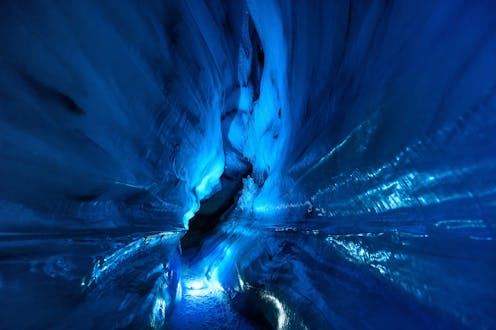
The ice in polar regions and mountains can give us information about the climate of the past. Ginger_polina_bublik/Shutterstock

Today’s climate change is man-made. The consensus in the climate science community is unequivocal, but in order to determine just how exceptional current climate change is, we have had to contextualise the present on a much longer time scale. To do this, scientists working in paleoclimatology (the study of past climate) use information from both natural and documentary sources from around the world.

Climate variability depends on both natural and anthropogenic factors. The former include a wide range of time scales, ranging from millions of years (tectonic movements) to tens of years (solar and volcanic activity). In contrast, anthropogenic factors only occur on a human scale, and much more intensively in the most recent decades of the industrial period.

Sign up to read this article
Read news from 100's of titles, curated specifically for you.
Already a member? Sign in here
Related Stories
Top stories on inkl right now
One subscription that gives you access to news from hundreds of sites
Already a member? Sign in here
Our Picks
Fourteen days free
Download the app
One app. One membership.
100+ trusted global sources.