
Get all your news in one place.
100's of premium titles.
One app.
Start reading
Times Life
Times Life
Aishwarya Kapoor

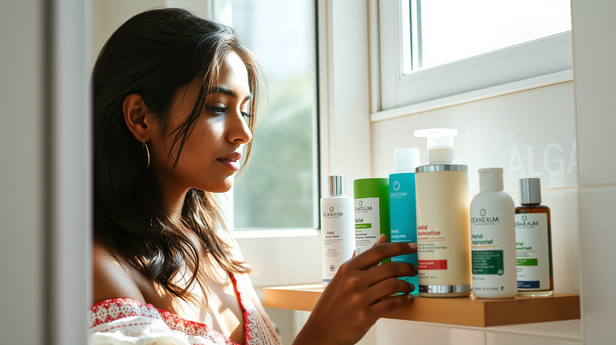
How Homegrown Indian Beauty Brands Are Finally Formulating for Indian Skin

The Shelf Was Never Built for You

Walk into any chemist in Bengaluru or Bhopal and the anti-ageing aisle still skews heavily toward brightening serums designed for skin that tans minimally and ages with fine lines rather than hyperpigmentation. That was not an accident. For most of the post-liberalisation era, the beauty industry in India was run on a simple assumption: that the global formulation was close enough. A moisturiser developed for temperate, low-humidity climates got a Hindi tagline and a local face on the packaging. The skin underneath was beside the point.

Indian skin is not one thing, it spans Fitzpatrick types III through VI across the country, carries a higher baseline melanin density than the skin most global formulations were tested on, and lives in climates that swing between 90 percent humidity in coastal Kerala and the desiccating dry heat of a Rajasthan summer. A single formulation cannot answer all of that. The multinational brands mostly did not try.

What Indian Skin Actually Needs

The concerns that show up most consistently in Indian skin are not the ones that drive the global anti-ageing conversation. Post-inflammatory hyperpigmentation, the dark marks left behind by acne, insect bites, or friction, is far more visible and persistent on melanin-rich skin than on lighter skin tones. Sun damage on Indian skin often presents as uneven tone and texture rather than the redness that triggers most SPF research in Western dermatology. Oiliness in humid climates coexists with dehydration in ways that confuse a product designed for one or the other.

Dermatologists at AIIMS and in private practice across Indian metros have been pointing this out for years. The formulation gap was real and documented. The gap in who was listening closed only when homegrown brands started building products from those clinical observations upward, rather than adapting a foreign brief downward.

The Ingredient Turn

What the best Indian brands did was not simply reach for Ayurvedic ingredients as a marketing hook. Some did, and the results were mixed, a face pack with turmeric and sandalwood that smells like a wedding but delivers little actives at the concentration used. The more serious formulations combined traditional ingredients with contemporary cosmetic chemistry. Bakuchiol, the plant-derived retinol alternative sourced from the babchi plant long used in Ayurvedic practice, became a genuine active in serums calibrated for Indian skin's tendency to react to synthetic retinoids in humid heat. Niacinamide at concentrations studied for hyperpigmentation on darker skin tones replaced the blanket brightening agents that worked by mild irritation.

Brands like Minimalist, Dot and Key, and Plum built their early reputations on transparency, publishing the concentration of every active, citing the dermatological basis for each formulation choice. That was new. The Indian beauty consumer had been sold on opacity for decades: a proprietary blend, a secret formula, a celebrity's word. The shift to legibility changed what the buyer expected to know before she spent her money.

What the Multinationals Missed

The multinational brands were not ignorant of the Indian market's size. They were slow to understand that size and specificity are different problems. A market of a billion potential buyers still requires products that work on the actual skin in the room. The homegrown brands had one structural advantage the multinationals could not buy quickly: their founders, their dermatologists, their early customers, and their feedback loops were all Indian. The iteration happened on Indian skin, in Indian climates, with Indian water quality factored into how a cleanser lathers and rinses.

Hard water, high in calcium and magnesium, is standard across most of North and Central India. It affects how surfactants perform, how residue builds on skin, and how a toner's pH interacts with what the tap water left behind. A formulation team based in Mumbai or Hyderabad notices this in user feedback within weeks. A team in Paris or New York does not have the same feedback signal.

The Shift Is Not Finished

The rise of Indian beauty brands has not resolved every gap. SPF formulations for deeper skin tones still lag, the white cast problem on melanin-rich skin remains inadequately addressed even by several Indian brands that otherwise get the brief right. Scalp and hair care for the full range of Indian hair textures, from fine straight hair in the Northeast to dense coily hair in parts of South India, is an area where the category is still catching up to the diversity it serves.

What has changed is the frame. The question Indian beauty brands are now asking is not how to localise a global product. It is what Indian skin requires that no existing product provides. That is a different starting point, and it produces different answers.

The brands that built their credibility on ingredient transparency and clinical specificity have also, quietly, changed what Indian consumers expect from a beauty purchase. You now read the label. You ask what concentration the niacinamide is at. You know that melanin-rich skin needs SPF as much as lighter skin does, possibly more, and you are less willing to accept a formula that leaves a cast. That expectation did not come from nowhere. It came from brands that treated Indian skin as the brief, not the afterthought.

Sign up to read this article
Read news from 100's of titles, curated specifically for you.
Already a member? Sign in here
Related Stories
Top stories on inkl right now
Our Picks
Fourteen days free
Download the app
One app. One membership.
100+ trusted global sources.