
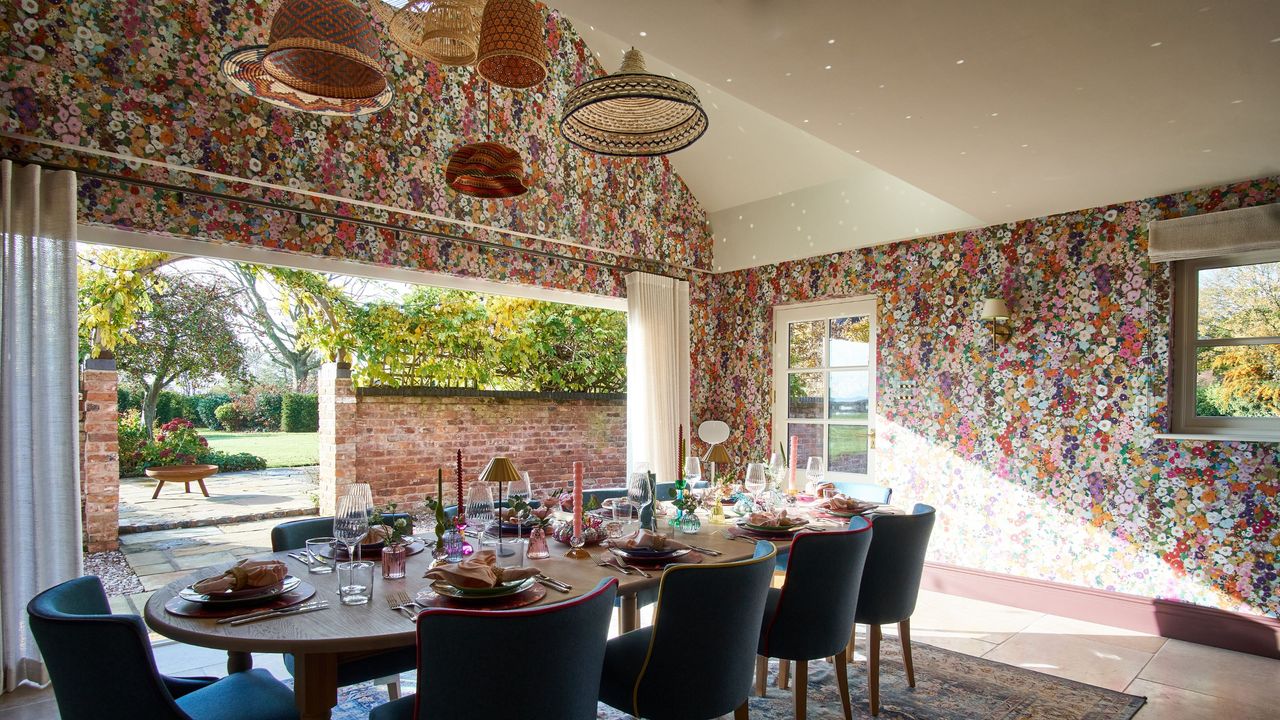
Wallpapering a room with awkward walls is far more challenging than a straight-lined, square space. However, an awkward wall is often the exact type of surface where wallpaper works best — to conceal and distract. So, if you have a room with limited square footage, a slanted ceiling, or even half-wall panelling, use wallpaper to create visual interest and a truly unique finish. And getting it right? Well, that just comes with practice.
Wallpaper expert James Mellan-Matulewicz, a designer at Bobbi Beck, explains, "Homeowners are often drawn to these irregular walls as a way to add personality and character to areas that might otherwise be overlooked, using pattern and texture to turn challenging walls like sloped ceilings or stairways into standout features within the home." But these irregular layouts, architectural features, and older surfaces all require extra planning and patience.

So, once you've studied the latest wallpaper trends and worked out what you want for that awkward attic room with slanted walls or your tiny powder room, read on to discover designers' best tips for wallpapering awkward walls.

"The main challenge when tackling how to hang wallpaper in awkward rooms is how the paper behaves at junctions, as angles, corners, and changes in ceiling height," says London-based interior designer Carina Raymond. "These factors can make things like a pattern repeat feel much more obvious."
Rather than plastering the panel on a smooth, flat surface, you have to think about how a print will curve or how it will lie next to a weird angle. If the design of the paper is too rigid or overly structured, it will be harder to place in unique spaces.
"Awkward architectural elements interrupt the flow of wallpaper and can make pattern matching particularly challenging, especially where designs need to line up across multiple surfaces," James Mellan-Matulewicz adds.
When applied haphazardly, "your print can draw attention to the architecture in a way that feels uncomfortable rather than intentional," warns Carina. However, when done right, it can work really well.
To understand how, below, I've shared how to wallpaper a few common 'awkward' walls (such as chimney breasts, alcoves, and window recesses), and how to avoid any wallpapering mistakes so you can enjoy a properly accented space.
1. Wallpapering a Slanted Wall

Slanted walls are the most common 'awkward wall' offender. But who doesn't love a cozy wallpapered ceiling idea? So, how do you get it right?
"With slanted walls, I tend to avoid very strict repeats," Corina says. Large or directional patterns are also more difficult to use on these types of walls. "They tend to emphasize irregular shapes and make any misalignment far more noticeable," adds James. Slanted walls naturally draw the eye upwards, highlighting even small errors.
"Patterns that feel more organic (whether that's painterly, floral, or soft geometrics) are far more forgiving as they move across angles," advises Corina. Smaller-scale prints and floral patterns will work particularly well, too, as they read more as texture and movement than a fixed repeat.
Once you've found the right type of wallpaper, start at the tallest point to achieve the best pattern placement and matching. "This may mean beginning in the middle of the wall, but doing so ensures the full drop and pattern are correctly positioned at the highest area," says James. Once you've done this, it is much easier to match the pattern neatly as you work into the smaller sections.
2. Wallpapering Short or Narrow Walls

Some spaces naturally have less wall to work with. Take powder room wallpaper ideas for example: the tiling, cabinets, and countertop space end up eating into most of the wall's surface area. The same problem arises anywhere there is a small or narrow wall.
"I actually love using wallpaper in narrow or transitional spaces like hallways or dressing rooms," says Corina. Rather than trying to minimize them, lean in. A confident wallpaper can bring rhythm and energy to a narrow or confined space, and prevent it from feeling like an afterthought.
Interior designer Holly Lamont, from Holla Design, adds, "Wallpaper can help add depth and interest without overwhelming the smaller rooms, particularly when paired with calmer finishes elsewhere."
3. Wallpapering a Stairway

Stairways tend to be an awkward (but lovely) space for wallpaper, as you'll be dealing with lots of corners, curves, and differing heights. But again, stairwell wallpaper is a style statement with a high payoff. So, what's the trick to making it work?
To start, ensure the wallpaper lengths are long enough for the stairway. "Most wallpaper rolls are around 10 meters long, but some are shorter, so always check the roll length before buying," says James. "This will ensure it will comfortably cover the longest drop or the highest point on the stairs." Most wallpaper brands, like Farrow & Ball, sell wallpaper at 10 meters per roll.
In general, it's wise to also expect higher wastage in stairways. To reduce this, opt for wallpapers with vertical pattern repeats, as they allow more efficient use of each roll.
Beyond just vertical repetition, consider suitable wallpaper for high-traffic areas — stairs are typically in constant use. As such, these spaces are prone to scuffs and marks, so textured wallpapers tend to wear better and are more forgiving over time. "Small-scale, busier prints are often your best friend in these situations as they visually soften inconsistencies and distract from tricky joins," adds Holly.
Lastly, James recommends working in manageable sections. "Stairway walls are usually tall and awkward, so shorter drops or divided sections are easier to handle and position accurately."
FAQs

Is it Better to Drench an Awkward Space or Use Wallpaper as an Accent?
In awkward spaces, "I usually prefer to wallpaper the whole room rather than creating an accent wall," says Corina. Drenching the space helps disguise awkward junctions and creates a sense of cohesion, whereas stopping and starting can make the room feel more chopped up. Incorporating a pattern drench often results in a calmer and more resolved atmosphere.
Are Prints or Solid Colors Better as Wallpaper on Awkward Walls?
As mentioned, smaller, organic prints are generally more forgiving in awkward spaces, as they don't compete with unusual angles or proportions.
That said, bolder patterns can work beautifully too if they're used confidently and wrapped around the space. "It's less about playing it safe and more about choosing a pattern that feels intentional and suits the character of the room," says Corina.
Wallpaper on awkward walls is not something to shy away from. In fact, these unique spaces produce the loveliest moments when decorated with confidence.