
Get all your news in one place.
100's of premium titles.
One app.
Start reading
The Conversation
The Conversation
Environment
Nic Rawlence, Senior Lecturer in Ancient DNA, University of Otago

How did ancient moa survive the ice age – and what can they teach us about modern climate change?

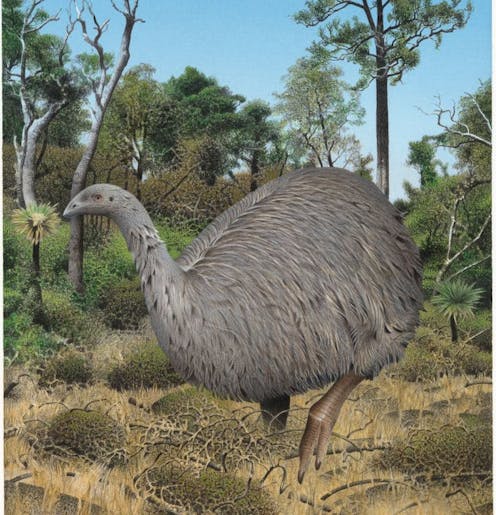
Artist's impression of an eastern moa in its podocarp forest habitat. Paul Martinson. Te Papa Tongarewa/Museum of NZ, CC BY-NC-ND

One species of iconic moa was almost wiped out during the last ice age, according to recently published research. But a small population survived in a modest patch of forest at the bottom of New Zealand’s South Island, and rapidly spread back up its east coast once the climate began to warm.

What we’re learning about this remarkable survival story has implications for the way we can help living species adapt to climate change, and how we conserve and restore what may be important future habitats.

Sign up to read this article
Read news from 100's of titles, curated specifically for you.
Already a member? Sign in here
Related Stories
Top stories on inkl right now
One subscription that gives you access to news from hundreds of sites
Already a member? Sign in here
Our Picks
Fourteen days free
Download the app
One app. One membership.
100+ trusted global sources.







