
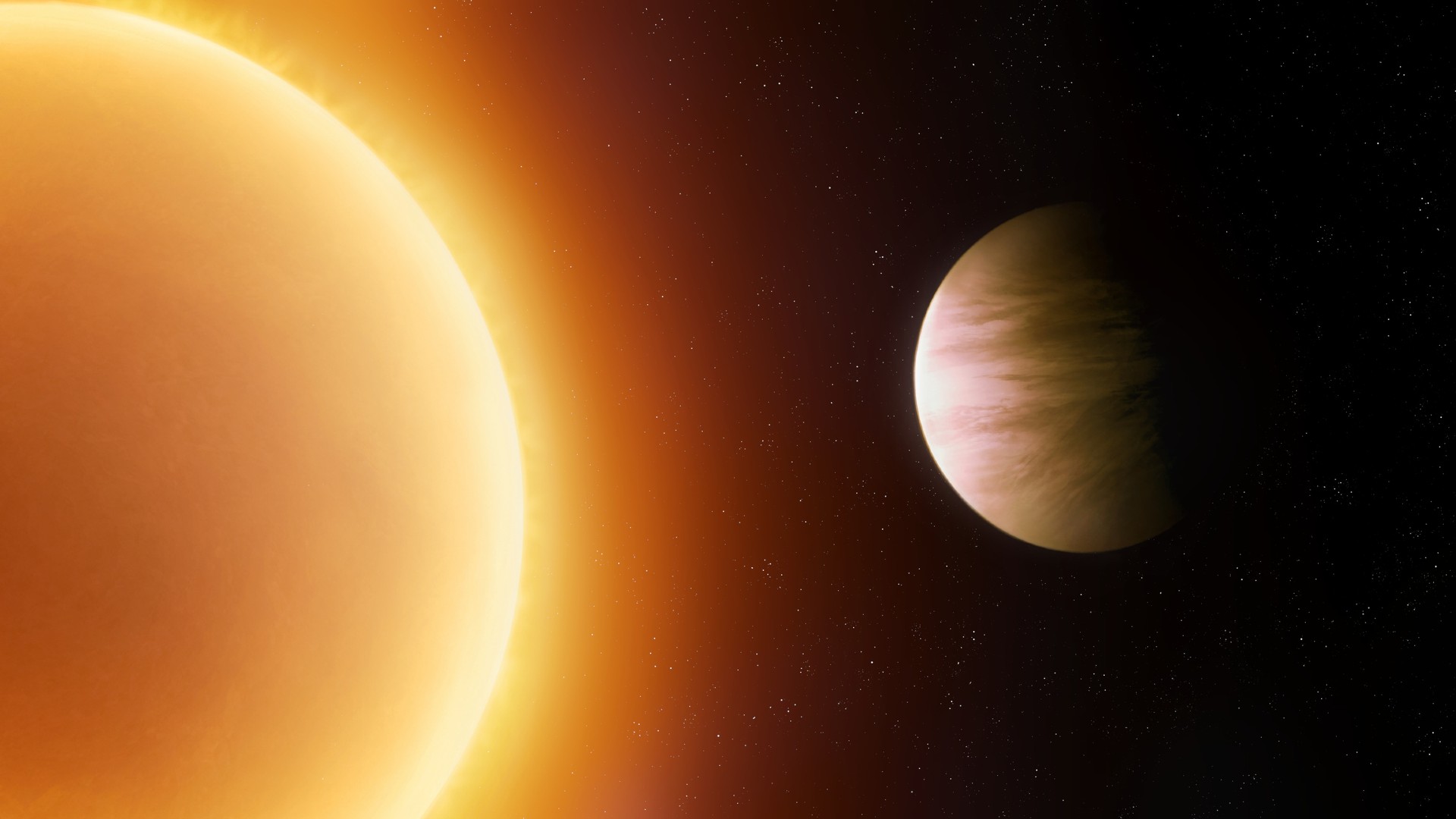
The famed science fiction author Isaac Asimov called them "ribbon worlds" — planets forced to always show one face to their parent star. The star side is locked in perpetual day, its sun never dipping below the horizon; indeed, its sun never even moving at all, fixed in place as if time itself stood still. The far side is trapped in perpetual night, a sky blazing with the light of thousands of stars, never knowing the warmth of its parent star.
And in between those two extremes, there's a special place: a terminator line, the boundary between night and day, a region of infinite twilight. Caught between the two extremes, this ribbon that stretches like a girdle around a planet might — might — just be a home for life, neither too hot in the never-ceasing glare of the star nor too cold in the infinite night.




