
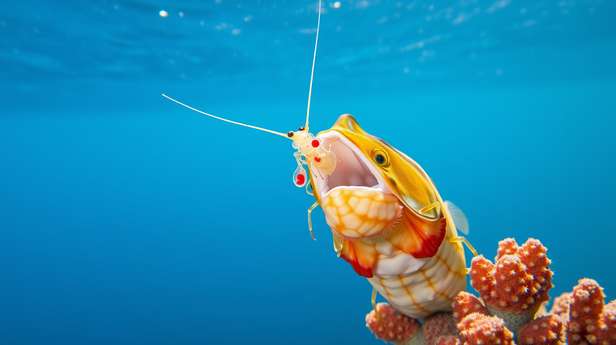
The Cleaning Station Is a Real Place
On a coral reef, certain spots function like appointment desks. Cleaner shrimp, most commonly Lysmata amboinensis, the Pacific cleaner shrimp, and Ancylomenes pedersoni, the Pederson cleaner shrimp, set up at fixed locations on the reef and stay there. Fish learn where these stations are. They return to the same spots repeatedly, sometimes queuing when another fish is already being serviced.The shrimp signals availability through a rocking, side-to-side dance. This is not incidental movement. Research on Ancylomenes pedersoni has documented that the dance is a specific behavioral cue, distinct from how the shrimp moves at other times, and that fish respond to it by adopting a solicitation posture: fins spread, body tilted, mouth open. The exchange has a grammar.A single cleaner shrimp can perform hundreds of cleaning interactions in a day. The shrimp picks external parasites, dead tissue, and food debris from the fish's skin, gills, and oral cavity. The fish gets relief from ectoparasites that would otherwise reduce its health and feeding efficiency. The shrimp gets a meal.














