
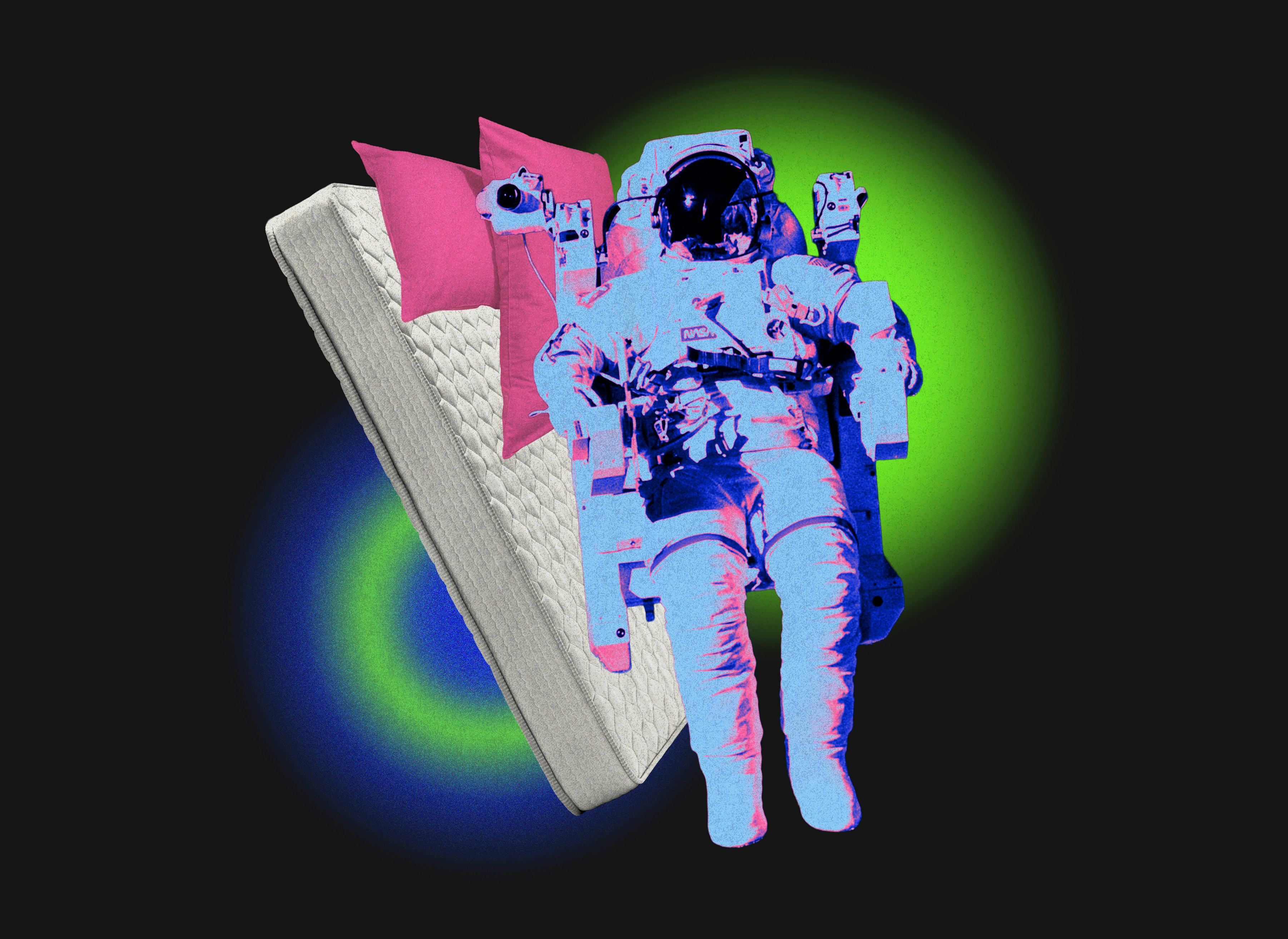
We all know that androids probably dream of electric sheep, but real-life astronauts are probably dreaming of quieter pastures. “The ISS is really noisy,” Dr. Kris Lehnhardt tells Inverse. Lehnhardt is the professor of emergency medicine and the director of space medicine at the University of Texas Health Science Center at Houston, and he points out that if you’re the kind of person who falls asleep to the sound of a whirring fan or other household appliances, you’d have more of that than you could handle on the International Space Station.
Sleeping on the ISS is not all about peaceful Earth views and the gentle hum of a Star Trek-style spacecraft lulling you into a contemplative mindset. The truth is, sleeping in space is not just louder, but way more difficult in a variety of ways — and more important to boot. So how does NASA solve for it? The answer is more essential than you might think.









