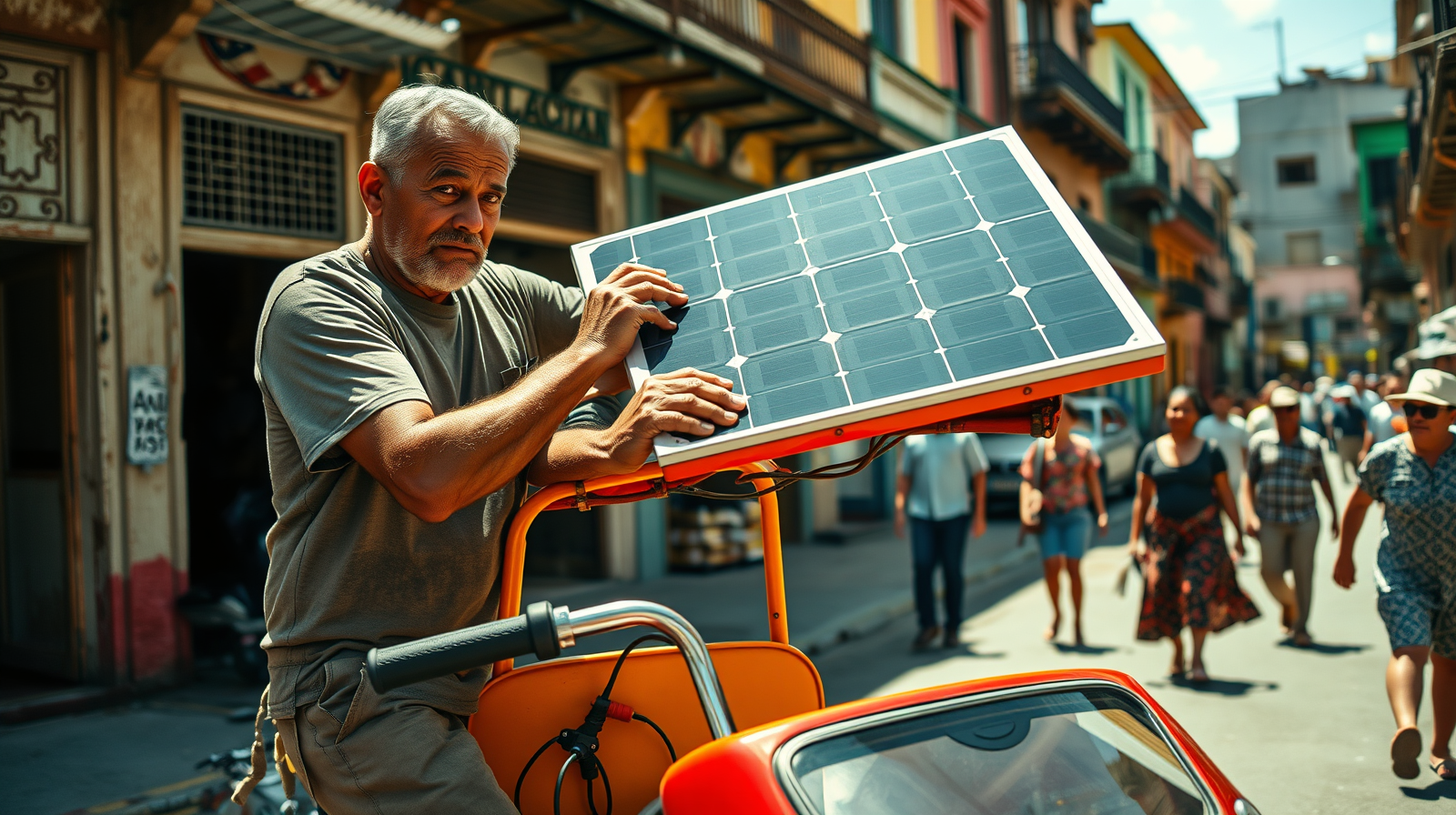
Cuba is in the middle of its worst energy crisis in decades. The national grid has collapsed multiple times since 2024, leaving millions of people without power for days at a stretch. As of early 2026, eight of the country's major thermal generation plants are offline, the ones still running operate at just 34 per cent of rated capacity, and the daily power shortfall regularly exceeds 1,500 megawatts. Fuel deliveries from Venezuela have dropped sharply, foreign currency reserves are too low to source alternatives, and a January 2026 US executive order imposing tariffs on countries supplying oil to Cuba has tightened the squeeze further. Against this backdrop, a 21-year-old from the outskirts of Havana has built something small, practical, and genuinely useful: a workshop that fits solar panels onto electric tricycles and gives the workers who depend on them a fighting chance of finishing their working day.
Cuba's fuel and electricity crisis is forcing workers into increasingly precarious transport situations