
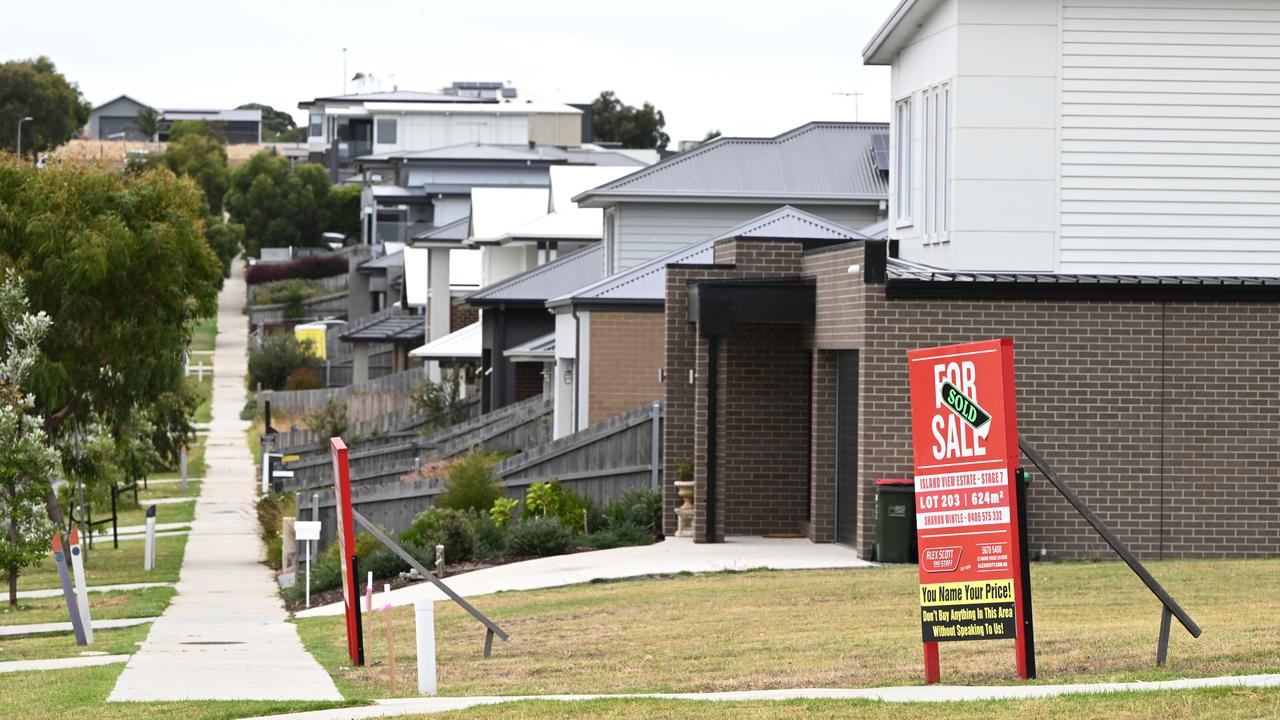
Australia is set to fall further behind on its bid to build 1.2 million new homes in five years.
Less than two years in, the nation is already more than 100,000 homes short of schedule.

The deficit is unlikely to be narrowed when the Australian Bureau of Statistics releases June quarter building data on Wednesday.
Seven quarters in, just over 308,000 new homes have been completed, at a rate of about 44,000 every three months.
Assuming a constant rate of progress, completions need to sit at 420,000 to meet the target by the end date of mid-2029 - a run rate of 60,000 per quarter.
Given the industry is already behind schedule, the required run rate is now almost 69,000 per quarter.
Master Builders Australia chief executive Denita Wawn remains optimistic, given the National Housing Accord has three more years to run but says forecasts by the construction peak body show an Everest to climb.
"We're going to fall about 260,000 odd homes short if we do not change policy settings," she told AAP.
Tax changes in the federal budget had made it less attractive for investors in new housing developments and additional funding for enabling infrastructure was taking too long, Ms Wawn said.
"We're still incredibly concerned about the time it takes for approval processes, which creates a lag and a cost impact.
"The other important factor is ensuring these changes promised around streamlining the National Construction Code occur as quickly as possible.
"The review process has now been going for nearly 12 months."
Workforce shortages were also constraining the sector's capacity.
Changes to migration settings to prioritise applicants with building skills were a positive but Ms Wawn called on the government to go further and allow international students to pursue apprenticeships in Australia.
Rising material costs exacerbated by the Middle East conflict and falling property prices were reducing feasibility for developers and challenging the supply picture.
Capital city dwelling prices fell 1.2 per cent in September, data firm Cotality revealed last week.
That extended the decline in the past three months to four per cent - the largest quarterly fall since the series began in 1980 - ANZ economists Sophia Angala and Jasmine Zheng said.
"Recent data suggests the slowdown is becoming increasingly broad-based across the capital cities," they said.
"Meanwhile, other indicators also point to softer momentum, as investor housing credit continues to moderate and building approvals recorded its second consecutive monthly decline."
The softness in the housing market is likely to continue following the Reserve Bank's fourth rate rise in 2026.
The Westpac-Melbourne Institute consumer confidence survey is likely to show a further fall in sentiment on Tuesday, with market pricing implying at least one more rate hike by mid-2027.
In August, the consumer sentiment index climbed six per cent but remained firmly in pessimistic territory at 88.9.
Weaker-than-expected jobs data has meanwhile dampened the expectations of Wall Street investors for a US rate hike.
The Dow Jones Industrial Average rose 0.49 per cent to close Friday at 51,176.96 points, the S&P 500 gained 0.73 per cent, to 7,722.72 and the Nasdaq Composite added 1.19 per cent, to 27,190.86.
Australian share futures were up 26 points, or 0.29 per cent, to 11,816.
The S&P/ASX200 rebounded 67.7 points on Friday, up 0.79 per cent, to 8,682.1, as the broader All Ordinaries rose 60.3 points, or 0.69 per cent, to 8,854.7.