Get all your news in one place.
100's of premium titles.
One app.
Start reading
Bangkok Post
Bangkok Post
Business

Honda targets hybrid EV leadership in the Thai market

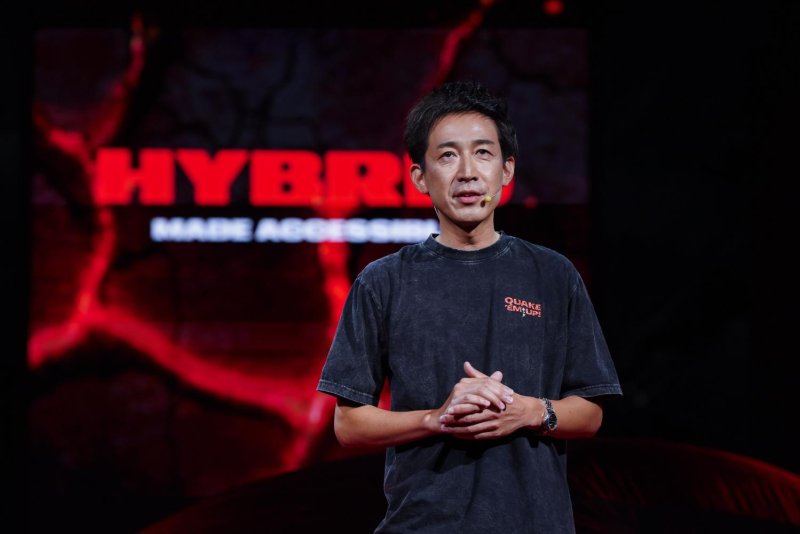
Mr Iwanami says hybrid EVs are expected to become more popular in Thailand, easing motorists' concerns about long-distance driving.

Honda Automobile (Thailand) is intensifying its strategy to challenge the Chinese-dominated electric vehicle (EV) market, announcing plans to make next-generation hybrid electric vehicles (HEVs) the cornerstone of its lineup.

By 2029, the Japanese automaker expects nearly 90% of the cars it sells in Thailand to be HEVs, aiming to counter the rapid rise of Chinese battery electric vehicles (BEVs), which dominate the market.

Honda wants to promote its "e:HEV" technology, which combines an electric motor with a petrol engine that can switch between generating electricity and powering the wheels.

Honda president and chief executive Koji Iwanami said the system offers significant advantages, including automatic recharging while driving and reduced fuel consumption, making it a cost-effective alternative to BEVs.

"Honda expects the e:HEV to outperform BEVs. These HEVs will help Japanese car makers gain market share in Thailand from Chinese BEVs," Mr Iwanami said.

The company recently introduced four new Honda City models in Thailand: the e:HEV RS, e:HEV SV, e:HEV V and VTEC Turbo. Honda projects sales of 40,000 units over one year, with 31,000 already sold between January and May 2026.

Honda targets total car sales of 76,000 units in Thailand this year, while the domestic market is expected to total 660,000 units.

Globally, Honda announced plans to cut the cost of its next-generation hybrid systems by more than 30% compared with previous versions, allowing the company to produce vehicles locally at competitive prices, directly challenging Chinese BEVs.

"Honda's car prices should be more attractive to customers who want new technology but not BEVs," Mr Iwanami said.

The company also urged the Thai government to extend local content requirements, currently applied to internal combustion engine (ICE) vehicles, to BEVs, ensuring that more than 90% of components are sourced domestically.

The automaker reaffirmed its commitment to Thailand as a key Southeast Asian hub, with its Prachinburi plant, built with a 17-billion-baht investment following the 2011 Ayutthaya floods, serving as a central manufacturing and export base.

Shun Kuroda, chief officer for sales and services at Honda Automobile (Thailand), emphasised the company's focus on the B-segment subcompact market, citing its affordability, efficiency and versatility.

He said Honda continues to invest in BEV technology alongside hybrids.

Looking ahead, Honda forecasts that HEVs will capture 52% of Thailand's car market by 2029, followed by BEVs at 33%, ICE vehicles at 13%, and other technologies at 2%.

Sign up to read this article
Read news from 100's of titles, curated specifically for you.
Already a member? Sign in here
Related Stories
Top stories on inkl right now
One subscription that gives you access to news from hundreds of sites
Already a member? Sign in here
Our Picks
Fourteen days free
Download the app
One app. One membership.
100+ trusted global sources.