Get all your news in one place.
100’s of premium titles.
One app.
Start reading
The Independent UK
The Independent UK
Lifestyle
Adam White

Hole’s Melissa Auf der Maur: ‘Courtney Love is a maniac and a hero – and yes, you can be both’

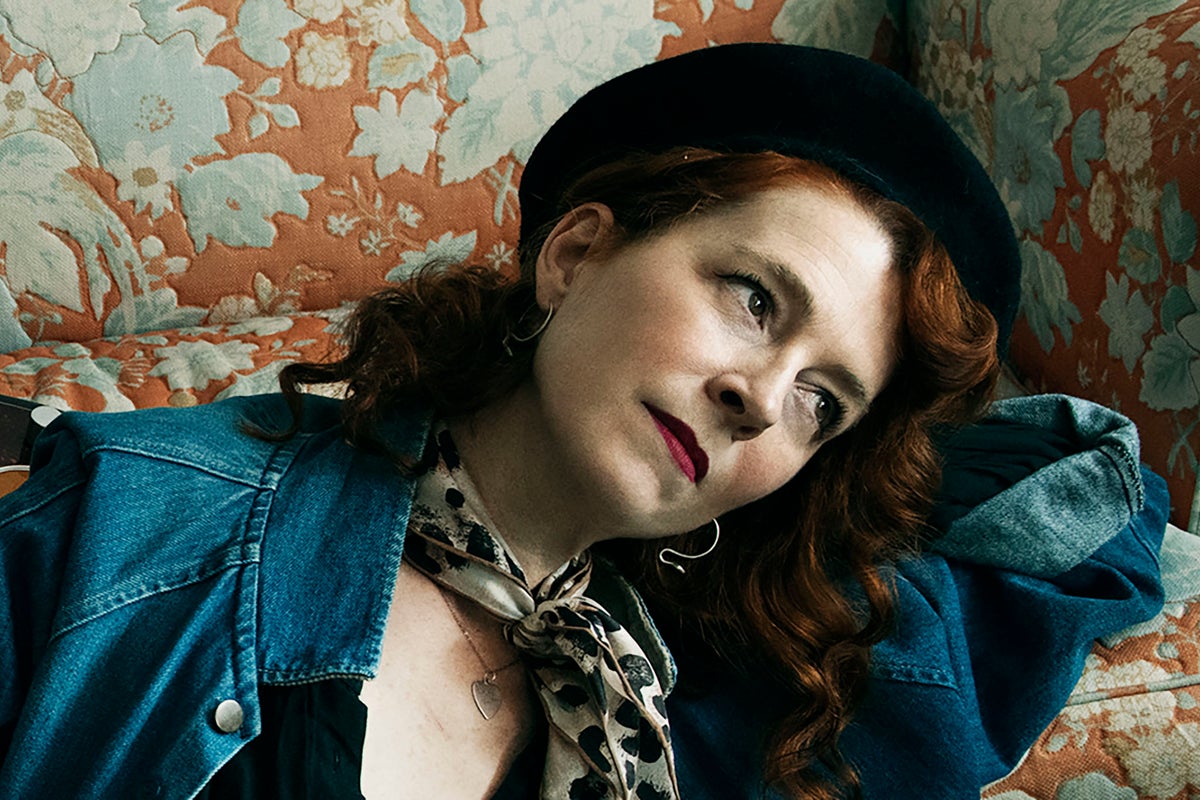
‘I was being called by forces way beyond me to take my life in another direction, even if my gut was telling me no’ - (Norman Jean Roy)

Imagine the Nineties rock band Hole as a big American house. If frontwoman Courtney Love is the hurricane door and the library, the broken faucet and the pentagram scrawled on the basement floor, then Melissa Auf der Maur is the wind chime hanging outside on the front porch. When Hole went pop, transitioning out of the indignant poetry of “Teenage Whore” and “Doll Parts” into luxurious radio hits like “Celebrity Skin” and “Malibu”, it was Auf der Maur, the ethereal Canadian on bass, who served as the glue connecting both worlds. Her background vocals, those gorgeous oohs and aahs, trailed Love’s guttural fury, adding calm and beauty to the darkest of spaces. It was a role she was expected to fill in reality, too. The 22-year-old Auf der Maur joined Hole in the summer of 1994, mere weeks after the fatal overdose of their original bass player Kristen Pfaff, and months after the suicide of Love’s husband Kurt Cobain.

“Someone recently called me a monster whisperer,” the 54-year-old laughs today. “I have a high tolerance for people who are a tiny bit difficult. My parents were radicals, and that trained me in how to deal with unexpected things. But instead of deciding to shed it all and have a more mellow life, I joined a wild rock band and lived on the road for 17 years.”

Now Auf der Maur has written a book about all of that. Even the Good Girls Will Cry traces the craggy chaos of her life so far: her nomadic upbringing as the daughter of a second-wave feminist bohemian mother and a prominent journalist father; her tumble through the counter-culture cool of Montreal’s music scene and into the maximalist chaos of Nineties alt-rock; her time as the zen interloper of a world defined by addiction and early death. It’s also dishy, sharp and wildly funny, a memoir that shifts elegantly between scenes of unbearable tragedy and scenes of Courtney Love performing a lewd magic trick with a lit cigarette. She wrote the book for her 14-year-old daughter, to fill in gaps and answer questions, and also to allow Auf der Maur herself to move on from it. “By putting it all down, I’ve allowed myself to feel differently about it,” she says. “It’s like therapy – you just talk it through and let it go.”

I connect with Auf der Maur over Zoom. She lives with her husband and daughter in a small town in upstate New York, where she runs an arts centre, and hasn’t made music in more than a decade. Today she is wearing orange shades and has her red hair tied into Pippi Longstocking-style braids, and introduces me to her pets – Siberian forest tree cats named Bella Chai and Babushka Bubbles – before asking to switch her camera off. “My favourite thing to do is just recline and speak to space, is that OK?” she asks. She lights up her fireplace, waves goodbye, and starts to unpack.

“When I think of the Nineties, I think of the dream we all had, of coming out of Thatcherism and Reaganism and into a new kind of peace, but then realising that wasn’t actually gonna happen,” she says. “What happened to our music scene was a microcosm of that – this rebellious, alternative culture that’s so powerful and so youthful, and then suddenly we’re all glossy and owned by major labels. We’re losing our friends. We’re losing our souls.”

Dave Grohl and I didn’t see it at the time – the profound, shared, weird role we played in rock mythology. Or, as they call it now, ‘shared trauma’

Auf der Maur had an unusual vantage point to the era. Music was one of a number of creative mediums she was drawn to, rather than her sole and direct calling. Heavy drugs never appealed to her, making her an outlier in a scene awash with heroin. And she only played with Hole on one album, 1998’s Celebrity Skin (though she joined them on the earlier tour for their 1994 breakout Live Through This). Hole also didn’t carry much appeal to her when she was first asked to join them, having been recommended to Love by their mutual friend (and mutual ex) Billy Corgan, of the Smashing Pumpkins. “Not an ounce of me wanted to be in that band,” she writes. She didn’t connect with their music, was reluctant to join a troupe of “grieving drug addicts”, and had mapped out a life of photography and arts education. But Love wanted her, for reasons that Auf der Maur has never totally understood.

She knew that Hole, and Love in particular, were significant. Dreams spoke to her. “I had demons and crazy aliens telling me to make music, so I listened to that,” she tells me. “I was being called by forces way beyond me to take my life in another direction, even if my gut was telling me no. But I had to make a commitment to the larger collective impact of women in a male-dominated landscape.”

Auf der Maur and Love perform at a Hole gig in 1999 (FilmMagic/Getty)

Love, naturally, looms large. She is a mad genius philosopher, as destructive as she is beguiling. Musicians warn Auf der Maur off from her, Sonic Youth go after her publicly, and she is endlessly pilloried amid wild speculation about her marriage, her parenting and the circumstances of Cobain’s suicide. You come away from the book in awe of her, and her continued survival. “I made a very determined commitment to reframe a very misunderstood, Medusa-style power-goddess,” Auf der Maur says. “This woman is so special, and was treated so terribly by the music community and by the press. I’ve always been protective of her, even though I lived in the chaos of her world. She is a maniac and a hero – and yes, you can be both at the same time. She is a complex contradiction of everything.”

She doesn’t deny that her time in Hole was challenging, though. Her closest friend in the band is drummer Patty Schemel, who descends into heroin addiction and is replaced by a session drummer on Celebrity Skin. Love spins in and out of addiction herself, and distances herself from the band to chase movie stardom. Auf der Maur’s father is diagnosed with terminal cancer, while she becomes fixated on her image in the band – she starts to embody the frozen beauty; the rock glamazon.

Over the course of the book, Auf der Maur publishes two frank and absurdly evocative faxes she received from Love at the peak of Hole’s success. One particularly brilliant one is from 1998, amid an argument sparked by Auf der Maur’s insistence that certain shots from the “Malibu” video are excised – ones that depict her goofing about and laughing, rather than serving face. Love is horrified. She writes of stars – Jessica Lange, Drew Barrymore, even her mortal enemy Gwen Stefani – and the power of innate beauty, from the perspective of a woman who has made herself beautiful through surgery and money and glam squads.

“I don’t have the luxury of your bones,” she writes. “DON’T GET TRAPPED BY YOUR BEAUTY!! Because you are better than just beautiful. When you’re drunk and nasty & funny & making guttural noises & making collages out of garbage & jewels, you are unbeatably mega. Love, Your friend, C.”

Love and Auf der Maur in 1999 (Getty)

Auf der Maur found the letter “manipulative and hypocritical” at the time. She’s since changed her mind. “I was so disillusioned,” she says. “I had lost my father. I was in deep grief. I’d become an ice princess. I’d evaporated. And reading those faxes 25 years later, I see someone so engaged and tuned into me. I’m one of the few people who will receive that level of her love and support, because she is a complicated woman – she does not have a knack for self-love or love of others. And I’m so f***ing grateful that I might be one of the few who got to bathe in the best version of it.” (She tells me they’re closer than ever now, and last year Auf der Maur laid down some of her classic oohs and aahs for Love’s forthcoming solo record.)

Auf der Maur departed Hole in 1999, burnt out and grieving. She’d also taken up with Nirvana’s Dave Grohl, adding a further strand to the dysfunctional, incestuous soap opera of Nineties rock: Kurt married Courtney who dated Billy who dated Melissa who dated Dave who grieved Kurt. It was only by writing her book that she clocked how inevitable it all seemed. “The parallels of the two happy non-drug addicts of Hole and Nirvana,” she laughs. “We didn’t see it at the time – the profound, shared, weird role we played in rock mythology. Or, as they call it now, ‘shared trauma’. There were wounds there we hadn’t yet begun to unpack.”

The cover art for Auf der Maur’s ‘Even the Good Girls Will Cry’ (Atlantic Books)

They were together for three years, while Auf der Maur toured with the Smashing Pumpkins, and then later worked on solo material. She recalls this time as a period of transition, and of finding herself again. “It was the start of me shaking my insides up and ejecting myself from everybody,” she says. “I sort of grew back into myself, and slowly came out from under all the people and the roles that I allowed myself to be trapped in.” In 2006 she moved to Hudson, New York, married the filmmaker Tony Stone, and had her daughter River in 2011. “I promised myself I wasn’t going to go back on the road and instead experience a different type of life. Like what would happen if I stayed in the same bed for not only months on end, but years? So now I have this adult life of the same house, the same view, the same kitchen sink. It’s f***ing crazy to me.”

River makes music herself, and while she hasn’t yet read her mother’s book, she and her best friend saw its title last year and wrote a song inspired by it. “It was the greatest gift I’ve ever received,” Auf der Maur says. “It just brought me to my knees.” They go to concerts together, of all the young women her daughter idolises, from Billie Eilish to Olivia Rodrigo. “I see connections between them and what Hole were trying to lay down for the future of women.” She, Love and Schemel are all mothers now to girls, which feels fitting. “We tried to do so much, and we did do so much, but there’s also such joy in getting to watch the women of the future do their work, too – and through the eyes of our daughters.”

‘Even the Good Girls Will Cry: My 90s Rock Memoir’ is out now, via Atlantic Books

Sign up to read this article
Read news from 100’s of titles, curated specifically for you.
Already a member? Sign in here
Related Stories
Top stories on inkl right now
One subscription that gives you access to news from hundreds of sites
Already a member? Sign in here
Our Picks
Fourteen days free
Download the app
One app. One membership.
100+ trusted global sources.