
Tyrell Terry scored his first points on the NBA stage on Christmas Day 2020. The Stanford standout was in at guard for the Mavericks, who had just drafted him No. 31, one slot behind Desmond Bane. Terry laid the ball up and in near the end of a Lakers blowout, while one of his favorite players, LeBron James, looked on. He would earn $1,289,846 that season.
Just about two years later he was on Instagram, typing out a post. He was announcing his decision to quit professional basketball, at age 22.
“While I have achieved amazing accomplishments, created unforgettable memories, and made lifelong friends…I’ve also experienced the darkest times of my life,” Terry wrote in part. “To the point where instead of building me up, it began to destroy me. Where I began to despise and question the value of myself, much more than those surrounding me could ever see or know.”
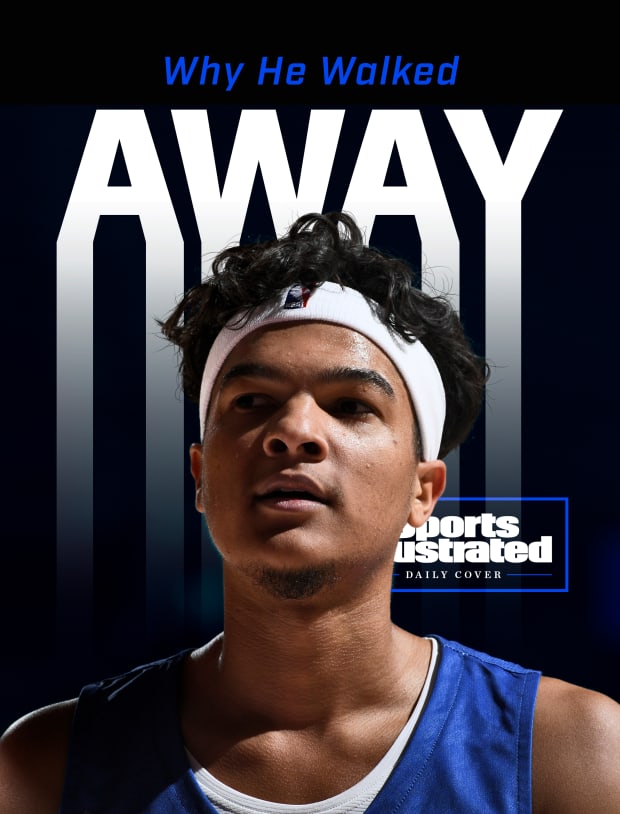
Bart Young/NBAE/Getty Images
Just posting that he’d made the decision immediately improved his mood.
But he didn’t expect the post, in which he went on to describe his anxiety disorder, to spread nearly as far as it did. It amassed nearly 30,000 likes, a huge embrace for a guy who only some NBA diehards had ever heard of. Terry received messages of support and stories from young athletes and their parents. Sixers forward Tobias Harris reached out. So did the father of Hawks All-Star Trae Young. Current and former college players, like Jeff Capel of Duke (who is now the head coach of the men’s team at Pitt), also got in touch.
“If you Google my name it’ll probably be ‘Ex-Athlete Steps Away From the Game for Mental Health,’” Terry says. Tying himself so closely to his identity as a young, retired basketball player for the foreseeable future gave him pause about Instagramming. “But when I read some of the DMs that people have sent me—I’ve had phone call conversations with parents of athletes who are struggling—and just the kind words and the gratitude that they’ve showed me, it pushes those second thoughts to the side and makes them less relevant.”
Often, public figures have their lives online defined by criticism. That wasn’t Terry’s experience, though. There was some hate, of course—people concern-trolling about how Terry would hold down a 9-to-5 gig if he couldn’t handle himself on an NBA court; others just writing that he should’ve sucked it up and pushed through—though less than you might think.












