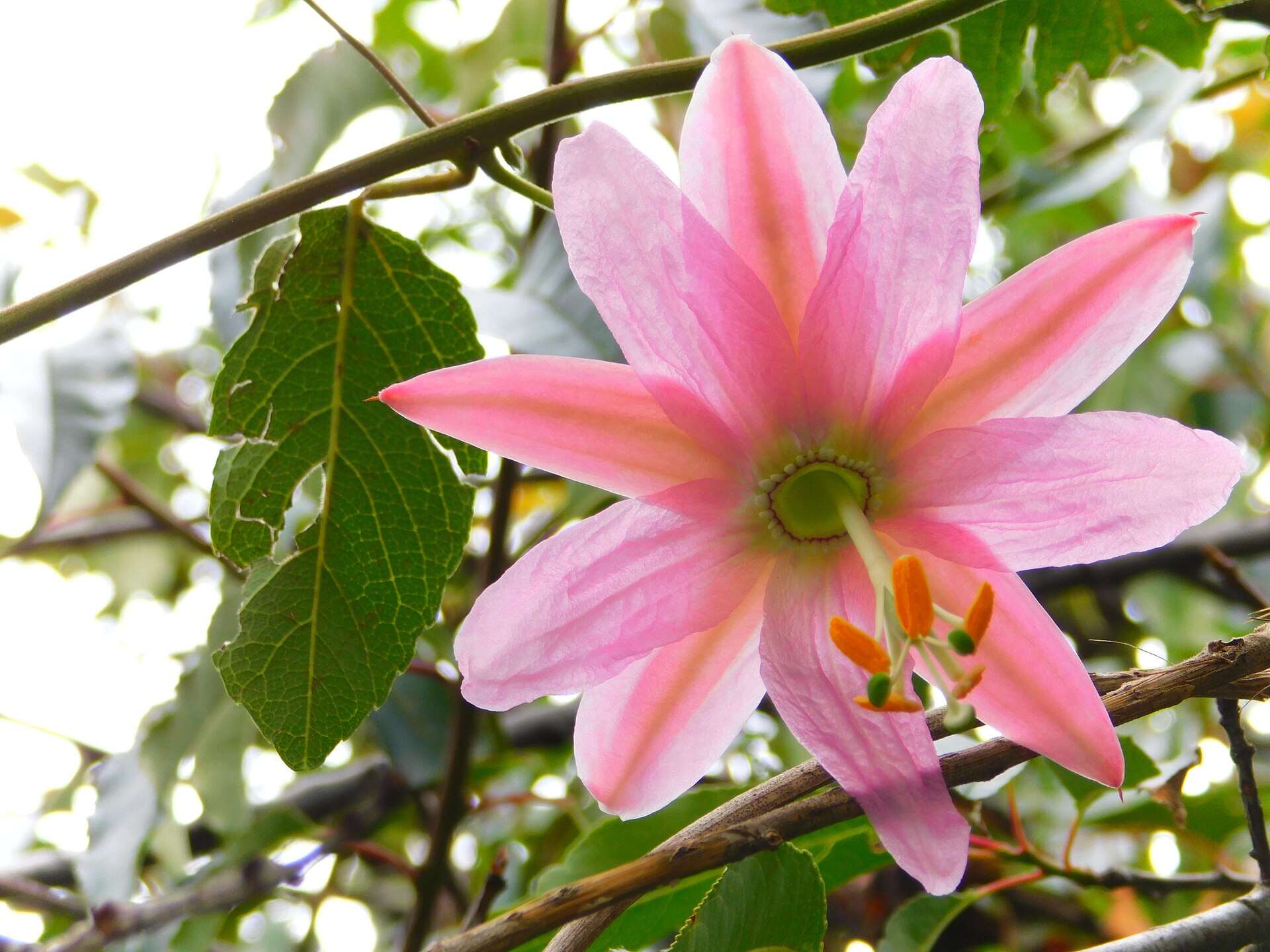
Banana poka was introduced to Hawaiʻi in the 1920s as an ornamental, not in the late 19th century. Birds later dispersed their seeds into native rainforests, where the fast-growing plant now climbs over trees and blankets them with dense vegetation.
Get breaking news anytime, anywhere. Download the TOI app now!

With its beautiful pink flowers and tasty yellow fruits, banana poka was once popular as a garden plant in Hawaii. Currently, however, the plant is spreading across the native Hawaiian forests, invading the forest canopies with dense curtains of vegetation. This former garden plant, introduced in the 1920s, has become one of the state's worst invasive species.
Banana poka, scientifically known as Passiflora tarminiana, is native to the Andes of South America and was introduced to Hawaiʻi as an ornamental vine. According to the Hawaii Invasive Species Council (HISC), banana poka (Passiflora tarminiana), a vine native to the Andes of South America, was introduced to Hawaiʻi as an ornamental plant. Banana poka (Passiflora tarminiana), a vine native to the Andes of South America, was introduced to Hawaiʻi as an ornamental plant. According to the Maui Invasive Species Committee , by 1926, botanists were able to record banana poka growing in the wild in Maui, Kauai, and Hawaii Island.
Vine spread was aided by birds and pigs
The rapid growth rate alone does not explain banana poka's success. Banana poka has elongated yellow fruits that contain hundreds of easily dispersible seeds. The Hawaii Invasive Species Council states that the primary seed dispersers of the banana poka are birds and feral pigs. Birds transport the fruit over great distances, whereas the pigs eat the fallen fruit and disperse the viable seeds elsewhere. Pig movement in the forest helps seedlings establish by turning over the soil.
According to a USDA Forest Service report on Hawaiian forest restoration, banana poka spreads readily because its fruits are eaten by feral pigs and introduced fruit-eating birds. The animals disperse viable seeds in new locations, helping the vine establish itself across Hawaiian forests. They help disperse seeds of this plant throughout a large area, thus making it possible for the vine to colonise new habitats far away from its initial habitat. Once established, banana poka grows quickly, entwining seedlings, saplings, and even large trees, slowing their growth and sometimes breaking them under the weight of the vines.
The vine gradually takes over native forests
Unlike ground-level weeds, banana poka grows up through the forest canopy.
The vine climbs trees using tendrils and then spreads quickly through the branches. According to the Hawaii Invasive Species Council, the vine can completely cover a forest from the tree crowns to the forest floor. The weight of the vegetation may cause branches or even whole trees to fall during storms. Under the canopy, mats of vines smother new trees growing there, preventing natural renewal of the forest.
The US National Park Service also refers to the banana poka as a significant problem for the Hawaiian forests, since it climbs and smothers trees, as well as grows due to seed dissemination by birds and feral pigs. Today, banana poka is reported to smother more than 200 square miles of native forest across Hawaii and Kauai, making it one of the state's most widespread invasive vines.
Why is Hawaii more vulnerable?
Island ecosystems tend to be isolated, so their flora and fauna are often less resistant to invasive species.
According to the Hawaii Invasive Species Council, Hawaii's biodiversity evolved over millions of years with relatively few competitors, herbivores, and predators. When other species come into Hawaii, the native flora and fauna cannot cope well since they are not accustomed to such competition. Banana poka thrives after disturbance events in the forest, especially when fallen trees create gaps in the canopy. Scientific studies have shown that the plant grows quickly in sunny areas but also survives in moderately shaded conditions.
Biological controls for the plant have been attempted
Manual removal of banana poka is challenging because it regenerates rapidly and produces many seeds. Herbicide has been effective in some environments, but it is expensive to use in vast mountainous forest areas.
As a result, researchers have tried biological control. According to the Hawaii Invasive Species Council, the naturally occurring fungus Septoria passiflorae was introduced to Hawaii in 1996. The fungus attacks the plant's leaves and causes a marked reduction in vine biomass when infections are severe. Scientists introduced two moth species that feed on the plant.
Lessons to learn in managing invasive species
The story of banana poka is a reminder of the dangers posed by invasive plants, one of many ornamental species that have become invasive outside their native range. The vine continues to colonize forest lands in Hawaii and is also invasive in New Zealand, where selling, cultivating, or distributing the plant is prohibited because of its impact on native vegetation. According to the New Zealand National Pest Plant Accord, preventing the spread of invasive ornamental plants is one of the country's main management strategies.
In Hawaii, birds, pigs, and even humans continue to spread banana poka seeds. Removing an invasive plant can take years and is far more difficult and costly than preventing its introduction.