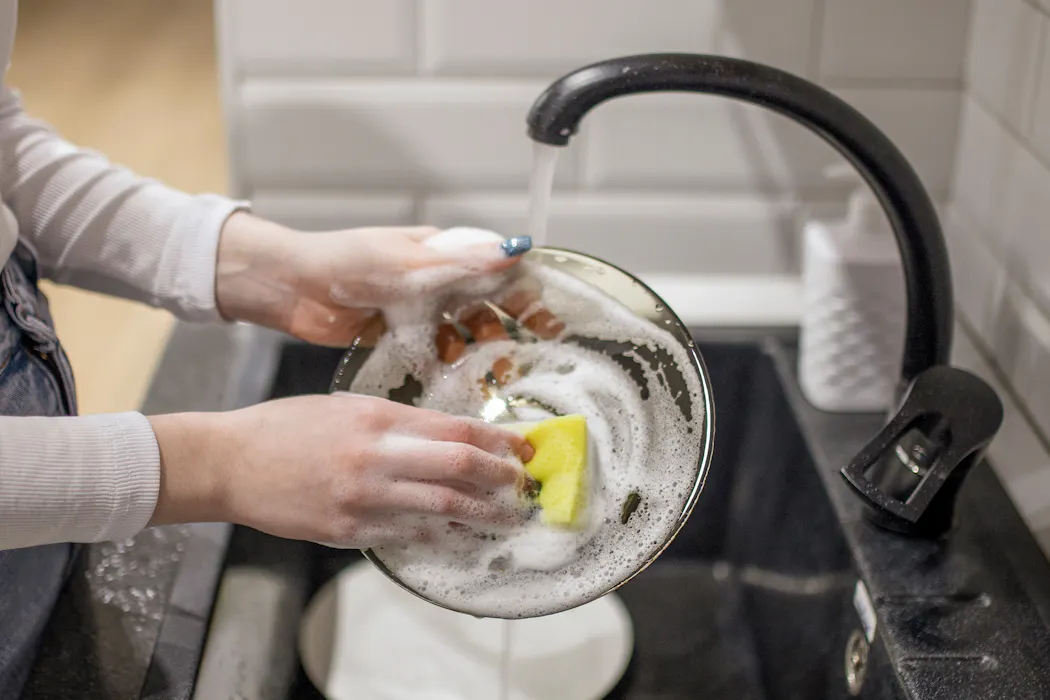
That kitchen sponge sitting by your sink is not as innocent as it looks. It could be harbouring Salmonella enteritidis, E coli or Staphylococcus aureus – and there’s no way to tell just by looking at it or smelling it.
New research from Germany grew bacteria from sponges in the lab, analysed their DNA and examined them under powerful microscopes. It revealed that food-poisoning bacteria can grow inside everyday kitchen sponges and form sticky, protective layers that are hard to remove. The bacteria could survive for at least two weeks, even once the sponge had dried out.