Get all your news in one place.
100’s of premium titles.
One app.
Start reading
Digital Camera World
James Artaius

Canon RF 85mm f/1.4L VCM review: Canon’s long-awaited portrait prime gets a hybrid makeover

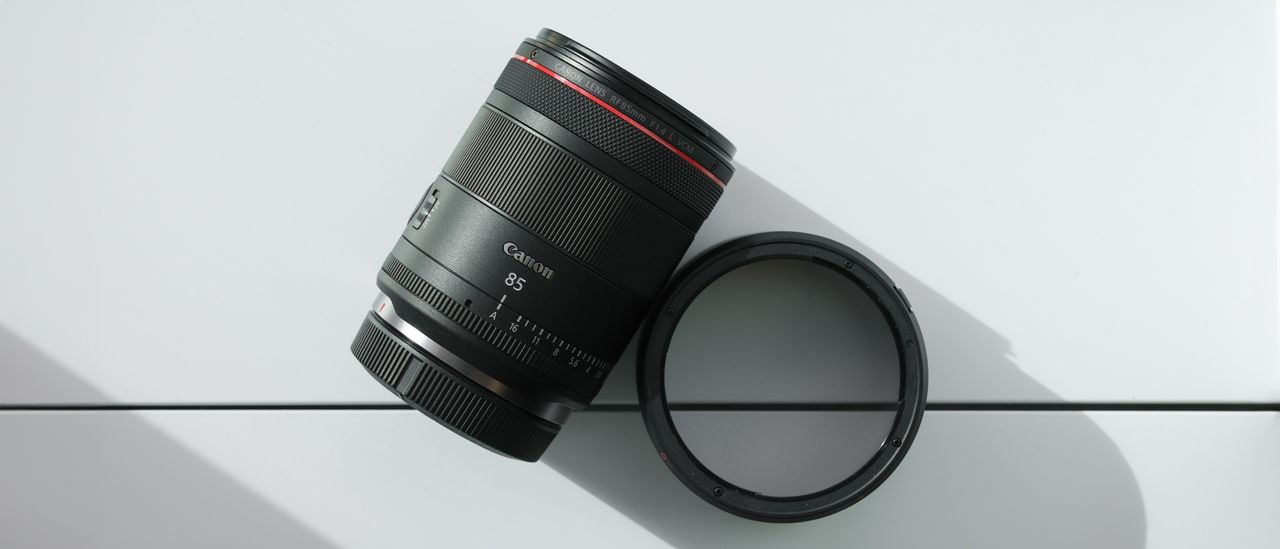
Canon RF 85mm f/1.4L VCM against a white background.

Portrait photographers have been awaiting the Canon RF 85mm f/1.4L VCM since the EOS R system debuted in 2018. Sure, we had the RF 50mm f/1.2L at launch, but that’s not a headshot lens; for that, we had to wait until 2019’s RF 85mm f/1.2L and 85mm f/1.2 DS lenses – but those were hulking, expensive, prestige optics. Then we had the budget RF 85mm f/2 Macro in 2020 – a much smaller and cheaper but also much slower and non-sealed option.

What the Canon RF 85mm f/1.4L VCM presents, then, is the traditional sweet spot portrait lens – a cut above the plastic fantastic f/2, offering great performance without the price or heft of the f/1.2. More than that, though, it’s the latest addition to Canon’s line of hybrid lenses – optics that combine the handling and performance characteristics of its EOS, Cinema EOS and broadcast lenses.

This means that the Canon RF 85mm f/1.4L VCM joins the four current hybrid primes – the RF 20mm, 24mm, 35mm and 50mm f/1.4 VCM – to form an outfit of video-friendly lenses with harmonized size, weight and filter threads for friction-free filming.

As someone who owns the RF 85mm f/1.2L, I was intrigued to see how this new lens performs – because at 18% the length, 53% the weight and (cricially) 55% the price, I wanted to see if I would lose anything if I chose to downsize. So I took it on a professional portrait shoot for a client… how did the Canon RF 85mm f/1.4L VCM fare?

Canon RF 85mm f/1.4L VCM: Specifications

Mount options

Canon RF / RF-S

RF-S effective focal length

136mm

Image stabilization

N/A

Weather sealing

Yes

Focus

Manual, automatic

Control ring

Yes

Aperture ring

Yes (for video – stills only for 2024 cameras and newer)

Lens construction

14 elements 10 groups, 11 aperture blades

Minimum aperture

f/16

Minimum focus distance

750mm

Filter size

67mm

Dimensions

76.5 x 99.3mm

Weight

636g

Canon RF 85mm f/1.4L VCM: Price

The Canon RF 85mm f/1.4L VCM carries a retail price of $1,649 / £1,799 / AU$2,699. This makes it the second-most expensive lens in the hybrid lineup, behind the RF 20mm f/1.4L at $1,699 / £1,919 / AU$2,999.

More relevant, of course, is the fact that this is Canon's third 85mm lens for the RF mount. For comparison, the top-end Canon RF 85mm f/1.2L USM comes in at $2,999 / £2,999 / AU$4,499 (though there are currently region-specific rebates) while the budget Canon RF 85mm f/2 Macro IS STM is priced at $649 / £669 / AU$999.

Canon RF 85mm f/1.4L VCM: Build & handling

(Image credit: Gareth Bevan • Digital Camera World)

It should come as no surprise that the Canon RF 85mm f/1.4L VCM looks, feels and handles almost identically to its hybrid prime siblings. It possesses the same uniform 76.5 x 99.3mm size and 67mm filter thread, but is the heaviest of the quintet at 636g – compared to the 20mm at 519g, the 24mm at 515g, the 35mm at 555g and the 50mm at 580g.

Obviously the upside of the harmonized sizing is that hotswapping filters and gimbals (and lens caps!) across the hybrids is a breeze. However, a side effect is that the hoods are also interchangeable – and, unless you know the difference between “Lens Hood ES-73” and “Lens Hood EW-73F”, you won’t know which is for which lens, as there’s no other information on each hood.

The Canon RF 85mm f/1.4L VCM has a large manual focus ring complemented by the standard customizable control ring, along with – again in common with the rest of the family – a smooth manual Iris Ring to control the aperture.

Bear in mind that these Iris Rings were designed for video, and they have a strange relationship with photography: currently they only control stills apertures on Canon’s cameras from 2024 and onwards (namely the EOS R1 and R5 Mark II).

While all the hybrid primes are weather-sealed, being as they’re L-series lenses and adorned by the coveted red ring, they are not stabilized – which is worth bearing in mind if you own a camera without in-body image stabilization (IBIS) and you plan on filming without a gimbal.

It can't be overstated just how much smaller and lighter this lens is than its f/1.2 counterpart – take a look a the two of them side by side below. Honestly, I love the f/1.2 – but it's ridiculously big, even on a chunky body like my EOS R5. On a smaller RF-S body, it's becomes ludicrous. If you're someone shooting on a smaller body like an EOS R7 or an R10, the new f/1.4 is a far better fit.

The Canon RF 85mm f/1.4L VCM (left) next to the RF 85mm f/1.2L USM (right) (Image credit: James Artaius)

Canon RF 85mm f/1.4L VCM: Performance

As noted, I own the RF 85mm f/1.2L and it's my go-to lens for portraiture – including my paid commissions. So I thought the best way to evaluate the new Canon RF 85mm f/1.4L VCM was to take it on a professional client shoot and see how it did.

In short, its performance was nothing short of exceptional. This is a very, very good lens.

Canon told me that the 85mm f/1.4L “comes very close to delivering the same quality” as the 85mm f/1.2L – and that was no exaggeration. This is sharp as a razorblade, even when shooting wide open. Indeed, I don't think you can fault it optically – and our lab test results certainly attest to that.

The voice coil motor (the VCM in the name) does a superb job of providing quick, quiet, accurate autofocus. And like other members of the hybrid family, the VCM technology isn’t just there to shunt around the large internal elements at speed – it also delivers smooth focus transitions while filming, where breathing is also well suppressed.

Portrait photographers will no doubt be wondering just how big a difference there is between f/1.4 and f/1.2. Well, in terms of rendering it’s not as dramatic as you might think. Yes, shooting at f/1.2 will always create superior subject separation with more pleasing bokeh (the quality of the out of focus areas of the image), but f/1.4 still gives you sublimely shallow depth of field that makes portraits look very special indeed.

The same is true when it comes to low light performance, as shooting at f/1.4 still enables you to shoot in incredibly challenging conditions. And today’s sensors are so good that bumping up your ISO – or slowing your shutter if you have IBIS to rely on – is a perfectly acceptable compromise.

Canon EOS R5 + Canon RF 85mm f/1.4L VCM (1/400 sec, f/1.4, ISO200) (Image credit: James Artaius)

Really the biggest difference between the two lenses is how they handle – particularly on Canon’s smaller RF-S cameras. As much as I love my 85mm f/1.2L, it's monstrously big even on chunky bodies like the EOS R5, it dwarfs the APS-C flagship EOS R7, and it becomes completely impractical on the R8 or anything smaller.

The 85mm f/1.4L, by contrast, is small and light enough to make a decent dance partner for any EOS R camera – especially smaller APS-C bodies. In fact, with its equivalent 136mm focal length, this becomes a very compelling option for RF-S shooters – and R7 owners in particular, where the stabilization is very welcome.

That's really the only negative with this lens: the lack of built-in shake compensation. Arguably it's a pro lens, intended for higher-end bodies equipped with IBIS. But having tested it on the Canon EOS R50 V, I would definitely have appreciated a little stabilization. Though of course, the f/1.2L lens doesn't have any stabilization either.

So, will I be selling the bigger lens and picking up the smaller, lighter, cheaper f/1.4L? No, I won't – I'm a bokeh whore, and the additional creaminess is worth it to me, even though the difference will be marginal to most people. However, while I won't be selling my f/1.2L lens, if I was buying an 85mm today – and certainly if I owned any camera smaller than an R5 – I would be buying this new f/1.4L.

It's close enough in performance, but the huge advantages in size, weight and cost make it a far better buy for 90% of photography – and it's also an infinitely better video lens, an area where the f/1.2L is almost entirely impractical.

Canon RF 85mm f/1.4L VCM: Sample images

Canon EOS R5 + Canon RF 85mm f/1.4L VCM (1/1250 sec, f/1.4, ISO200) (Image credit: James Artaius)
Canon EOS R5 + Canon RF 85mm f/1.4L VCM (1/500 sec, f/1.4, ISO320) (Image credit: James Artaius)
Canon EOS R5 + Canon RF 85mm f/1.4L VCM (1/1250 sec, f/1.4, ISO200) (Image credit: James Artaius)
Canon EOS R5 + Canon RF 85mm f/1.4L VCM (1/320 sec, f/1.4, ISO320) (Image credit: James Artaius)
Canon EOS R5 + Canon RF 85mm f/1.4L VCM (1/1250 sec, f/1.4, ISO200) (Image credit: James Artaius)
Canon EOS R5 + Canon RF 85mm f/1.4L VCM (1/640 sec, f/1.4, ISO320) (Image credit: James Artaius)
Canon EOS R5 + Canon RF 85mm f/1.4L VCM (1/320 sec, f/1.4, ISO320) (Image credit: James Artaius)
Canon EOS R5 + Canon RF 85mm f/1.4L VCM (1/1250 sec, f/1.4, ISO200) (Image credit: James Artaius)
Canon EOS R5 + Canon RF 85mm f/1.4L VCM (1/400 sec, f/1.4, ISO320) (Image credit: James Artaius)
Canon EOS R5 + Canon RF 85mm f/1.4L VCM (1/1250 sec, f/1.4, ISO200) (Image credit: James Artaius)

Canon RF 85mm f/1.4L VCM: Lab results

We run a range of lab tests under controlled conditions, using the Imatest Master testing suite. Photos of test charts are taken across the range of apertures and zooms (where available), then analyzed for sharpness, distortion and chromatic aberrations.

We use Imatest SFR (spatial frequency response) charts and analysis software to plot lens resolution at the center of the image frame, corners and mid-point distances, across the range of aperture settings and, with zoom lenses, at four different focal lengths. The tests also measure distortion and color fringing (chromatic aberration).

Sharpness:

(Image credit: Future)

Sharpness is excellent, right across the entire image frame, even wide open at f/1.4, and stays so through to f/11.

Fringing:

(Image credit: Future)

Color fringing strays into visible territory at larger apertures, but stop down to f/4 and it becomes a non-issue. Enabling in-camera lens correction banishes aberrations when shooting wide open.

Distortion: 1.21

There's a little more pincushion distortion than we'd normally expect for an 85mm lens, but this is pretty much eliminated when firmware correction is enabled.

Canon RF 85mm f/1.4L VCM: Verdict

I think the sample images speak for themselves: the Canon RF 85mm f/1.4L VCM is an extraordinary lens for portrait photography and people videography.

It carries the torch for the hybrid prime lineup, offering the crossover characteristics and optical performance the range is renowned for, but arguably its greatest strength is in offering EOS R photographers a long-awaited middle ground for 85mm glass.

While I’m lucky enough to own the RF 85mm f/1.2L, and love using it for professional work, it's impractical for walkabout and casual photography. The RF 85mm f/2 is compact, but lacks the speed and sealing for high-end use. But the RF 85mm f/1.4L offers premium performance without breaking the scales or the bank balance. It's a genuine Goldilocks lens.

As such, this will be just as attractive to the APS-C crowd. With an effective 136mm focal length in a form factor that doesn’t dwarf smaller RF-S bodies, this is a practical pro-grade option for smaller sensor shooters.

For videographers, it fills the crucial short telephoto gap in the hybrid lineup – 85mm isn’t something that’s top of the shopping list for most creators or filmmakers, but it’s nonetheless an important one for those who do need it. And particularly with the concurrent launch of the EOS C50, it’s great to see Canon finally fleshing out its cinema (or at least, cinema-friendly) RF optics.

While I’d certainly prefer these hybrid primes to possess stabilization, and it’s galling that only those who own one of Canon’s latest (and most expensive) cameras are able to use the Iris Ring for photography, in every other respect the Canon RF 85mm f/1.4L VCM is every inch the sweet spot optic that photographers and videographers have been waiting for on this system.

You might also like…

See how this lens compares to the best lenses for portraits, as well as the best Canon RF lenses.

Sign up to read this article
Read news from 100’s of titles, curated specifically for you.
Already a member? Sign in here
Related Stories
Top stories on inkl right now
One subscription that gives you access to news from hundreds of sites
Already a member? Sign in here
Our Picks
Fourteen days free
Download the app
One app. One membership.
100+ trusted global sources.