Get all your news in one place.
100's of premium titles.
One app.
Start reading
The Economic Times
The Economic Times

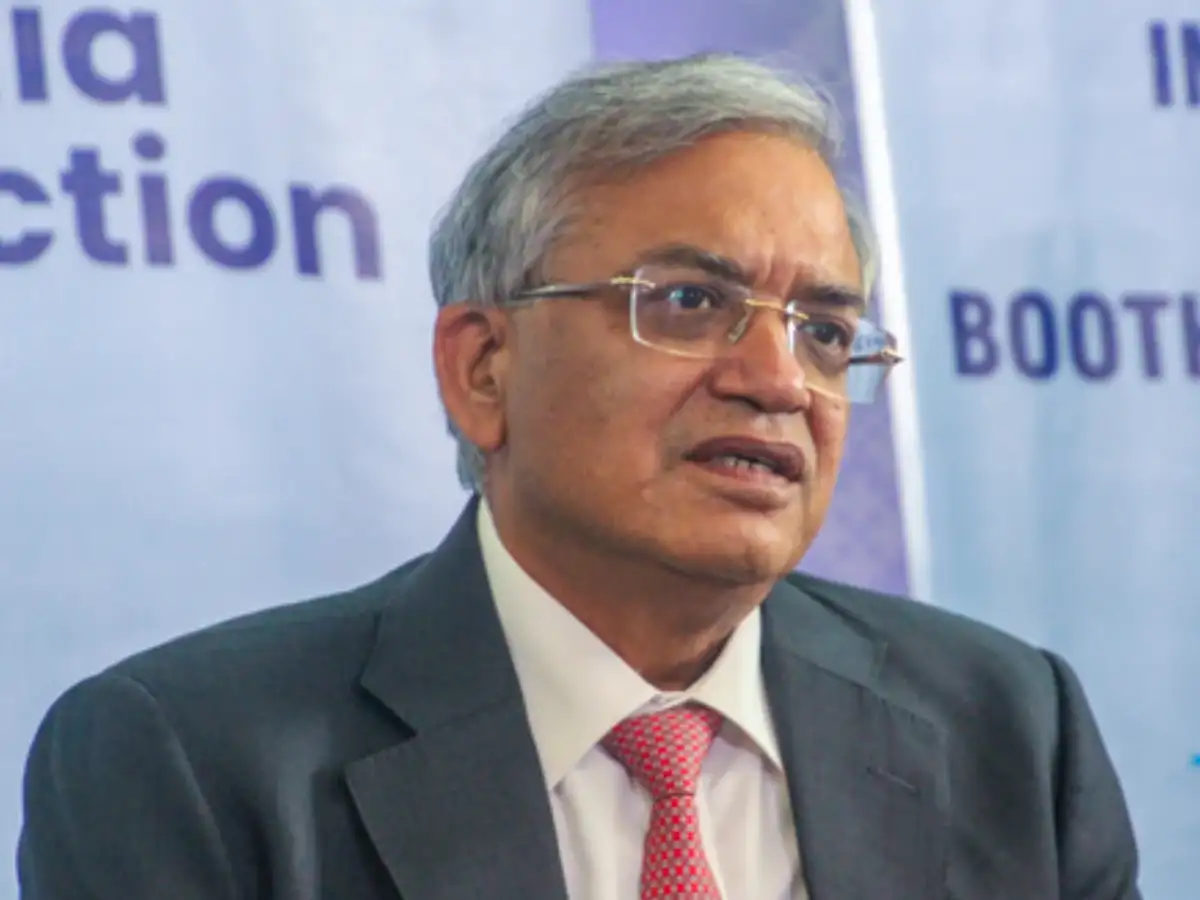
Gyanesh Kumar’s journey to CEC post: From Article 370 & Ram Mandir trust to key Centre roles and CEC post; why his 19-month tenure is now under fresh scrutiny

When Gyanesh Kumar took charge as India’s 26th chief election commissioner (CEC) in February 2025, his career included key assignments linked to the abrogation of Article 370 and the establishment of the Ram Janmabhoomi trust.

Nineteen months into his tenure, Kumar is facing increased scrutiny following an investigation by The Indian Express, which reported that fellow Election Commissioners Sukhbir Singh Sandhu and Vivek Joshi formally objected at least 14 times over 10 months to decisions and orders they said were issued without their knowledge.

The objections reportedly related to the Special Intensive Revision (SIR) of electoral rolls, changes to the statutory Form 6 used for voter registration and concerns over the centralisation of access to the electoral roll database.

Read more - Mamata Banerjee demands fresh Bengal elections amid EC SIR dissent row; calls for CEC's arrest

Election Commissioners raise objections over SIR decisions

According to The Indian Express investigation, Sandhu and Joshi raised objections on record to several steps taken during the SIR exercise. Their concerns included the addition, deletion and restoration of names on electoral rolls, the process of filing appeals and the functioning and access controls of the Election Commission's voter database.

Read more - SIR row: Opposition seeks CEC's removal, SC scrutiny of Election Commission

The report said the two commissioners also raised concerns over changes to Form 6, which is used by new voters to apply for registration. The revised form reportedly included questions linked to previous SIR electoral rolls. Sandhu and Joshi had objected to the change, arguing that it could not be introduced without the required legal process.

The two commissioners also flagged what they described as the gradual centralisation of the electoral roll database and questioned whether statutory officials at the state and constituency levels retained appropriate access to the system.

Election Commission says decisions were unanimous

The Election Commission has maintained that differences of opinion are a normal part of internal deliberations and that its final decisions, including those concerning the SIR, were unanimous. Reports citing EC sources said decisions were taken with the approval of the three-member commission.

Neither Sandhu nor Joshi has publicly discussed the objections attributed to them in the investigation.

The reported disagreements have nevertheless drawn attention to the functioning of the three-member constitutional body, particularly because the objections concern voter registration, electoral roll changes and the systems used to maintain voter data.

What is the Special Intensive Revision of electoral rolls?

The SIR is an exercise aimed at reviewing and updating electoral rolls. It began in Bihar in 2025 and was subsequently expanded to other states and Union Territories.

The exercise has become politically contentious, with opposition parties alleging that eligible voters could be excluded and accusing the Election Commission of favouring the ruling Bharatiya Janata Party (BJP). The EC has rejected such allegations.

The latest reported objections from within the Commission have added another dimension to the debate, with the two election commissioners questioning aspects of how electoral roll-related decisions and technology systems were being handled.

Gyanesh Kumar's response to 'vote chori' allegations

Kumar's tenure has also faced political criticism over his response to Congress leader and Leader of Opposition in the Lok Sabha Rahul Gandhi's allegations of "vote chori".

Kumar asked Gandhi to substantiate the allegations through a sworn declaration or apologise. The exchange became another point of contention between the Election Commission and opposition parties.

The EC has rejected allegations that it has acted to benefit any political party.

Gyanesh Kumar's appointment as chief election commissioner

Kumar's appointment as CEC was also opposed by sections of the Opposition. He was the first CEC appointed under the 2023 law governing the selection of election commissioners.

The law changed the composition of the selection panel by replacing the Chief Justice of India with a Union Cabinet minister. The panel therefore consists of the Prime Minister, a Union Cabinet minister and the Leader of Opposition in the Lok Sabha.

Rahul Gandhi, who was the Opposition member on the panel, had sought a delay in the selection process pending the Supreme Court's consideration of challenges to the law.

On September 23, a two-judge Supreme Court bench delivered a split opinion on whether petitions challenging the validity of the 2023 law should be referred to a larger bench.

Gyanesh Kumar: career and education

Kumar is a 1988-batch Indian Administrative Service (IAS) officer of the Kerala cadre. He retired as secretary in the Ministry of Cooperation in January 2024 and joined the Election Commission in March that year, shortly before the Lok Sabha election schedule was announced.

He became chief election commissioner on February 19, 2025. The Election Commission's official profile lists his term as running until January 26, 2029.

Before joining the poll panel, Kumar held several positions in the Kerala government and later served in senior positions at the Centre.

During his tenure in the Union Home Ministry, he worked on matters related to the government's decisions following the abrogation of Article 370 and the establishment of the Ram Janmabhoomi trust following the Supreme Court's Ayodhya verdict.

He subsequently served as secretary in the Ministry of Parliamentary Affairs and the Ministry of Cooperation. He also held positions as joint secretary in the Ministry of Defence and joint secretary and additional secretary in the Ministry of Home Affairs.

According to his profile on the Election Commission website, Kumar studied civil engineering at IIT Kanpur, business finance at the Institute of Chartered Financial Analysts of India and environmental economics at Harvard University.

Who are Sukhbir Singh Sandhu and Vivek Joshi?

Sukhbir Singh Sandhu joined the Election Commission as an election commissioner on March 15, 2024, alongside Kumar. He is a 1988-batch IAS officer of the Uttarakhand cadre and previously served as Uttarakhand chief secretary, chairman of the National Highways Authority of India (NHAI) and secretary to the Lokpal. The EC's official profile lists his tenure as an election commissioner until July 2028.

Vivek Joshi joined the Election Commission on February 19, 2025, the same day Kumar became CEC. A 1989-batch IAS officer of the Haryana cadre, Joshi previously served as Haryana chief secretary and held central government assignments in the Department of Financial Services and the Office of the Registrar General and Census Commissioner.

What happens after Kumar's tenure?

Sandhu is due to retire from the Election Commission before Kumar's term ends. If Sandhu and Joshi remain in office until then, Joshi would be the senior election commissioner when Kumar's CEC tenure concludes in January 2029.

However, being the senior election commissioner would not automatically make Joshi the next CEC. Any future appointment would have to be made through the selection process prescribed by law.

The reported objections from Sandhu and Joshi have put the internal functioning of the Election Commission under renewed scrutiny, while the poll panel has maintained that its final decisions have been taken unanimously.

Inputs from agencies

Sign up to read this article
Read news from 100's of titles, curated specifically for you.
Already a member? Sign in here
Related Stories
Top stories on inkl right now
One subscription that gives you access to news from hundreds of sites
Already a member? Sign in here
Our Picks
Fourteen days free
Download the app
One app. One membership.
100+ trusted global sources.