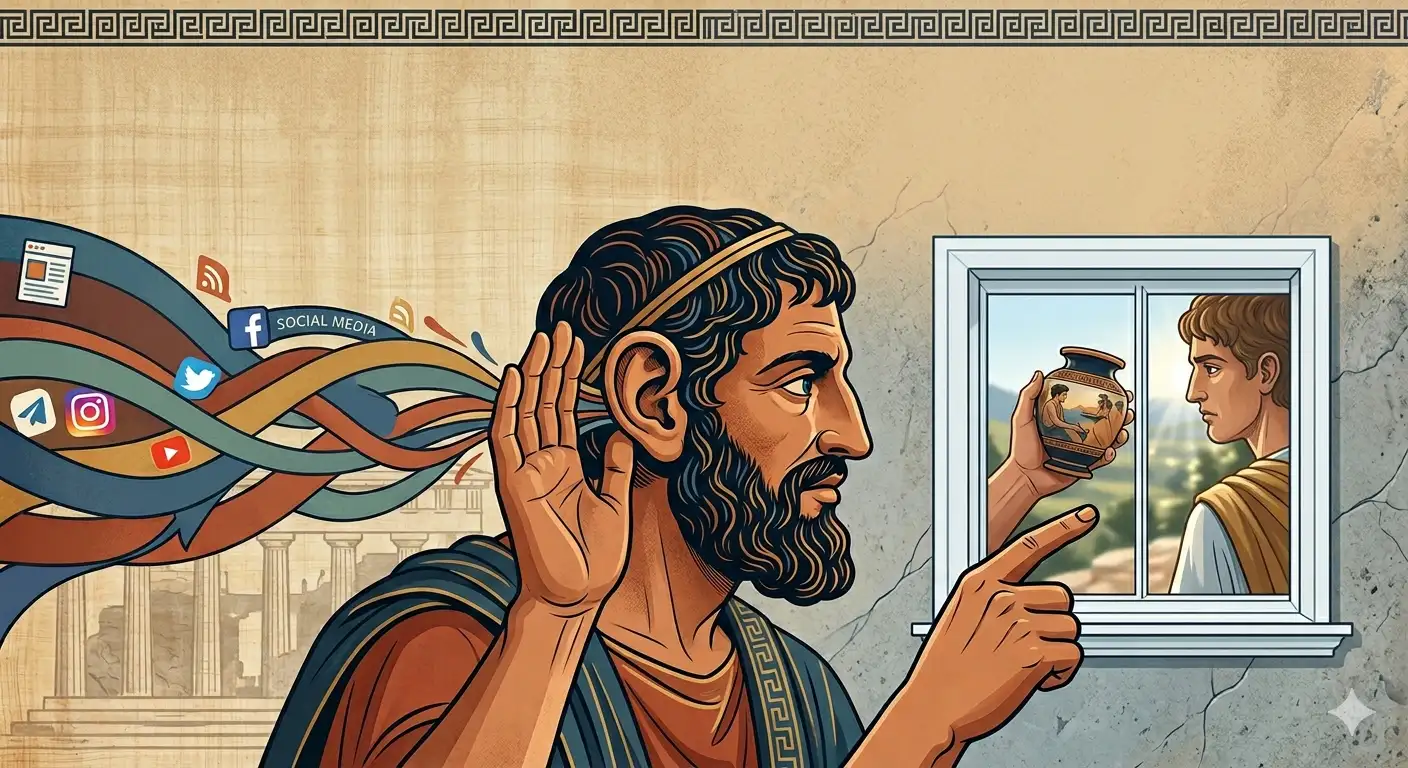
Greek proverb of the day : Information travels faster than ever before, yet the challenge of separating truth from persuasion remains as old as human civilization itself. People often rely on what they hear from friends, leaders, media, or society to form opinions. While advice and guidance can be valuable, history has repeatedly shown that words can sometimes distort reality, influence perception, or even cause people to doubt what they have personally witnessed. Ancient Greek wisdom recognized this danger, encouraging individuals to think critically and trust evidence rather than blindly accepting the opinions of others.

Greek Proverb of the Day Today on Truth and Independent Thinking
Today’s Greek proverb is, “ Through our ears others may persuade us not to believe the evidence of our own eyes, ” as per The Gold Scales.
The proverb highlights how easily people can be influenced by what they hear, even when it conflicts with what they have directly observed.
What This Ancient Greek Saying Teaches About Perception
The deeper meaning behind the proverb is that persuasion can sometimes be more powerful than personal experience. People may hear convincing arguments, repeated claims, or popular opinions that gradually cause them to question facts they once considered obvious.
The saying serves as a warning against accepting information uncritically. It encourages individuals to evaluate evidence carefully and think for themselves rather than allowing others to shape their beliefs entirely.
The proverb reminds us that truth should not be abandoned simply because a louder voice tells us otherwise.
Why Words Can Influence Reality
One of the key lessons within the proverb is the remarkable power of language. Repetition, confidence, and social pressure can often influence how people interpret events and experiences.
Throughout history, misinformation, rumors, and propaganda have persuaded individuals to doubt their own observations. Even in everyday life, people may second-guess themselves when surrounded by strong opinions from others.
The proverb highlights the importance of maintaining independent judgment in the face of outside influence.
Greek Proverb of the Day June 4: Lessons on Critical Thinking
Ancient Greek philosophy placed great value on reason, evidence, and questioning assumptions. This proverb reflects those traditions by encouraging people to examine claims carefully before accepting them as truth.
Rather than rejecting all advice or opinions, the saying advocates balance. Listening to others is important, but so is evaluating facts and trusting reliable evidence.
The lesson is not to close one's ears, but to keep an open mind while remaining grounded in reality.
How This Ancient Wisdom Applies in Modern Life
In the digital age, information is constantly shared through social media, news platforms, videos, and online discussions. People are exposed to countless opinions every day, many of which compete for attention and influence.
As a result, the proverb feels especially relevant today. It reminds individuals to verify information, question assumptions, and avoid allowing popular narratives to replace observable facts.
Its message supports media literacy, critical thinking, and informed decision-making.
Life Lessons From the Greek Proverb About Truth and Judgment
The proverb teaches that independent thinking is essential for understanding the world accurately. While listening to others can provide valuable insight, personal observation and evidence should not be ignored.
By balancing openness with critical analysis, people can avoid being misled by persuasion alone.
Inspiring Greek Proverbs
Here are a few more Greek proverbs.
- "Time is a river of passing events," as per The Gold Scales.
- "Time is precious," as per The Gold Scales.
- "To rebel in season is not to rebel," as per The Gold Scales.
- "What the fox cannot reach he allows to hang," as per The Gold Scales.
- "When the light is out every woman is alike," as per The Gold Scales.
- "When your neighbor's house is on fire look to your own," as per The Gold Scales.
- "When your own courtyard thirsts do not pour the water abroad," as per The Gold Scales.