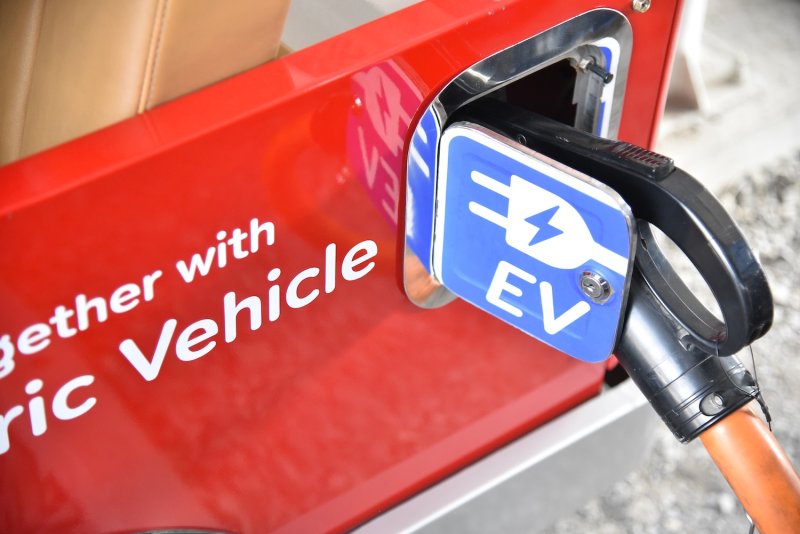
The Thai government is reviewing a 24-billion-baht plan to replace up to 80,000 ageing commercial vehicles with EVs and evaluating whether it should be extended to cover passenger electric vehicle purchases as part of the country’s energy-transition efforts.
The replacement of tens of thousands of standard vehicles with EVs would help boost the country’s struggling auto industry, supporters have said.

Thailand is Southeast Asia’s largest automotive production hub, but domestic vehicle sales slumped to a 15-year low in 2024, as high household debt and tighter lending standards curbed demand, particularly for pickup trucks, a key sector of the market.
An initial proposal, presented to a government committee in June, targeted the replacement of commercial transport vehicles, including taxis, motorcycle taxis, tuk-tuks, buses and trucks, with electric equivalents, Deputy Transport Minister Siripong Angkasakulkiat told Reuters.
“We are reconsidering whether the assistance should be extended to all vehicle categories, not just those for transport,” Mr Siripong said.
Discussions about extending the programme have gathered pace since the Constitutional Court ruled this month that the government’s 400-billion-baht emergency borrowing plan was lawful, clearing the way for further spending.
The cabinet approved the borrowing plan in May, but opposition lawmakers challenged it two weeks later by asking for a court ruling.
The government has proposed using half of the 400 billion baht to fund consumption stimulus, such as the Thais Help Thais co-payment scheme, and other support for vulnerable groups affected by rising costs.
The other half is supposed to go towards energy transition projects, but the opposition said details were scarce, and expressed concern that some of the money would go towards projects that had already been quietly pre-arranged.
Subsidies, loans, tax breaks
The Ministry of Transport has proposed that support for EV purchases could take various forms, such as subsidies, low-interest loans and tax incentives for targeted vehicles scheduled for replacement under stipulated age limits, Mr Siripong said.
A review committee led by the Ministry of Finance is charged under the borrowing plan with approving projects and overseeing support for both relief measures and the energy transition.
According to the Federation of Thai Industries (FTI), 621,166 cars were sold domestically in 2025, an increase of 8% from 2024. The figure included 120,301 passenger EVs. About 1.7 million motorcycles were also sold.
Car sales including pickup trucks in the first five months of this year were up 14% year-on-year at 288,242. EVs now make up 30% of all sales, the FTI data showed.
Successive Thai governments have promoted EV manufacturing and adoption through a range of tax breaks and incentives to maintain the country’s position as a regional automaking heavyweight.
So far, the efforts have attracted more than $4 billion in investments, including from the Chinese firms BYD and Great Wall Motor. But the current EV policy ends in 2027, and auto industry groups have warned that the industry could face a sharp decline.
Any new incentives or programmes should be targeted at domestically manufactured EVs that use a majority of locally sourced parts, said Surapong Paisitpattanapong, spokesperson for the FTI’s Automotive Industry Club.
“More domestic EV production means more jobs, higher incomes and greater tax revenue, (and) is a win-win for businesses, consumers and the government,” Mr Surapong said.
Any trade-in scheme for EVs should also be for locally produced vehicles, said Siamnat Panassorn, vice-president of the Electric Vehicle Association of Thailand.
“We would like to push for EV motorcycles and public buses, vehicles that typically have high emissions,” he said.
Mr Siripong agreed the goal should be to encourage EV adoption across all types while benefiting the public through cleaner and safer technology.
“There will definitely be something this year, but we need to finalise the details first,” he said, adding that the discussions were expected to continue for another month.
Help for taxi drivers
For taxi drivers replacing vehicles that reach the 10-year age limit next year, the government is considering financing support for EVs that would cut daily loan repayments to 500 baht from about 700 baht for five years, according to Mr Siripong.
Support for other types of electric vehicles, including minibuses, vans, buses, tuk-tuks and heavy transport vehicles, would vary, he said.
Finance Minister Ekniti Nitithanprapas said last week the programme would also support new purchases and the replacement of pickups with EVs as well as a shift to models capable of using B20 biodiesel, through low-interest loans and subsidies.
Pickup trucks are the backbone of Thailand’s auto industry, representing more than 60% of overall vehicle production and underpinning a vast network of local suppliers, manufacturing jobs and parts production.