Donald Trump's presidency is being likened to a 'Weekend at Bernie's' farce by some of his own party's insiders in Washington, who say the administration now resembles a zombie government staggering on while aides desperately pretend everything is normal. That unflattering comparison, detailed by Salon's White House correspondent Brian Karem, has fuelled talk on Capitol Hill that 'Trump fever is breaking' as Republicans privately vent their frustration and brace for a future without the 80‑year‑old president.
Karem's reporting is based on conversations with a mix of officials in the White House and members of Congress, including Republicans who say they are watching their own party's agenda being repeatedly blown off course by the man meant to deliver it. It is not an official diagnosis of the administration so much as a portrait of mood and anxiety within the Republican ranks, drawn from people who are still, at least publicly, supposed to be in Trump's corner.

Karem describes a capital city in which almost everyone understands the performance, even if few will say so on camera. The 'Weekend at Bernie's' nickname a reference to the 1989 comedy in which two hapless employees prop up their dead boss to convince the world he is still alive has apparently become dark shorthand among some GOP staffers and junior members of Congress for what they see unfolding in real time.
One Republican representative, speaking to Karem on condition of anonymity, did not bother to soften the language. 'It's a f—— s— show, isn't it?' the lawmaker said, in remarks that make Downing Street invective look positively polite. 'It's always about him. That's his only idea. He's nuts.' The sentiment, Karem argues, reflects a shift from nervous loyalty to something closer to open contempt.
'Weekend at Bernie's' and the Fraying Trump Illusion
According to Karem's account, Trump's own recent behaviour has done much of the damage. Instead of driving a cohesive Republican programme through Congress, the president's erratic interventions have repeatedly derailed negotiations and overshadowed policy with personal drama. The result, one GOP congressman told him, is that 'this administration is dead in the water.'
It is here that the 'Weekend at Bernie's' comparison bites hardest. In Karem's telling, aides and senior Republicans are effectively playing the role of the two film characters, dragging a visibly diminished leader from event to event and hoping no one looks too closely. He writes that some in the White House worry Trump could 'roll over like a cockroach and start spouting gibberish (if he hasn't done that already) or that he simply won't survive his full term, which still has 940 days to go.'
None of these fears is backed by public medical records or official briefings. The White House has not confirmed any decline in the president's health, and there is no hard evidence of an imminent crisis. On that point, Karem is careful to frame what he is hearing as anxiety and speculation rather than established fact. Nothing is confirmed yet, so those predictions should be taken with a grain of salt.
Even so, the chatter is having political consequences. Behind the scenes, Karem reports, Republicans are no longer just firefighting the latest controversy. They are sketching out their own succession battles for 'when the day finally comes that the 80‑year‑old president is no longer around.' A junior member of Congress is quoted as saying some colleagues are wondering whether that day could arrive 'sooner than later.'
Donald Trump, Fractured Republicans and a Fraying Brand
If outwardly the party still rallies behind Trump, Karem paints a picture of a 'palace' in quiet panic. Senior figures, he says, are scrambling to identify a potential heir apparent while also working to frame Democrats as 'communists' after a handful of high‑profile left‑wing wins in New York City. That language, while red meat for primary voters, looks less like a strategy than a reflex a familiar enemy to point at while they try to keep the Bernie's routine going.
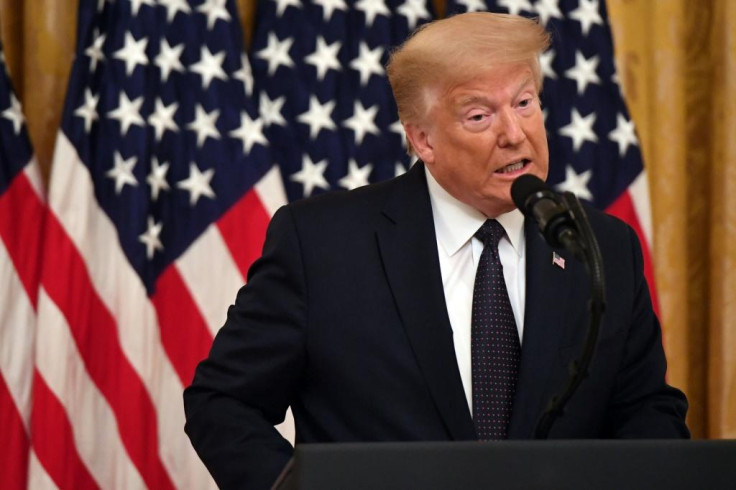
The optics are not helping. Karem notes that photographs of Trump asleep in public have circulated widely among staffers, feeding an undercurrent of mockery within the very institution meant to project strength. In his words, the president is seen as 'increasingly lethargic, unintelligible and addicted to cosplaying commander‑in‑chief for the cameras'.
Some of that is political theatre. Republicans who owe their seats to Trump's base have every incentive to vent anonymously while staying loyal in public. Equally, critics in the press have long cast the administration in lurid terms. Yet what stands out in Karem's piece is not the language itself but where it is allegedly coming from: members of Trump's own congressional caucus and staff, not just the usual Democratic foes.
The impeachment question, which dominated much of Trump's last stint in office, barely features in these private conversations, according to Karem. Few on Capitol Hill reportedly believe a serious impeachment effort is likely before the midterm elections, and even then only if the numbers and the mood shift dramatically. The more immediate preoccupation is blunter and, to some, more unnerving: whether the president can simply make it to the end of his term without a medical or cognitive collapse.
Karem writes that White House reporters are now quietly bracing for the day one of them, acting as the pool reporter, receives a call about 'a calamity befalling the president'. It is not a prediction so much as a scenario they feel obliged to prepare for. As with so much in this presidency, the line between political melodrama and genuine risk can be hard to draw.
The administration continues to move, sign documents, hold rallies and issue orders. But if Karem's sources are to be believed, a good chunk of official Washington is already watching as if they are in on the joke, waiting to see how long the Bernie's act can hold before the audience stops pretending.