
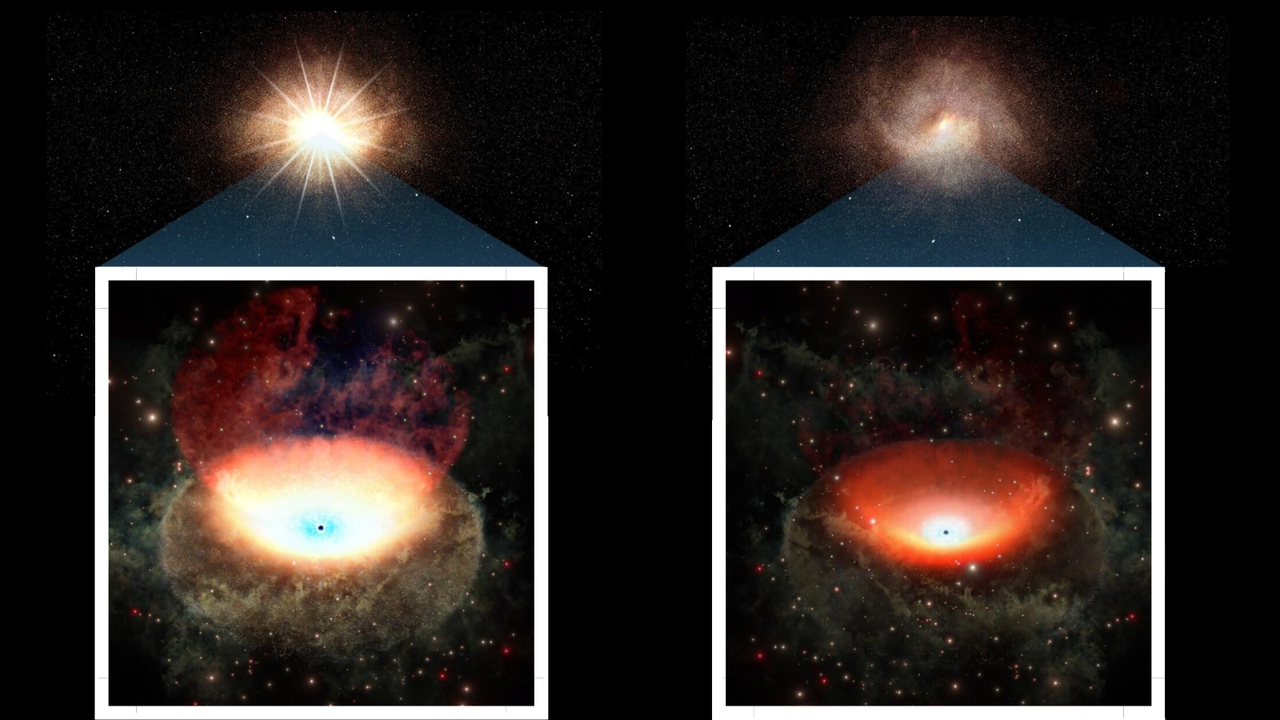
Astronomers watched a distant galaxy cut off the "food," or general matter, flowing to its central supermassive black hole. As the regions around feeding black holes are often brighter than the combined light of every star in their host galaxy, this led to a radical change in brightness occurring over just 20 years. The starvation of this central black hole was marked by the galaxy dimming by 95%, dropping to 5% of its original brightness.
The discovery is remarkable because it demonstrates that the activity of supermassive black holes can radically change over timespans similar in scale to a human lifetime — rather than over thousands of years as current models suggest. As the first evidence of this rapid "starvation" the discovery could prompt a change in current black hole feeding models that suggest such changes take much longer to proceed.