
Get all your news in one place.
100's of premium titles.
One app.
Start reading
The Conversation
The Conversation
Julia Cole, Professor of Earth and Environmental Science, University of Michigan

Galápagos corals show El Niño events are more extreme now than in past 1,000 years – here’s how my team made the discovery

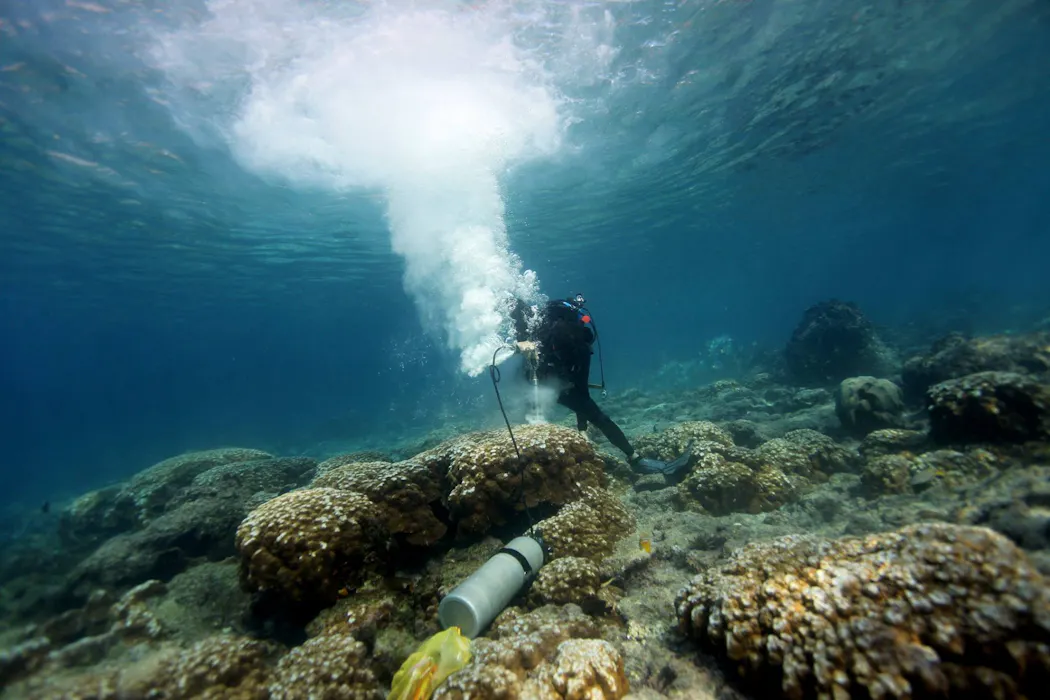
A NOAA scientist takes a coral sample in the Galapagos Islands. The process does not injure the colony, which grows back. Atlantic Oceanographic and Meteorological Laboratory - NOAA

Temperatures have warmed dramatically across the equatorial Pacific Ocean in 2026, signaling the onset of a strong and potentially historic El Niño. These events can affect weather around the world, and the intensity of recent El Niño events is raising alarm that, as global temperatures rise, they are becoming stronger and more destructive.

To understand how these climate patterns are changing, we need to understand what happened during El Niño events in the past, but observations go back only a few decades. So, my colleagues and I went to the Galápagos Islands – at the heart of the El Niño pattern – to find answers from some of nature’s best record keepers: corals.

Sign up to read this article
Read news from 100's of titles, curated specifically for you.
Already a member? Sign in here
Related Stories
Top stories on inkl right now
One subscription that gives you access to news from hundreds of sites
Already a member? Sign in here
Our Picks
Fourteen days free
Download the app
One app. One membership.
100+ trusted global sources.







