Get all your news in one place.
100's of premium titles.
One app.
Start reading
AAP
AAP
Catherine Bouris

Fuel prices soar but government rules out relief

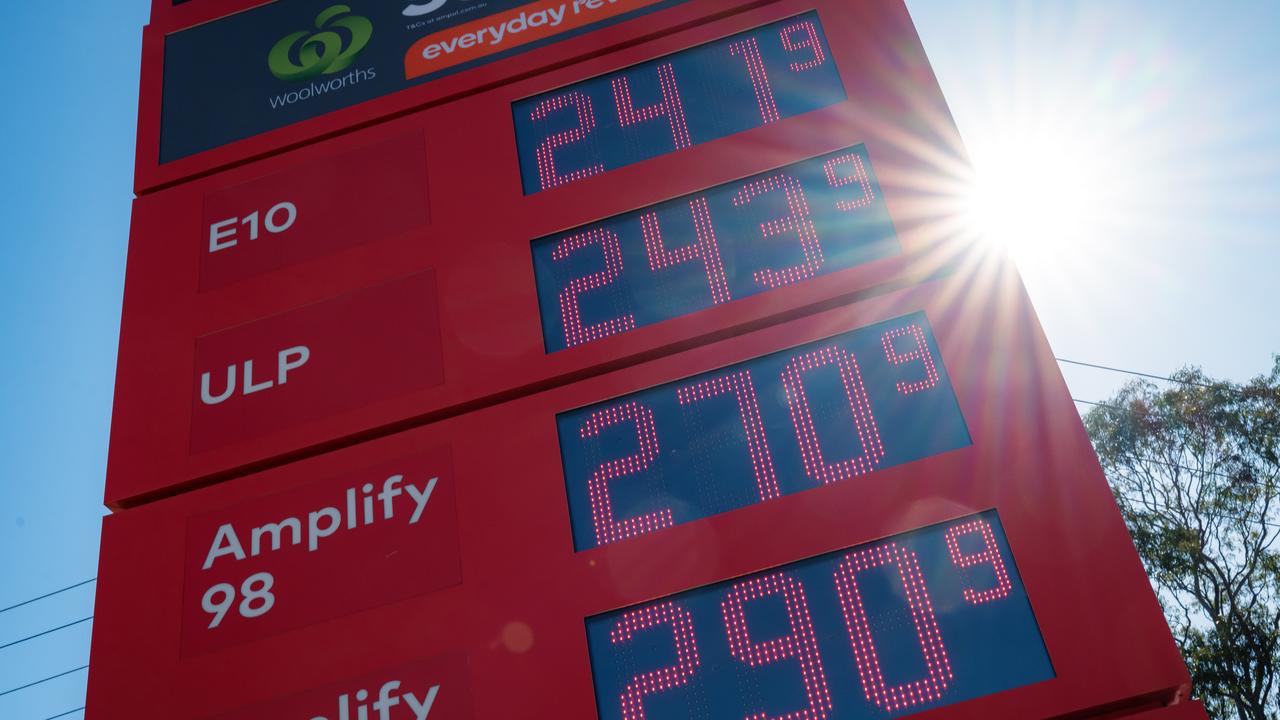
Petrol prices have jumped again after unrest intensified in the Middle East, impacting supplies. (George Chan/AAP PHOTOS)

Motorists around the country are facing almost-record-breaking fuel prices as the conflict in the Middle East continues to escalate.

The US war with Iran is causing ongoing chaos in the Strait of Hormuz and fuel supplies have been further impacted by a drone attack on Saudi Arabia's East-West oil pipeline, prompting global oil prices to surge..

The average fuel price in Sydney has jumped by more than 20 cents in the past week, with the cost of unleaded 91/E10 petrol sitting at $2.34 a litre.

Commodities experts at the Commonwealth Bank estimate that oil markets have five 10 weeks before global oil and refined product inventories deplete, which could send the cost of oil skyrocketing to as much as $US150 a barrel.

If that happens, fuel prices could climb by another 40 cents a litre, AMP chief economist Shane Oliver said.

"If the East-West pipeline remains shut and the flow of oil remains limited through the Strait of Hormuz... you can't keep running down global oil reserves forever. Eventually the world would have to adjust to a lower supply," he told AAP.

Despite the price increases, the federal government is not currently considering cutting the fuel excise.

"We're providing cost‑of‑living relief in other permanent ways," Treasurer Jim Chalmers told reporters on Friday.

He also acknowledged that the war in Iran had been disastrous economically.

Peter Khoury
Peter Khoury says a de-escalation of violence in the Middle East would help fuel prices fall. (Bianca De Marchi/AAP PHOTOS)

"Right around the world, ordinary people are being absolutely smashed by the consequences of the war in Iran, and unfortunately Australia is no different."

Mr Oliver said cutting the fuel excise would be costly for the budget without solving the problem.

"We did it six months ago and it just provided temporary relief and here we are going back up again," he said.

NRMA spokesperson Peter Khoury said what was really needed to provide relief at the bowser was a de-escalation of violence in the Middle East.

If that were achieved, "what we'll see is those prices go back, that's how volatile they are," Mr Khoury said.

"The markets are responding pretty quickly to what's going on, but until that happens, unfortunately we're going to continue to see these high prices."

Sign up to read this article
Read news from 100's of titles, curated specifically for you.
Already a member? Sign in here
Related Stories
Top stories on inkl right now
One subscription that gives you access to news from hundreds of sites
Already a member? Sign in here
Our Picks
Fourteen days free
Download the app
One app. One membership.
100+ trusted global sources.