Get all your news in one place.
100’s of premium titles.
One app.
Start reading
The Guardian - UK
The Guardian - UK
Comment
Rafael Behr

From Trump’s Maga to Farage’s Reform, they’re all following Putin’s nationalism playbook

A view of Nigel Farage’s socks at a press conference in Dudley, West Midlands, 24 February 2026.
A view of Nigel Farage’s socks at a press conference in Dudley, West Midlands, 24 February 2026. Photograph: Jacob King/PA

In September 2022, seven months into an all-out war in Ukraine that was only supposed to last a few weeks, Russian schoolchildren started compulsory patriotism lessons. Since then, Monday mornings have been set aside for “conversations about what is important” – a class on the glories of national history; western perfidy; the virtue of self-sacrifice for the Motherland; Vladimir Putin’s wise leadership.

Authoritarian regimes never trust people to love their country spontaneously. Organic national identity, the kind that grows without state cultivation, contains stories of dissent and cultural idiosyncrasy. Variety is subversive.
Patriotism in the nationalist mode is uniform and humourless. The citizen must feel humbled by the country’s history because humility is a pathway to submission. A generation taught to venerate heroes of the past is more easily made dutiful to a leader who will restore lost greatness.

Sure enough, Reform UK also wants schools to teach a more “patriotic curriculum”. Suella Braverman, the Conservative defector named last week as Nigel Farage’s education spokesperson, has promised a history syllabus that “fosters a love of our great country”.

This is deemed necessary to correct a liberal bias that drains national self-esteem by exposing young minds to negative portrayals of the British empire. Education has never been prominent in Farage’s campaigns. As leader of a successful anti-Europe, anti-immigration pressure group, he didn’t need to diversify into other areas. But now the Reform leader wants to look like the head of a government-in-waiting. He needs a broader platform.

Micromanaging the classroom is a natural progression from fretting over numbers of foreign-born residents. A party that defines national greatness by reference to a more monocultural past has to set boundaries of interior identity as strictly as it polices external borders. Reform’s agenda is textbook nationalism. Given the chance, Braverman will fill the nation’s textbooks with “conversations about what is important”.

Britain, it must be said, is unlike Russia – and Farage is no Putin. He doesn’t openly despise democracy, nor is he animated by lust for blood and territory.

The Reform leader hates being reminded that he once named the Russian president as the world leader he most admired “as an operator, but not as a human being”. More recently, Farage has called Putin a “monster” and “incredibly dangerous”. That was not a view he expressed as a regular commentator on RT, the Kremlin propaganda channel, before Ofcom revoked its UK broadcasting licence.

Farage has often shared the Russian analysis that Ukraine brought war on itself by daring to seek a trade partnership with the European Union. He turned more critical of Putin as it became clear that mainstream UK opinion was locked in sympathy with Kyiv, and that admiration for a brutal dictator, even with caveats, was toxic.

Whatever Farage thinks these days, viewed from Moscow his politics are a gift that keeps giving. Brexit was an act of strategic self-harm that diminished Britain and destabilised the EU. It is not by random selection that Russian security forces, looking to exert influence in the European parliament, recruited Nathan Gill, a Ukip and Brexit party MEP. He was Reform’s leader in Wales before his conviction and incarceration last year.

Farage condemned Gill as a “bad apple” who had betrayed his leader. That doesn’t alter the fact that his party attracted and promoted someone who was either sincere in loyalty to the Kremlin or venal enough to take bribes without caring what cause he served.

There doesn’t have to be a conspiracy or cash transaction for Reform to be useful to Russia. That function is performed automatically by each sibling in the family of nationalist movements that reject the liberal norms and legal foundations of Europe’s postwar peace and prosperity – France’s Rassemblement National, Hungary’s Fidesz, Spain’s Vox and Germany’s Alternative für Deutschland, among others.

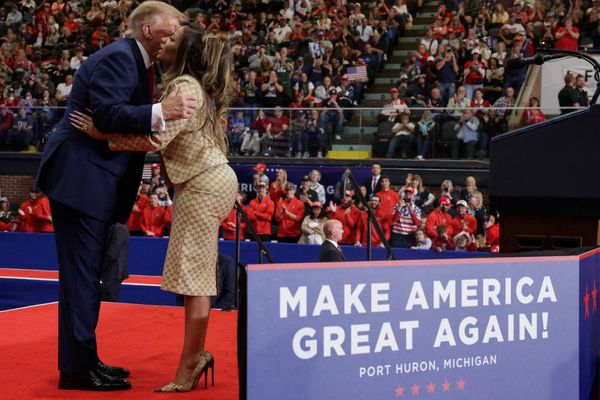
Politicians who sabotage solidarity among European democracies are friends of Putin, whether wittingly or not. They are also candidates for Donald Trump’s patronage. They lead the “patriotic” parties identified in last year’s US national security strategy as vehicles for “resistance” to the “civilisational erasure” menacing the continent.

This is a point of concurrence between pro-Trump zealots, Putin propagandists and their European fellow travellers. All agree that liberal tolerance of sexual and ethnic diversity loosens the moral fibre of a nation. Western Europe is deemed especially degenerate in that regard.

True patriotism is then defined as belief in the superiority of white heterosexual Christians and readiness to bolster their supremacy with policies to reverse decades of immigration and boost “indigenous” birthrates. The further leaders go in that direction, the likelier they are to qualify for a Trump endorsement and, crucially, the money that follows, channelled through a network of US far-right thinktanks and foundations.

That international audience is the target, alongside or even ahead of domestic voters, when Reform makes Maga-coded pledges: a UK Deportation Command, for example, modelled on the Immigration and Customs Enforcement (ICE) agency. Danny Kruger, another Tory defector, laments Britain’s “totally unregulated sexual economy”, opposes no-fault divorces and says Reform UK has “pronatalist” ambition. Zia Yusuf, Farage’s home affairs spokesperson, has promised to put Christianity at the centre of a patriotic school curriculum. Not himself a Christian, Yusuf describes the faith as “core to the history and DNA of the country”.

The apparent disconnect between the spokesperson’s heritage and his criterion for intrinsic Britishness is resolved by remembering that all contradictions in nationalism are soluble in dedication to the leader. The party can believe one thing today, something else tomorrow; have a practising Muslim on the platform and blatant racists in the ranks; oppose state intervention in the economy in some sectors, demand it in others; be pro-Kremlin by instinct, anti-Putin by expedient. What matters is that the line is set by Farage and that everyone follows.

It has to be this way because nations are complex, diverse things made from individuals with untidy, conflicting needs. Their pasts, presents and futures resist ideological regimentation. Sooner or later, nationalists resort to defining patriotism as whatever the leader says it is and calling anyone who disagrees a traitor.

Reform UK will be no different. And if, as I hope, the party’s support hits a ceiling short of what is required to take power, this will be the reason. There are enough British people who love their country in ways that refuse to be defined as submission to the will of Nigel Farage.

  • Rafael Behr is a Guardian columnist

  • Guardian Newsroom: Can Labour come back from the brink?
    On Monday 30 April, ahead of the May elections, join Gaby Hinsliff, Zoe Williams, Polly Toynbee and Rafael Behr as they discuss how much of a threat Labour is under from both the Green party and Reform and whether Keir Starmer can survive as leader of the party. Book tickets here

Sign up to read this article
Read news from 100’s of titles, curated specifically for you.
Already a member? Sign in here
Related Stories
Top stories on inkl right now
One subscription that gives you access to news from hundreds of sites
Already a member? Sign in here
Our Picks
Fourteen days free
Download the app
One app. One membership.
100+ trusted global sources.