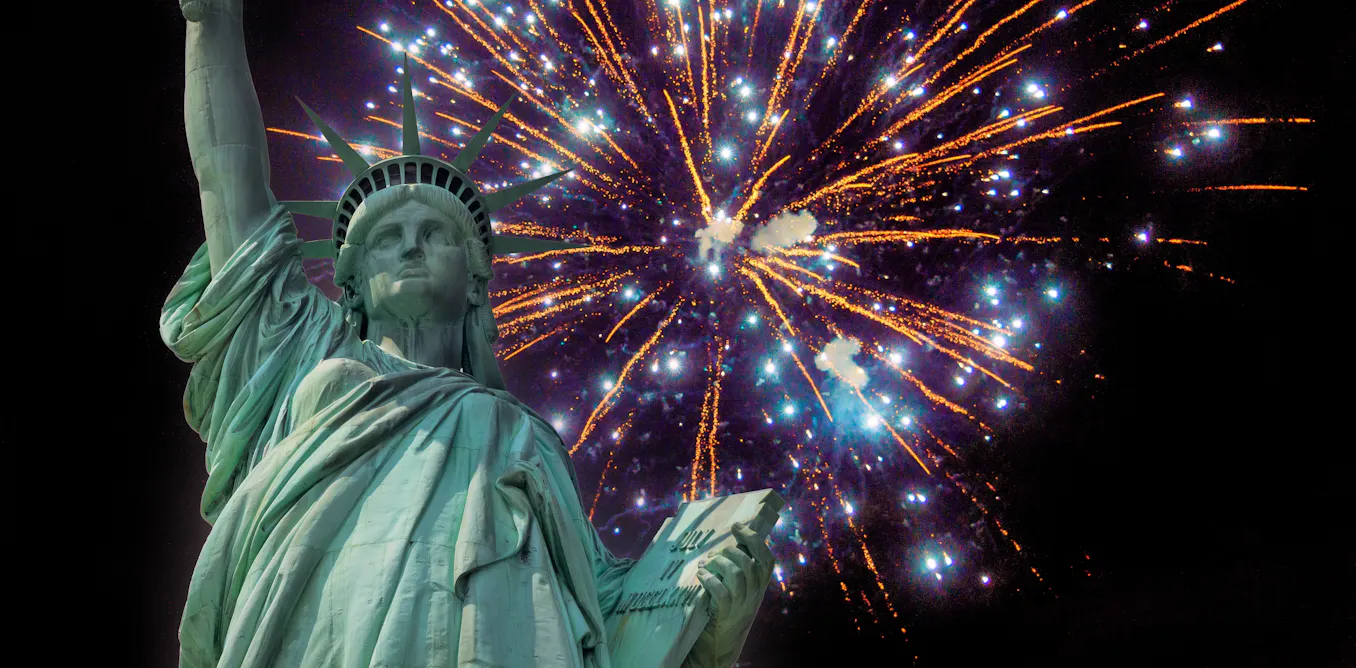
Why do France and the United States – two nations that claim to be founded on universal principles rather than common ancestry – place such extraordinary importance on their national holidays? And what do today’s battles over these celebrations reveal about the crisis of democratic national narratives?
France and the United States are two exceptional cases of nation-building: both claim to derive their legitimacy from universal political principles rather than ethnic origin. Their holidays therefore do more than commemorate a historical event – they periodically recreate the nation itself. Yet the contemporary politicisation of these rituals points to a deeper transformation: the debate is no longer simply about what the nation is, but about who can legitimately claim to embody it – and the answer, in both countries, is now fiercely contested.