
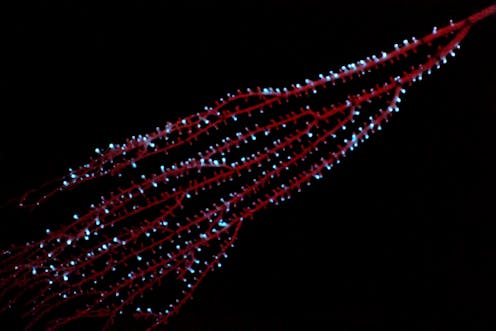
Humans have long been fascinated by organisms that can produce light. Aristotle, who was a scientist as well as a philosopher, wrote the first detailed descriptions of what he called “cold light” more than 2,000 years ago. More recently, pioneering researchers like World War II Army veteran Emmett Chappelle and deep submergence vehicle pilot Edith Widder advanced the study of this phenomenon with novel technologies.
At least 94 living organisms produce their own light through a chemical reaction inside their bodies – an ability called bioluminescence. Examples include luminous fireflies, algae that create “glow-in-the-dark” bays, small crustaceans with intricate courtship displays, and deep-sea fish and coral. Yet despite its widespread occurrence, scientists don’t yet know when or where it first emerged, or its original function.











