Get all your news in one place.
100’s of premium titles.
One app.
Start reading
AAP
AAP
Business
Jacob Shteyman

Splurging shoppers push economy over speed limit

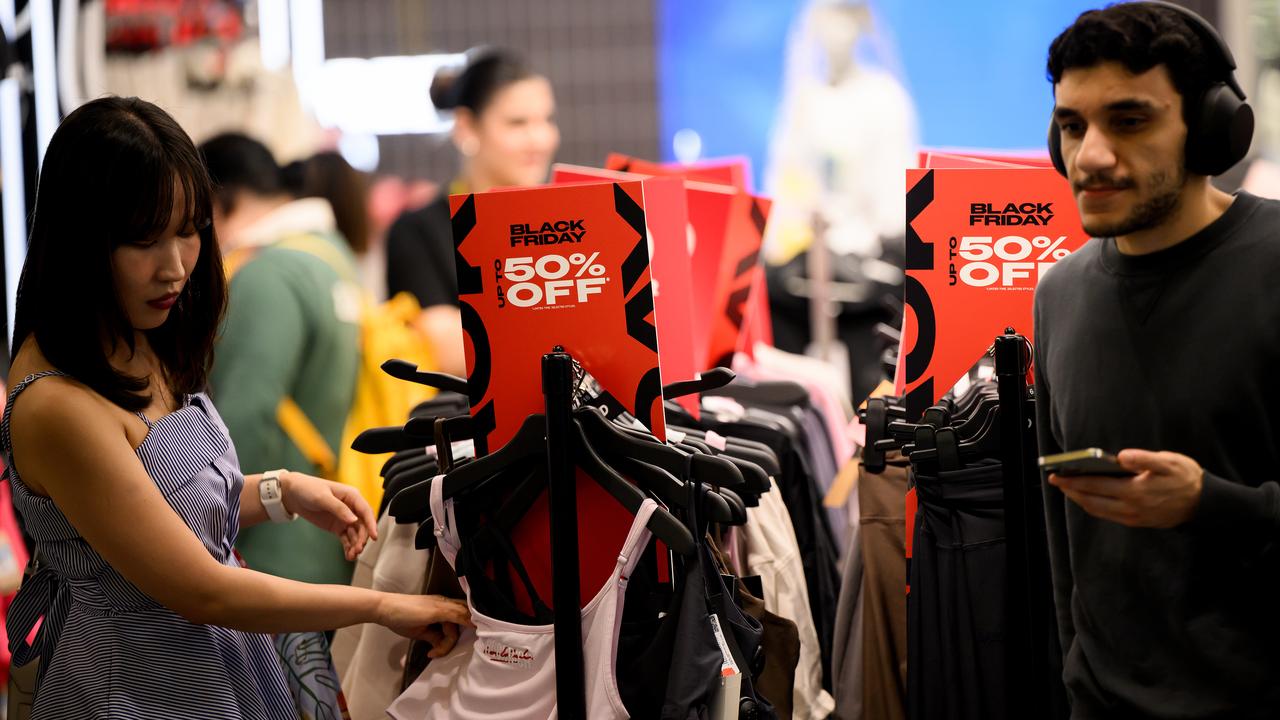
Resurgent consumer spending raises the prospect of inflation persisting in the Australian economy. (Bianca De Marchi/AAP PHOTOS)

The treasurer has rubbished suggestions government spending is denying borrowers more rate relief, as a household shopping spree complicates the Reserve Bank's mission to tame inflation.

The opposition said Labor's budget deficits were fuelling inflation, but Jim Chalmers pointed to economic growth figures showing the private sector had moved into the driver's seat.

National accounts data released by the Australian Bureau of Statistics on Wednesday showed private demand was driving growth, with a surge in data centre construction contributing to the sharpest rise in private investment in five years.

"This was a very positive and very promising set of numbers and the reason for that is because the overwhelming story of these national accounts was a very substantial recovery in the private sector," Dr Chalmers told ABC Radio on Thursday.

"Technology and data infrastructure was a big part of the story - and that's a good thing, because data and digital and artificial intelligence is a game-changer for our economy. It will be a huge part of the more productive economy that we're building into the future."

QUESTION TIME
Figures showing a private sector recovery are "very promising" according to Treasurer Jim Chalmers. (Mick Tsikas/AAP PHOTOS)

But government spending was also strong.

Public investment rebounded three per cent in the three months to September - driven by renewable energy, water and rail infrastructure - after falling 3.5 per cent in the prior quarter.

Public spending was at a 40-year high under Labor, Opposition finance spokesman James Paterson said.

Productivity growth was still anaemic, meaning the economy could not grow without adding to inflation, he told ABC Radio.

Dr Chalmers said the coalition didn't know what it was talking about.

"Well, it's rubbish," he said.

"Private demand has now contributed more to growth in our economy than public demand for four quarters in a row. 

"In fact, in the quarter just gone, the private economy made a three times bigger contribution than public spending."

Generic images of Australian notes and coins in Melbourne
The federal opposition points to public sector spending and anaemic productivity. (James Ross/AAP PHOTOS)

Treasury secretary Jenny Wilkinson has told a Senate estimates hearing growth in the economy was shifting from public-led to private-led.

A pick-up in productivity in the national accounts revealed more good news for the Australian economy, AMP chief economist Shane Oliver said.

But the acceleration in output would do little to alleviate the RBA's concern the economy, growing at 2.1 per cent annually, was bumping up against its speed limit, Dr Oliver said.

Earlier on Wednesday, RBA governor Michele Bullock conceded it was not yet clear whether the economy was at capacity but if the economy accelerated further, it could add to inflation.

If inflation pressures persist longer than previously thought, that would have implications for monetary policy, she told a Senate estimates hearing.

Reserve Bank of Australia governor Michele Bullock
Further acceleration in the economy could stoke inflation, RBA governor Michele Bullock warns. (Dan Himbrechts/AAP PHOTOS)

Household spending jumped 1.3 per cent in October in the sharpest increase since January 2024, the statistics bureau revealed on Thursday.

Shoppers took advantage of sales events to splurge on clothing and footwear, home furnishings and electronics, Commsec chief economist Ryan Felsman said.

Services spending also rose with major concerts and cultural festivals driving demand for dining and hotels.

"The stronger consumer is making the RBA's job more challenging, given the economy appears to already be operating near the potential economic growth speed limit," Mr Felsman said.

With Black Friday and Cyber Monday sales set to result in further spending growth in November, early indications suggest household consumption could accelerate in the December quarter after slowing to 0.5 per cent in September.

Sign up to read this article
Read news from 100’s of titles, curated specifically for you.
Already a member? Sign in here
Related Stories
Top stories on inkl right now
One subscription that gives you access to news from hundreds of sites
Already a member? Sign in here
Our Picks
Fourteen days free
Download the app
One app. One membership.
100+ trusted global sources.