Get all your news in one place.
100's of premium titles.
One app.
Start reading
Euronews
Euronews
Giedre Peseckyte

For cancer survivors, tai chi can ease sleep problems, fatigue and pain, study finds

Breathing exercises, meditation and tai-chi and qigong practices reduced fatigue and pain in people with cancer who had completed their primary treatment but continued to experience at least moderate psychological distress, a new study found.

Tai-chi and qigong — an ancient Chinese mind-body practice that combines gentle, flowing movements with heightened attention to body sensations and breathing — also improved sleep quality, something most cancer patients struggle with.

Mind-body therapy “has been a tremendous help navigating this most unpleasant journey,” said cancer survivor Ken Taub, who took part in the trial, adding that now he “can start the day feeling fresh and limber.”

There is a growing number of cancer survivors like Taub. “More and more people with cancer are surviving longer term but often, they are struggling with long-term side effects that can be difficult to manage,“ Linda E. Carlson, a professor at the University of Calgary and lead investigator on the study, said in a press release.

This clinical trial included nearly 600 participants with a variety of prior cancer diagnoses, including breast, prostate, gastrointestinal, lung and many other types of cancer. Approximately half of the participants had early-stage cancer.

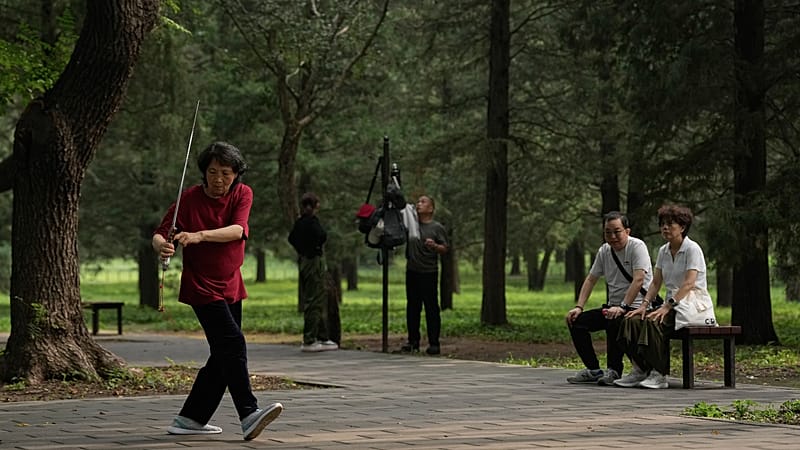
A woman and a child walk by as a woman practices tai chi at Ritan Park in Beijing. (Copyright 2025 The Associated Press. All rights reserved)

Participants either chose one of two programmes — mindfulness-based cancer recovery or tai chi and qigong — or were randomly assigned to one. A waitlist group served as a control.

Mindfulness-based cancer recovery included yoga, meditation and in-person group discussions for nine weeks. The tai chi and qigong group practised flowing rhythmic movements, along with breath awareness and a variety of cognitive skills, including focused attention, heightened body awareness, and imagery, for 11 weeks.

“Both mindfulness-based cancer recovery and tai chi/qigong helped participants manage some of the most common and burdensome challenges faced after cancer treatment, including fatigue, pain and, in the case of tai chi/qigong, sleep difficulties,” said senior author Peter Wayne, director of the Osher Center for Integrative Health at Mass General Brigham, adding that the findings "reinforce the value of a whole-person approach to cancer survivorship care."

Pain was measured in two ways: intensity and interference with daily activities. Although there were minimal effects on intensity and pain interference, the more psychological aspect of pain improved over time with both practices. Researchers also found that symptoms of pain interference, sleep disturbance and fatigue tended to cluster together, so when one symptom improved, the other two did as well.

“If this kind of practice could be incorporated from the beginning, that could help a lot of people,” Cynthia Good, who participated in the tai-chi and qigong practices 11-week program, said.

Sign up to read this article
Read news from 100's of titles, curated specifically for you.
Already a member? Sign in here
Related Stories
Top stories on inkl right now
One subscription that gives you access to news from hundreds of sites
Already a member? Sign in here
Our Picks
Fourteen days free
Download the app
One app. One membership.
100+ trusted global sources.