
Get all your news in one place.
100's of premium titles.
One app.
Start reading
The Conversation
The Conversation
Science
Brenda Wingfield, Previous Vice President of the Academy of Science of South Africa and DSI-NRF SARChI chair in Fungal Genomics, Professor in Genetics, University of Pretoria, University of Pretoria

Following a fungus from genes to tree disease: a journey in science

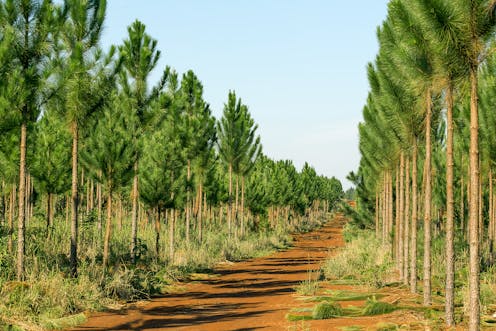
Pablo Rodriguez Merkel/Shutterstock

Anyone who reads even a little about science and technology will be familiar by now with the idea of genome sequencing. This process involves breaking an organism’s DNA into fragments to study their compositions or sequences. Then the fragments are aligned and merged to reconstruct the original sequence.

But why sequence an organism’s genome? What’s the value for ordinary people and the world more broadly? The answers are immediately obvious when it comes to the medical field. Understanding what makes a disease “tick” offers scientists a way to treat or prevent it. Sequencing the genome of a crop or animal can improve agricultural yields or make species hardier in shifting climates.

Sign up to read this article
Read news from 100's of titles, curated specifically for you.
Already a member? Sign in here
Related Stories
Top stories on inkl right now
One subscription that gives you access to news from hundreds of sites
Already a member? Sign in here
Our Picks
Fourteen days free
Download the app
One app. One membership.
100+ trusted global sources.







