Right on the coast of Florida, Pompano Beach has opened a new venture dedicated to one of the ocean’s most enigmatic creatures: the jellyfish, a boneless and brainless invertebrate that has survived in the earth’s ocean for over 500 million years.
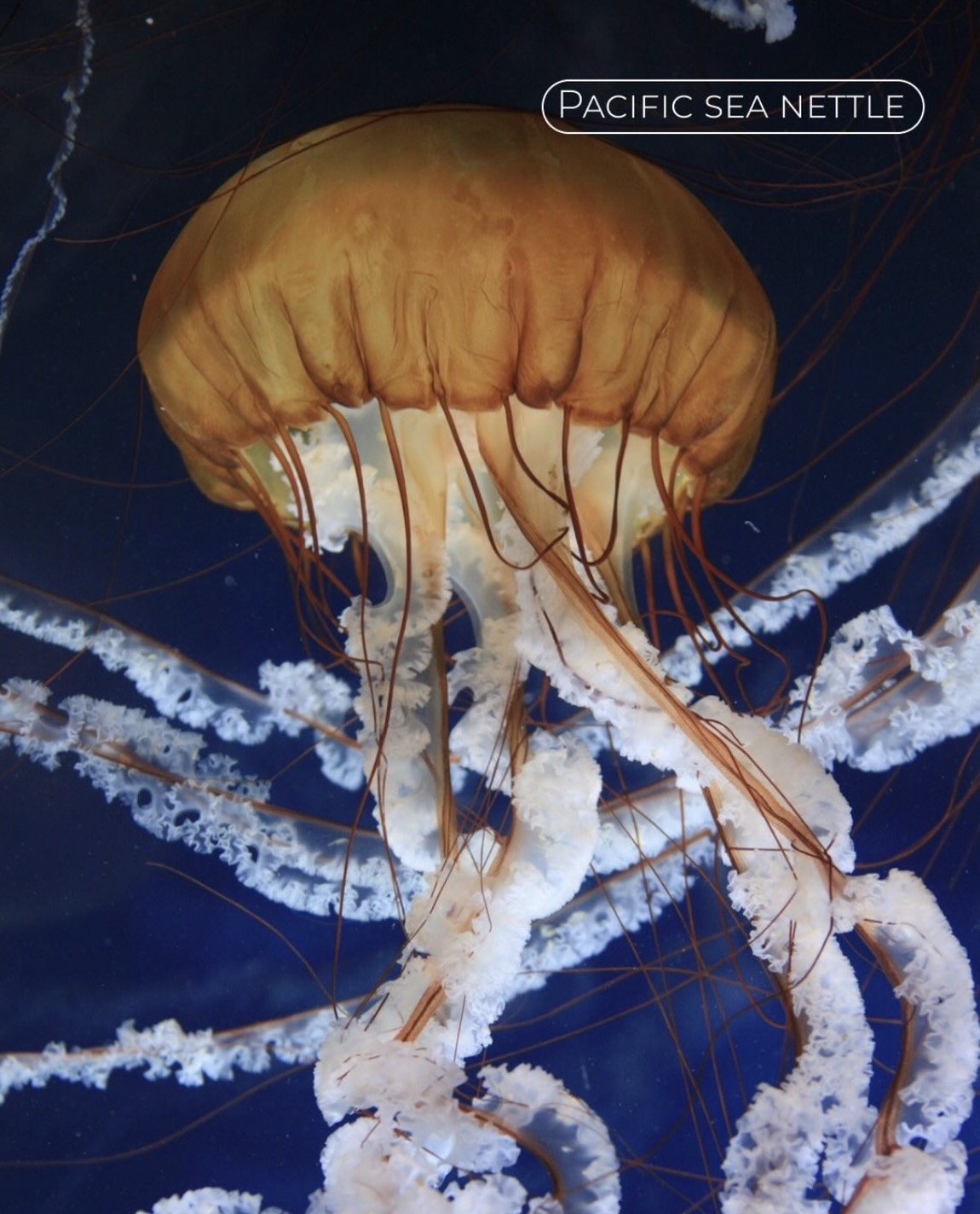
The Jellyfish Museum celebrates the otherworldly beauty of these deep-sea creatures, housing around 20 distinct species across 21 display tanks, alongside towering three-dimension (3D) projections designed to immerse visitors in the underwater world. The 900-square-metre space offers a sensory experience that is as much about serenity as it is about science.
This aquatic gallery was founded by Ukrainian refugees Alex and Yana Yanovsky, who previously developed the Museum of Jellyfish in Kyiv, Ukraine.
The pair have worked in the aquarium business for over two decades, and since moving to the United States in 2022 following Russia’s invasion of Ukraine, the Pompano Beach museum marks their first aquarium venture abroad.
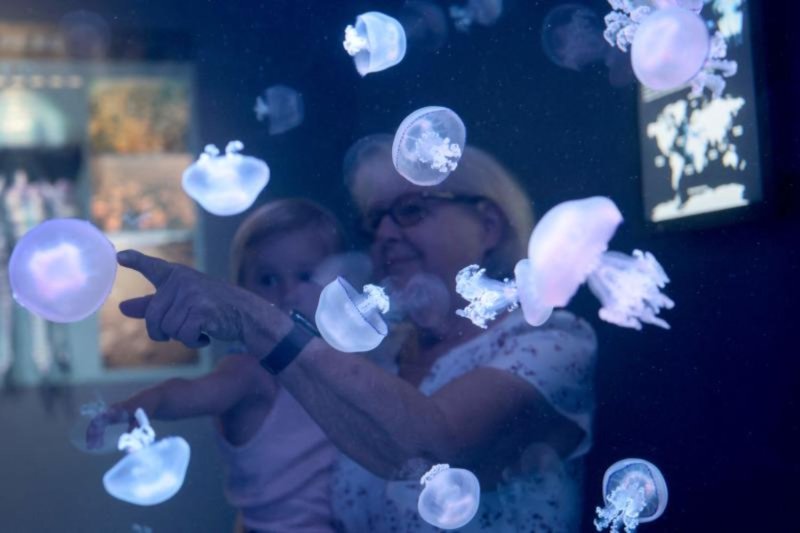
Jellyfish may not be the sea creature most beachgoers hope to encounter during an untroubled day by the ocean. Inside the museum, however, they take on an entirely different character.
Illuminated by neon lights and drifting through saltwater tanks, their slow, hypnotic movements create a sense of serenity that feels worlds away from the bustle of Florida’s coast.
But the Yanovskys want the museum to be more than a visual spectacle. Visitors are encouraged to leave with a deeper understanding of jellyfish and their place in the marine ecosystem.
Expert guides introduce visitors to the global jellyfish population, their biology and the ecological forces that shape their existence, offering context for creatures that many people otherwise encounter only briefly, or perhaps while scuba diving.
Jellyfish have inhabited the world’s oceans for more than 500 million years, making them older than the dinosaurs. Some species possess remarkable biological abilities of immortality.
That’s right! The Turritopsis dohrnii jellyfish species all have the potential to revert to an earlier stage of their life cycle and effectively escape ageing…though their extraordinary survival mechanisms remain vulnerable to the simplest rule of the food chain.
The museum itself has undergone a transformation of its own. The space was converted from a former Wells Fargo bank, with approximately US$100,000 in community redevelopment funds provided by the City of Pompano Beach. The investment reflects the museum’s ambition to become not only a tourist attraction, but also an educational space for the local community.
In a city better known for its beaches and sunshine, the Yanovskys have created an unlikely underwater world indoors, where visitors can slow down, look closer and discover that there is considerably more to a jellyfish than its sting.