Get all your news in one place.
100's of premium titles.
One app.
Start reading
The Conversation
The Conversation
Claire L. Ma, Postdoctoral Research Fellow of Public Health, University of Michigan

Flavored vapes led to a major shake-up at the FDA – 3 health policy analysts explain the science behind the controversial products

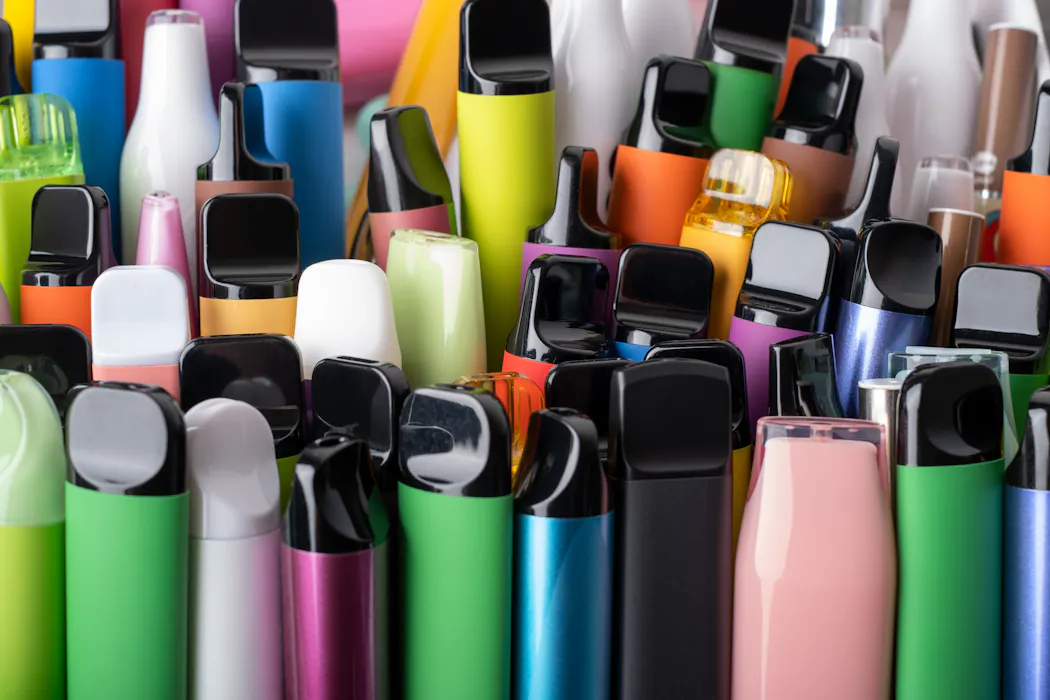
There are currently 45 approved vaping products in the U.S. Most are tobacco- or menthol-flavored; only two are fruit-flavored. Roman Mykhalchuk/iStock via Getty Images Plus

The resignation of Marty Makary, commissioner of the U.S. Food and Drug Administration, on May 12, 2026, brought to the forefront a heated controversy over fruit-flavored nicotine vapes.

Rumors had been circulating for weeks that President Donald Trump was planning to fire Makary, in large part due to Makary’s disagreement with Trump over the FDA’s recent approval of two fruit-flavored vapes. Makary reportedly disagreed in private with the FDA’s decision, which came soon after Trump pushed the FDA to move more quickly in approving fruit-flavored vapes.
Before that FDA approval, the agency had only approved menthol- and tobacco-flavored nicotine vapes. The clash between Trump and Makary over whether to allow fruit-flavored vapes is a high-profile example of the continued debate surrounding these products.

Beyond Washington, the public health community is also divided. Researchers are working to understand how flavored vapes affect public health, but the evidence is complicated.

We are a team of public health researchers who study scientific evidence, health policy and regulation as it relates to tobacco and nicotine products. Our team at the Center for the Assessment of Tobacco Regulations at the University of Michigan and University of Massachusetts Amherst is studying questions about flavors in these products.

The authorization of two fruit-flavored vapes marks a pivotal moment in U.S. e-cigarette regulation.

Closeup headshot of former Food and Drug Administration Commissioner Marty Makary.
Former Food and Drug Administration Commissioner Marty Makary is said to have clashed with President Donald Trump over the FDA’s controversial approval of two flavored vapes. Brendan Smialowski/AFP via Getty Images

FDA’s role in regulating tobacco and nicotine

The Family Smoking Prevention and Tobacco Control Act, which was signed into law in 2009, gave the FDA the authority to regulate the manufacture, distribution and marketing of tobacco products. This includes nicotine alternatives such as e-cigarettes, vapes and oral nicotine pouches.

Tobacco and nicotine products, such as major cigarette brands, that were on the market before 2007 did not require FDA authorization, but new products, like vapes, do. To be authorized, new tobacco and nicotine products must meet the standard of being “appropriate for the protection of public health”. In other words, their benefits to the population as a whole must be judged to outweigh their risks.

The Center for Tobacco Products at the FDA is responsible for making these decisions and implementing regulations. Academic research centers, like ours, support the center in understanding how its policies might affect public health.

Vaping has a lower relative risk than smoking

Vaping nicotine is not risk-free, but research is clear that it is much less harmful than smoking. Vapes and e-cigarettes don’t contain tobacco leaf like cigarettes do, nor do they have the same toxic chemicals that are found in cigarettes. Smoking involves burning organic material, which releases cancer-causing pollutants; vaping does not.

Vapes can contain potentially harmful chemicals, but these are usually in much lower amounts than those found in cigarettes. Nicotine is an addictive chemical, but it does not on its own cause cancer. The FDA’s regulation and oversight of vapes is important for public safety. As of May 2026, the FDA has approved 45 vaping products that can be lawfully sold in the U.S.

On the other hand, the U.S. is flooded with illegal vapes, including colorful devices manufactured in China. It can be difficult to know what is in illegal vapes.

Because vaping is not risk-free but has a lower relative risk than smoking, it presents an increased risk for people who do not otherwise use tobacco or smoke, but a decreased risk for people who smoke.

Large vape cartridge sitting atop three cigarettes
There’s no question that vapes are less harmful than cigarettes. But that doesn’t mean vapes aren’t harmful. Witthaya Prasongsin/Moment via Getty Images

Flavored vapes attract new users, especially youth

Flavored vapes can include menthol and mint, fruit and sweet flavors and concept flavors with names like “jazz,” “solar,” “fusion” and “unicorn puke.” Other flavored vapes are often packaged in bright and appealing colors, even if they do not include explicit flavor description words.

The recent FDA decision to approve two fruit- and sweet-flavored nicotine vapes, which have the color-coded names of “Sapphire” and “Gold,” is a potentially significant expansion of the FDA’s approach to authorizing e-cigarettes.

Research shows that flavored vapes attract new users, including young people who do not have a history of smoking tobacco. It also shows that experimenting with flavors increases the appeal of vapes among adolescents. Young people often think fruit-flavored vapes are less harmful than tobacco-flavored vapes.

Flavored vapes might help people quit smoking

Flavored vapes can attract youth, but they can also appeal to people who smoke. For people who smoke, switching to nicotine vapes can diminish their exposure to cancer-causing chemicals and potentially lower their likelihood of tobacco-related disease.

Researchers regularly assess the scientific evidence on whether e-cigarettes can help people stop smoking. Regularly updated evidence across more than a hundred studies continues to show that nicotine vapes can help people who use cigarettes to quit smoking.

However, researchers don’t yet know whether or how adding flavors to vapes might affect smoking and vaping. While fruity and sweet flavors can be appealing to people who smoke, tobacco and menthol flavors are sometimes more popular among older people who have a history of smoking tobacco.

As the recent clash between Trump and Makary shows, the debate over flavored vapes continues. Whatever the outcome, it remains important that decisions made about vapes are based on scientific evidence, and that the reasons behind policy decisions are communicated effectively to the public.

The Conversation

Claire L. Ma is a Postdoctoral Research Fellow at the Center for the Assessment of Tobacco Regulations, where she leads research dissemination efforts for the Policy Analysis and Dissemination Core. Her research is funded by the FDA and NIH through a Federal grant to the University of Michigan School of Public Health. Dr. Ma does not receive any funding from the tobacco or vaping industries.

Holly Jarman is the Co-Lead of the Policy and Dissemination Core for the Center for the Assessment of Tobacco Regulations (CAsToR) at the University of Michigan and receives funding from the NIH and FDA for that work. Jarman does not receive any funding from the tobacco or vaping industries.

Jamie Hartmann-Boyce receives funding from the NIH, FDA, Truth Initiative, Cancer Research UK and the Massachusetts Department of Health for research related to tobacco control. She does not receive any funding from tobacco or vaping industries.

This article was originally published on The Conversation. Read the original article.

Sign up to read this article
Read news from 100's of titles, curated specifically for you.
Already a member? Sign in here
Related Stories
Top stories on inkl right now
One subscription that gives you access to news from hundreds of sites
Already a member? Sign in here
Our Picks
Fourteen days free
Download the app
One app. One membership.
100+ trusted global sources.