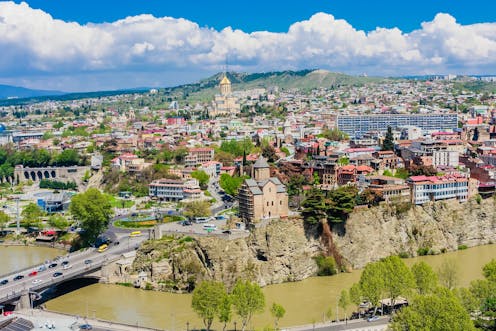
Fifteen years ago this month, while all eyes were set on Beijing for the opening of the 29th Olympic Games of the modern era, war broke out between Russia and Georgia over South Ossetia. Officially part of Georgia since the country gained independence from the Soviet Union in 1991, it remained occupied by Moscow, as did the Black Sea coastal region of Abkhazia. Georgia’s then-president, Mikhail Saakachvili, attempted to regain control of these territories, which represent 20% of Georgia’s surface area, but to no avail. At the instigation of Nicolas Sarkozy, then president of France, the European Union took on the role of mediator.
Russia is still exerting pressure to penetrate further into the territory today through what is known as the technique of “frontierisation”. It aims to make a territorial conquest irreversible by transforming a simple administrative demarcation line into an international border. The process, which Russia has used extensively in the past, particularly in Central Asia, is being deployed in Georgia and Ukraine.